


Introducing a new puppy to your current dog is often an exciting process, and many dogs will become fast friends and eas...
Read MoreAdopt Me


Learning how to adopt a Komondor in Minneapolis starts with understanding this striking Hungarian livestock guardian and the realities of city living. Komondors are intelligent, devoted, naturally protective, and often reserved with strangers, while Minneapolis offers four distinct seasons, active neighborhoods, and plenty of outdoor space for a well-managed dog. With thoughtful preparation, the city can be a rewarding home for this remarkable breed.
Komondors are large, powerful dogs with a distinctive corded coat that requires lifelong maintenance. Their calm independence does not mean they are low-maintenance: they need daily interaction, early socialization, secure handling, and owners who can recognize guarding behavior before it becomes a problem. Minneapolis adopters who appreciate the breed’s purpose and personality can build an exceptionally loyal partnership.
A Komondor can do well in a Minneapolis house, townhouse, or spacious apartment if the dog receives structured exercise and has a quiet place to decompress. Apartment living is possible, but hallway traffic, elevators, visitors, and nearby dogs require careful management because Komondors may be watchful and territorial. A fenced yard is helpful, although it does not replace leashed walks and training, so confident planning makes city life more comfortable.
Minneapolis winters are generally manageable for a Komondor’s thick coat, but snow and ice can collect between the cords and around the feet. Summer humidity and warm pavement are more concerning, so schedule walks near sunrise or sunset and provide shade, water, and air conditioning. Families should supervise interactions with children, cats, and other dogs because a Komondor’s size and protective instincts call for respectful boundaries, creating a safer home for everyone.
A typical Minneapolis Komondor lifestyle includes quiet neighborhood walks, scent games, obedience practice, and regular outings to appropriate trails such as the Chain of Lakes paths or quieter areas around Theodore Wirth Regional Park. Avoid crowded dog parks until your dog’s social preferences are clear, and use a secure leash rather than relying on off-leash reliability. Expect frequent coat care, muddy spring paws, and deliberate introductions to guests, but those routines can become a rewarding rhythm.
Ready to see whether one of these rare dogs is waiting nearby? The steps below explain where to look, what local rescues may ask of you, and how to prepare for a successful adoption.
Komondors are uncommon in Minneapolis shelters, so available dogs may appear through general animal shelters, foster-based rescues, breed-focused networks, or listings from surrounding Minnesota communities. Some dogs are adults needing a quieter home, while others may arrive with incomplete socialization or grooming histories. Because availability changes quickly, applying before a dog appears can help you respond thoughtfully when the right match becomes available.
Dog Academy makes adopting a Komondor in Minneapolis easier by aggregating adoptable-pet listings in one convenient place instead of requiring you to check many shelter pages separately. You can review breed listings, learn about behavior and care needs, and prepare with practical training guidance before bringing a dog home. That combination of reliable discovery and education gives Minneapolis adopters a clearer path forward.
Local rescue groups typically begin with an application covering housing, work schedules, household members, fencing, pets, and prior dog experience. A phone interview, landlord approval, veterinary references, and home visit may follow, especially for a guardian breed as large and independent as the Komondor. Rescues may also evaluate the dog’s comfort with children, cats, handling, visitors, and grooming before recommending a placement.
Dog Academy is a go-to source for Minneapolis adopters because its adoption listings and breed education are designed to make the search more dependable and understandable. Our practical training resources also help families prepare for leash skills, visitor manners, cooperative grooming, and calm behavior in a busy city, so you can move confidently from browsing to meeting available dogs.
The local process often includes submitting an application, completing an interview, meeting the dog in a foster or shelter setting, and allowing time for reference checks or a home visit. Prepare vaccination and veterinary records for current pets, confirm your Minneapolis housing rules, and budget for grooming supplies, training, preventive care, and large-dog food. Adoption timelines range from several days to a few weeks, and patient matching usually produces the strongest result.
Beside the Komondors available in Minneapolis, we welcome you to check out the available Komondors for adoption in nearby cities via the links at the bottom of the page. You can also search for other Komondors to adopt in Minnesota.
Start training as soon as your Komondor settles in, using reward-based methods and short, consistent sessions. Minneapolis owners can look for positive-reinforcement classes and private trainers experienced with guardian breeds, focusing on recall foundations, polite greetings, loose-leash walking, place training, and calm responses to apartment or neighborhood activity. Early exposure to buses, bicycles, winter clothing, delivery workers, and friendly visitors helps your dog interpret city life without feeling responsible for controlling it.
Dog Academy supports Minneapolis owners with accessible lessons for manners, socialization, enrichment, and cooperative care. Komondor cords should be separated and dried carefully so dampness does not lead to skin problems or odor, and veterinary checks should watch for concerns common in large dogs, including hip issues and bloat risk. Keep meals consistent, avoid intense exercise immediately after eating, and plan grooming around snow, rain, and summer humidity so daily care stays manageable.
Once your Komondor has settled in, you’ll find plenty of great places around Minneapolis to explore together.
Before adopting, it’s worth weighing the advantages and challenges of raising a Komondor in Minneapolis.
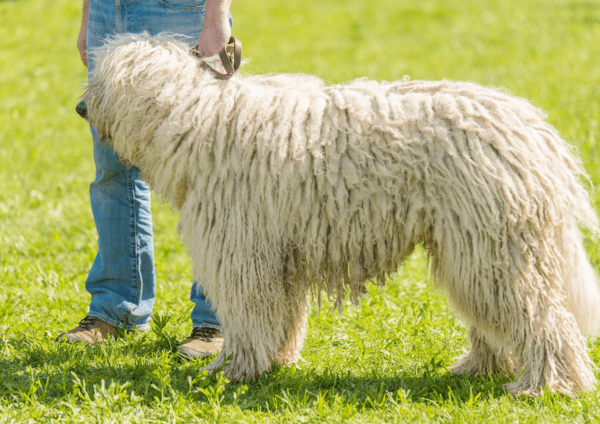
The advantages include a devoted home guardian, excellent cold-weather tolerance, and a calm companion for owners who enjoy structured walks and training. The challenges include limited breed availability, substantial coat care, possible sensitivity to crowded city environments, and the need to manage a very large dog around Minneapolis visitors, sidewalks, elevators, and other pets. Spring mud, summer humidity, and icy conditions add seasonal work, but prepared owners can handle each challenge successfully.
Komondors can adapt well to Minneapolis when they have consistent routines, secure housing, thoughtful socialization, and access to shaded summer exercise and dry winter shelter. A fenced yard, nearby trails, and a household willing to invest in grooming and reward-based training improve the experience, while a noisy, unpredictable home may be a poor match. For the right adopter, this breed can thrive in Minneapolis as a steady, deeply loyal family member.
Komondors are uncommon in Minneapolis, so listings may be limited and may include dogs from nearby Minnesota communities. Using Dog Academy to monitor aggregated shelter and rescue listings can save time and help you act when a suitable Komondor appears.
A Komondor can live in a Minneapolis apartment if the building permits the breed and you can provide daily training, controlled walks, and a quiet resting area. Elevators, shared hallways, and frequent visitors require careful socialization because this breed may naturally guard its space.
A Komondor generally handles Minneapolis cold well because of its dense corded coat, but snow and ice must be removed and the coat dried thoroughly. Summer heat and humidity require early or late walks, shade, water, and reliable air conditioning for safe comfort.
Families should supervise children, introduce other pets gradually, and choose a Komondor with a temperament suited to the household. The breed’s size, independence, and protective instincts make calm routines and adult guidance especially important in a busy Minneapolis home.
Look for Minneapolis-area positive-reinforcement classes or private trainers familiar with large guardian breeds, and supplement local instruction with Dog Academy’s practical online training resources. Focus on leash skills, visitor manners, grooming cooperation, and calm behavior around city distractions.
Some landlords, insurers, or condominium associations may restrict large guardian breeds, so confirm rules before applying. Housing laws can provide protections for qualifying service dogs, and emotional support animals may receive different treatment under applicable laws, but documentation and legal standards matter.

Introducing a new puppy to your current dog is often an exciting process, and many dogs will become fast friends and eas...
Read More
Rescue dogs can make great companions and can transform your home into something better. These dogs make great pets and ...
Read More
You should never rush to pet a dog. Even dog owners make the mistake of approaching unfamiliar dogs and petting them rig...
Read More
Puppy mill dogs are survivors who have endured extreme hardships in their lives. They have grown up in horrendous, unsan...
Read More
With their wagging tails and comforting presence, adopting a dog can add a unique touch to your life. It’s a heart...
Read More
Older dogs may have a few gray hairs around the edges, but that doesn’t mean they can’t make wonderful companions! T...
Read More