Best Dog Food for Bulldogs
Bulldogs, with their endearing smushed faces and gentle demeanor, are too adorable not to love. However, their unique characteristics and breed-specific health concerns mean that you need to be extra careful when choosing the right food.
So what’s the best dog food for bulldogs in 2026? The answer isn’t always straightforward, as bulldogs can have sensitive stomachs and are vulnerable to certain health issues like obesity and skin allergies.
To make sure your bulldog thrives, it’s important that you select a high-quality dog food that caters to their specific needs. This means looking for a diet that’s easily digestible, meets their nutritional needs, and doesn’t cause any food-related allergies. You’ll also want to consider factors like your bulldog’s age, activity level, and any underlying health conditions.
Once you understand the best dog food for your bulldog, you can help them live a longer and healthier life. Let’s get a deeper insight into bulldog nutrition and go through some of the options available for them.
What to Think About When Buying Dog Food for Your Bulldog
Selecting the perfect dog food for your bulldog involves a number of important considerations. In the following section, we’ll discuss factors such as food quality, potential allergies, calorie needs, and more.
Food Quality
The quality of your bulldog’s food defines their overall health. High-quality ingredients provide the essential nutrients your canine needs to thrive, like proteins for muscle development, healthy fats for a shiny coat, and complex carbohydrates for energy.
With a high-quality diet, you’ll help reduce the risk of various health issues common in bulldogs, including obesity, skin allergies, and digestive problems. While high-quality ingredient dog food may be more expensive, it’s truly an investment in your bulldog’s health and happiness, not just a luxury.
Food Allergies
Food allergies can have a big impact on your bulldog’s quality of life. Common allergens in dogs include proteins like beef, chicken, and dairy, grains like wheat and corn, and certain additives like artificial colors and flavors. Symptoms of food allergies in bulldogs can range from skin irritations like itching and redness to severe digestive issues like vomiting and diarrhea.
If you suspect your dog has a food allergy, it’s important that you consult with your veterinarian. They can help you identify the allergen through a process of elimination or allergy testing. Once the allergen is identified, your vet can recommend a hypoallergenic or a limited-ingredient dog food to manage your bulldog’s allergy and alleviate their symptoms.
Calorie Needs
Keeping an eye on your bulldog’s calorie intake is key to maintaining a healthy weight. Overfeeding can lead to obesity, a serious health concern for bulldogs because it can exacerbate existing health problems and significantly shorten their lifespan.
To determine your bulldog’s ideal calorie intake, you’ll have to talk to your veterinarian. They’ll take you through factors such as your dog’s age, weight, activity level, and overall health and make a personalized plan accordingly. Giving your bulldog the right amount of calories will help keep them fit and healthy, and manage health concerns as a bonus.
Special Health Needs of Bulldogs
Bulldogs come with a set of special health needs. One of the most significant is their brachycephalic airway, which can lead to breathing difficulties, especially in hot and humid conditions. It’s important that you keep your bulldog cool and avoid excessive exercise in extreme weather.
Skin care is another important part of bulldog ownership. Their loose skin folds can trap moisture and bacteria, leading to skin infections. Regular cleaning and drying of these folds will help prevent these issues. Plus, as mentioned above, bulldogs are prone to obesity, so it’s important to monitor their weight and adjust their diet accordingly.
With the right diet, your bulldog won’t experience excessive breathing problems or itchy skin, leading to a happy, healthy dog.
Life Stage
A dog’s life stage significantly influences its dietary needs. As your bulldog grows and ages, their nutritional requirements change. For example, senior bulldogs benefit from a diet lower in calories and higher in fiber to help maintain a healthy weight and digestive function. Puppies, however, will need a diet rich in protein and calories to support their rapid growth and development.
It’s important to choose a dog food specifically formulated for your bulldog’s life stage. This makes sure that they receive the right balance of nutrients to support their overall health and well-being. If you’re confused, consider speaking with your veterinarian; their personalized recommendations will go a long way in meeting your dog’s specific needs.
Wet Versus Dry Food
When it comes to choosing between wet (fresh) and dry food for your bulldog, you’re spoiled for choice. Both options have their advantages and disadvantages. Dry food has always been the convenient option and can help with dental health by scraping plaque off teeth as your bulldog chews. However, we’ve all seen how some dogs will simply not like it, especially those with sensitive stomachs.
Fresh food, on the other hand, is a lot more appealing to most dogs and can be a good option for picky eaters or bulldogs with dental issues. It also provides more moisture, which can add extra hydration. However, it can be messier and may not be as effective for dental health.
Your Bulldog’s Preferences
Keeping your bulldog’s nutritional needs in mind before choosing a dog food is important, but it’s equally important to listen to their preferences, too. Some bulldogs, or most dogs in general, are just picky eaters, while others will go crazy for certain food textures or flavors they like.
Paying attention to these individual preferences your bulldog has can help you choose a food that they’ll actually eat and enjoy. If your bulldog seems to be picky or isn’t eating enough, make sure to talk to your veterinarian to rule out any underlying health issues first and discuss potential dietary adjustments subsequently.
The Best Dog Food for Bulldogs
Now that we've covered the key things to consider when choosing dog food for your bulldog, let's go over the best products you can choose. The following is our list of the most highly rated, high-quality dog foods for bulldogs.
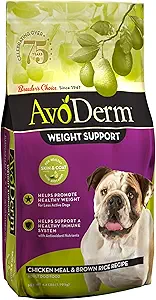
Avoderm Natural Weight Support Dry Dog Food
Our Rating: ★ ★ ★ ★ ★ 4 out of 5
Why we like it
If your bulldog tolerates chicken and needs help with weight management, this is a good option.Key Notes
This avocado-infused food supports healthy skin and coat while providing a good balance of protein and dog-friendly grains.
Since English bulldogs aren’t usually picky eaters, they can easily put on weight, especially as they age and become less active. For bulldogs that have no poultry allergy, this option from Avoderm balances weight management with high-quality nutrition. It’s also very reasonably priced. Chicken is the main source of lean protein in this food. It also contains dog-friendly grains like rice and oatmeal to balance the nutrition. Avocado and flaxseed oils provide healthy fats that are easy to digest and can improve your dog’s skin and coat. At 8-12%, it’s lower in fat than many other dog foods, but the fats they choose are high quality. The food is also enriched with probiotics and extra vitamins. The protein in this dog food is at 20%, making it on the low side for juvenile dogs, since puppies usually need 22% minimum. For an active, muscular dog, this may not be adequate, but it’s a good option for a couch potato.Pros
- Reasonably priced
- Lower in fat
- Supports skin and coat health
Cons
- Chicken-based food
- Too low in protein for puppies
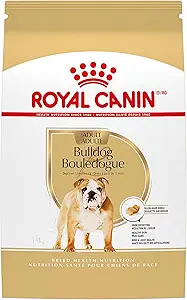
Royal Canin Bulldog Adult Dry Dog Food
Our Rating: ★ ★ ★ ★ ★ 5 out of 5
Why we like it
Specifically formulated to meet the nutritional needs of bulldogs.Key Notes
Kibble size and shape are designed for brachycephalic jaws, supports healthy digestion, and contains nutrients to help maintain muscle mass.
This Royal Canin Bulldog Adult Dry Dog Food is a good option for bulldog owners looking for a kibble specifically designed for their breed's short face and digestive system. The food contains nutrients to support muscle mass without weight gain, which is important for bulldogs, as they are prone to obesity. However, keep in mind that this dog food is expensive compared to some other options, and some dogs don't like the taste.Pros
- Breed specific
- Kibble size and shape are designed for brachycephalic dogs
- Supports healthy digestion
- Contains nutrients to help maintain muscle mass
Cons
- Some dogs may not like the taste
- Fairly expensive
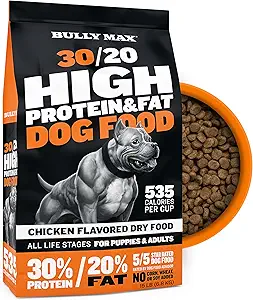
Bully Max High Performance Premium Dry Dog Food
Our Rating: ★ ★ ★ ★ ★ 4.5 out of 5
Why we like it
It has a high protein content, ideal for muscle development in active bulldogs.Key Notes
Very high protein content (30%), grain-inclusive formula, targets rapid muscle growth.
The Bully Max High Performance is a dog food that goes all in on protein content, specifically aiming to support muscle development in bulldogs. This can be particularly good for active bulldogs or those needing to maintain muscle mass. However, the high protein content might not be good for all bulldogs, especially senior dogs or those with skin issues, which is something to keep in mind. The grain-inclusive formula could also be a concern for bulldogs with grain sensitivities.Pros
- Breed specific
- High protein content to support muscle growth
- Can be appealing to picky eaters due to potentially stronger flavor
- Suitable for most life stages
Cons
- Grain-inclusive formula could irritate bulldogs with grain sensitivities
- May not be ideal for every bulldog
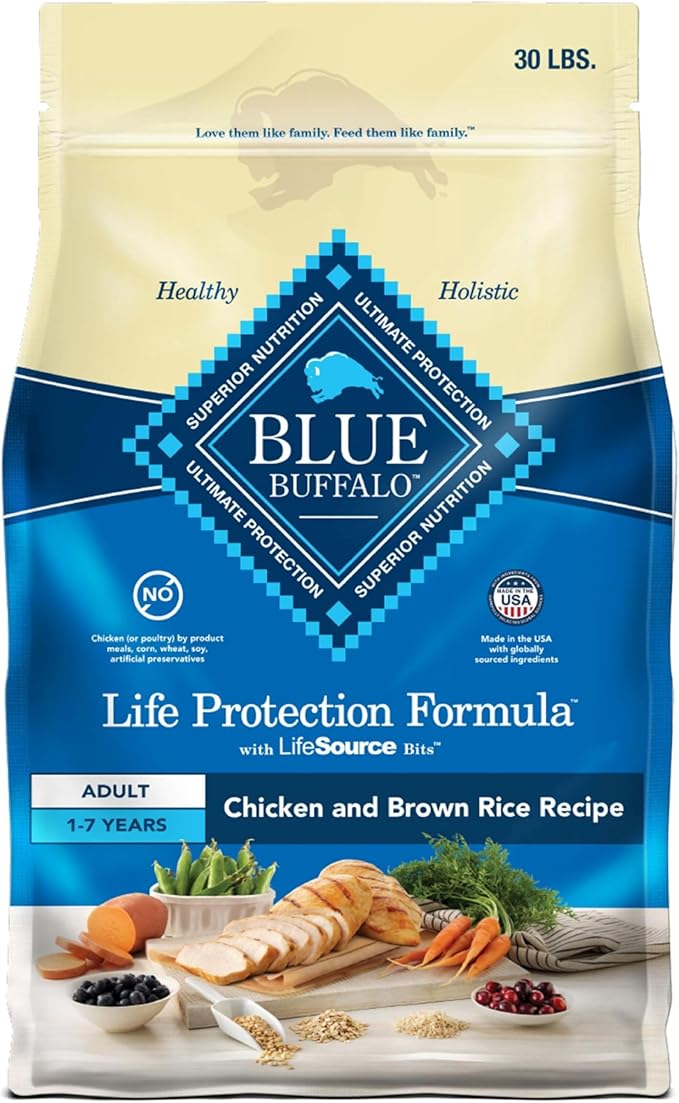
Blue Buffalo Life Protection Formula Adult Dry Dog Food
Our Rating: ★ ★ ★ ★ ★ 4.5 out of 5
Why we like it
Prioritizes natural ingredients and contains glucosamine and chondroitin to support joint health, which is important for bulldogs.Key Notes
Made with real chicken as the first ingredient, contains glucosamine and chondroitin for joint health, and features a satisfying protein content.
This formula from Blue Buffalo offers a natural ingredient-focused option for bulldogs. The inclusion of glucosamine and chondroitin can be good for these dogs because many of them are prone to joint problems. The protein content is well-suited for most adult bulldogs. While some experience digestive issues with this food, it’s generally well-received and enjoyed by most dogs.Pros
- Made with real chicken as the first ingredient
- Contains glucosamine and chondroitin to support joint health
- Moderate protein content that's suitable for most adult bulldogs
- Variety of flavor options available
- Generally well-liked by dogs
Cons
- Some bulldogs may experience digestive issues
Canidae Under the Sun Grain Free Recipe Dry Dog Food
Our Rating: ★ ★ ★ ★ ★ 4 out of 5
Why we like it
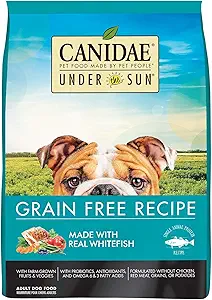
It’s a grain-free option with whitefish as the primary ingredient, potentially favorable for bulldogs with allergies.Key Notes
Grain-free formula, features whitefish as the first ingredient, contains probiotics and antioxidants for digestion and immune system support.
If your bulldog has allergies or sensitivities to common proteins like chicken or beef, Canidae Under the Sun is hands-down the way to go. The grain-free formula is another plus for bulldogs with grain sensitivities. This food also contains probiotics and antioxidants, which can benefit your bulldog's digestion and immune system. While some dogs may not be fans of the taste of whitefish, this recipe is generally well-regarded for its focus on limited ingredients and possible allergy relief.Pros
- Grain-free formula suitable for bulldogs with grain sensitivities
- Limited ingredient list with whitefish as the first ingredient, possibly helpful for allergies
- Contains probiotics and antioxidants for digestion and immune system support
Cons
- Some bulldogs may not prefer the taste of whitefish
Your Guide to Buying Dog Food for Bulldogs
Now that you have a better idea of what to look for in a dog food, let's take a closer look at some practical tips for buying and feeding your bulldog. We'll cover everything from how to introduce new food to managing common health issues like obesity and allergies.
If you’re still unsure about something related to your dog’s food, you’ll find the answer to it here.
How Can I Introduce New Food to My Bulldog Without Upsetting Their Sensitive Stomach?
Introducing new food to your bulldog gradually is the best way for them to avoid digestive upset. Start by mixing a small amount of the new food with their current food and gradually increase the proportion of the new food over a week or two. This slow transition allows your bulldog's digestive system to adjust to the new ingredients.
My Bulldog Is Overweight. What Dietary Changes Can I Make to Help Them Lose Weight?
If your bulldog is overweight, it's important to talk to your vet to determine the best course of action. They may recommend a low-calorie, high-fiber diet specifically formulated for weight loss. Reducing portion sizes and increasing activity can also help your bulldog shed those extra pounds.
My Bulldog Has Skin Allergies. Can Their Diet Be Contributing to the Problem?
Yes, food allergies are a common cause of skin issues in bulldogs. If you suspect a food allergy, consult with your veterinarian to determine the allergen. They may recommend a hypoallergenic food or a diet with limited ingredients to help manage your bulldog's allergies.
In the meantime, you can consider going for a hypoallergenic dog food as well.
How Can I Prevent My Bulldog From Begging for Food?
To prevent your bulldog from begging, you’ll have to establish a consistent feeding schedule and avoid feeding them table scraps. Be firm and don't give in to their begging, as this can reinforce the behavior. If your bulldog continues to beg, you might eventually have to talk to a dog trainer for behavior modification techniques.
How Often Should I Feed My Bulldog?
Most adult bulldogs can be fed once or twice a day. However, it's important to consider your bulldog's own needs, such as their age, activity level, and metabolism. Generally, senior bulldogs will need less food than growing, energetic ones, but this isn’t always the case.
Consult your vet to determine the best feeding schedule for your dog, taking into account its activity level, health, and life stage.
The Right Food Will Keep Your Bulldog Happy
Choosing the right dog food for your bulldog is important for their health and happiness. By keeping in mind things like food quality, allergies, calorie needs, and life stage, you can make sure you’re picking the best diet for your dog.
Look for a high-quality dog food that's specifically formulated for bulldogs while paying attention to ingredients and any special dietary needs of your dog. If you’re ever in doubt, it's always a good idea to run things by your vet before making a decision.
With a little bit of research, you can find the perfect food to keep your bulldog happy and healthy for life.