Welsh Terrier: Your Complete Guide
Welsh terriers have an unmistakable spark in their eyes. One glance, and you can tell these dogs are smart, curious, and ready to explore the world with you. Their square build, wiry coat, and bearded faces make them look like Airedales who’ve been shrunk in the wash. However, their character is anything but small.
These dogs were made for action, and you’ll see it in the way they move. Welsh terriers also have a friendly, outgoing nature that helps them bond quickly with people. Individuals and families alike enjoy their lively personality and how well they adapt to various home environments.
If you’re thinking about getting a Welsh terrier, you probably have a lot of questions about how they behave at home, how big they get, how much grooming they need, and whether they behave well with children or other pets. This guide has all the answers you need.
Table of Contents
Quick Look at the Welsh Terrier
Below is a breakdown of the Welsh terrier’s main characteristics, from their physical details to their personality and care needs.
| Weight/Height | 20 pounds and 15 inches |
| Coat Type | Coarse, wiry, medium double coat |
| Grooming Needs |  |
| Shedding |  |
| Temperament | Friendly, confident, spirited, intelligent |
| Good With Kids |  |
| Good With Other Animals | |
| Intelligence | |
| Easy to Train |  |
| Energy Level | |
| Barking Habits | |
| Lifespan | 12-15 years |
What Is the History of Welsh Terriers?
Welsh terriers are an old British breed, believed to have originated in the mountainous regions of northern Wales in the 1700s. Farmers and hunters needed a tough, fearless dog that could pursue foxes, badgers, and other vermin across rough hillsides and into their rocky dens.
The Welsh terrier fit the job perfectly. They were quick on their feet over rocky land and brave enough to not back down once the prey was cornered. Even the toughest badgers didn’t stand much of a chance against the strong front legs and jaws of these dogs.
For a long time, Welsh terriers were valued for their working ability, not their looks. It wasn’t until the 19th century that they appeared in British dog shows and were recognized as a distinct breed. They even won top honors at prestigious shows like Crufts. From there, they traveled farther afield, eventually reaching North America and other parts of the world.
What Do Welsh Terriers Look Like?

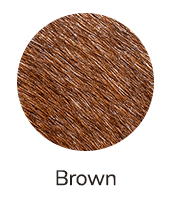


Welsh terriers are small dogs with a distinctly square frame. They’re roughly as tall as they are long, and carry themselves with a proud posture that makes them easy to spot, even in a crowd.
These dogs have an athletic body. The head is long and somewhat brick-shaped, framed by a characteristic beard and expressive eyebrows. Small, V-shaped ears fold forward neatly, and the tail is usually carried high.
Their coat is one of the defining features of a Welsh terrier. There’s a dense, wiry outer layer over a softer undercoat. Most Welshies are black and tan (deep red) or black, grizzle, and tan, with a darker saddle over the back and rich tan on the legs, chest, and face.
Some dogs can appear a little lighter or darker depending on grooming and age, and puppies are often born much darker before their adult coloring appears. Overall, they resemble a smaller version of the Airedale terrier.
What Size Is a Welsh Terrier?
Welsh terriers fall into the small-to-medium category. Adults stand about 15-15.5 inches tall and weigh 16-22 pounds. Males often sit toward the upper end of that weight range, while females may be a little lighter and more petite.
Since they were bred as working dogs, Welsh terriers are pretty solid for their size, with well-developed muscles and the stamina to stay active throughout the day. Their compact build can sometimes make people think of them as lapdogs, but they’re much stronger and more energetic than they look.
What Is a Welsh Terrier’s Coat Type and Length?
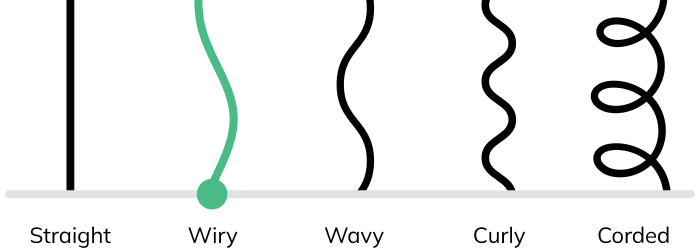
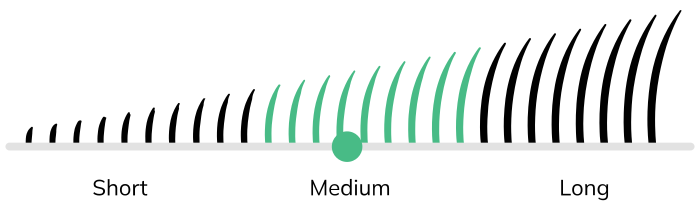
The Welsh terrier’s double coat is short to medium in length, but very distinctive in texture. The outer layer is harsh, wiry, and weather-resistant to protect the dog from rain, mud, and underbrush while working outdoors. Beneath that, a softer undercoat acts as insulation in cool, damp climates.
When properly maintained, the coat lies close to the body and should feel somewhat rough rather than fluffy. You’ll also notice thicker, bushier hair around the muzzle, eyebrows, and legs, which gives the breed its signature bearded look.
Breed enthusiasts often prefer hand-stripping (using fingers or a special knife to remove dead hairs) to keep the coat’s crisp texture and rich color. Some pet owners may choose clipping instead, which softens the coat and is quicker to manage.
What Is a Welsh Terrier’s Temperament?
According to the AKC breed standards, the Welsh terrier personality is described as happy, bold, and lively. These dogs are generally friendly with people, affectionate with their families, and enthusiastic about every little thing in life. They have a lot of confidence, and they enjoy exploring new places with their trusted humans.
These dogs also have classic terrier traits. They’re independent, determined, and sometimes a little too sure of themselves. If they see something interesting (a squirrel, a strange dog, or a new smell), they’re likely to investigate with gusto.
It’s important to establish clear boundaries and train your Welshie early to prevent their determination from turning into stubbornness. With positive guidance, you can help them grow into a polite, confident, and well-behaved companion who loves to play, learn, and get involved in family life.
Are Welsh Terriers Good With Kids?
Many families find Welsh terriers to be great companions for children of all ages. However, the relationship works best when they’re raised together.
Since they’re not as fragile as some toy breeds, most Welshies enjoy active play with school-aged children and teenagers who can engage them appropriately.
For toddlers and preschoolers, supervision is important as these dogs may become overwhelmed by sudden movements or rough handling. They may also accidentally knock over small children during excited play.
Early training in bite inhibition, gentle play, and polite manners, combined with teaching kids not to pull on fur or disturb a resting dog, goes a long way toward keeping the relationship positive.
Are Welsh Terriers Good With Other Animals?
Welsh terriers can live peacefully with other animals, but it depends on how they’ve been socialized and introduced.
They can be very friendly and playful with other dogs when raised alongside them. They enjoy playing with their canine friends at home as well as going on group walks or visiting dog parks. However, their confident terrier nature means they may not always back down if challenged, so supervision and ongoing training are a must in multi-dog households.
With cats, the answer depends on early experiences. A confident, dog-savvy cat can usually live peacefully with this dog, especially if the boundaries are clear. One that keeps running may trigger the Welshie’s prey drive.
Smaller animals, such as rabbits, guinea pigs, hamsters, and backyard chickens, also awaken their strong prey drive. Even the sweetest Welsh terrier may see small furry animals as something to hunt rather than cuddle. You’ll have to use a leash and fenced areas to keep them separate.
Are Welsh Terriers Aggressive?
Aggression isn’t a prominent trait of this breed. Welsh terriers are best described as spirited and self-assured. They were bred to face down tough quarry underground. They’re naturally brave and confident because of their hunting roots, but that doesn’t make them aggressive.
A well-bred, well-socialized Welsh terrier should be friendly or at least neutral toward people and manageable around other dogs.
As with any breed, problems can arise if they don’t receive proper training and socialization or if they’re encouraged to be overly protective. Resource guarding (growling over food or toys) or reactive behavior toward other dogs can develop if you don’t set boundaries early.
Fortunately, most Welsh terriers respond well to positive training that redirects their terrier intensity into sports or games.
Do Welsh Terriers Bark?
Yes, these dogs are quite vocal, which makes them great at alerting you to visitors or unusual sounds. Without proper management, however, their barking can become a problem.
A Welshie’s bark is sharp and can carry through walls. This can make it difficult for you to keep one in an apartment with strict noise rules. Your training plan will have to include helping them understand when barking is necessary and when it’s not. Providing adequate exercise and mental enrichment will also help reduce boredom barking.
Are Welsh Terriers Affectionate?
Welsh terriers are affectionate dogs, but they tend to show their love in playful ways rather than constant cuddling or staying in your lap for long periods. They usually like being petted and handled when it’s done respectfully and on their terms. What they love more is to be included in family activities, especially after they’ve burned off some energy.
These dogs may initially appear cautious or alert around new people, but proper socialization usually helps them become friendly and confident in unfamiliar situations. If you want your Welshie to warm up to someone fast, let them see how comfortable you are with that person. They’ll mirror your confidence and follow your lead.
Are Welsh Terriers Intelligent?

These dogs have sharp minds and quick reflexes, and are considered to have average to above average intelligence among terrier breeds. That’s because they’re not the robotic, ultra-biddable kind of smart. They’re more of an independent problem-solving breed that likes to decide for themselves instead of blindly following commands.
Welsh terriers are great at observing and investigating their surroundings. They can remember routines and patterns after only a few repetitions. While these dogs may not always be eager to please, they learn efficiently when training is consistent and engaging.
Are Welsh Terriers Energetic?
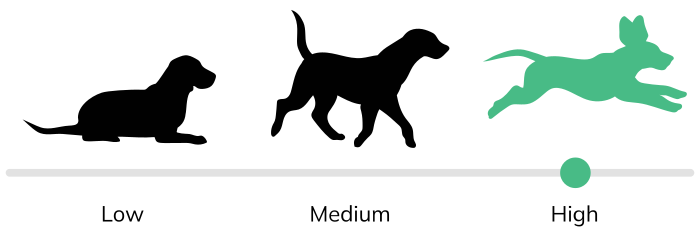
If dogs were powered by enthusiasm alone, the Welsh terrier would never need a meal. They’re high-energy dogs who wake up ready to move, explore, and get involved in whatever you’re doing. They’ll quickly teach you the importance of keeping a dog active if you want a calm home.
Since these dogs were bred to work for long periods, they have impressive stamina for their size. If they don’t get enough outlets for that energy, they can become restless, vocal, or mischievous. Planning for both physical and mental exercise is the only way to keep them happy.
Are Welsh Terriers Easy to Train?
Welsh terriers are very capable learners, but they’re not always easy to train in the way that some eager-to-please breeds are. Thanks to their independent streak, they like to test boundaries and ignore commands if they’re bored or see something more interesting.
The trick is to make training worth their while. Short sessions with fun activities and high-value rewards work best. With this approach, you can expect your dog to learn basic manners and social skills as well as complex tricks, advanced obedience patterns, and agility sequences in no time.
Are Welsh Terriers Good Watchdogs?
Welsh terriers possess many traits that contribute to good watchdog behavior, including alertness, confidence, and a strong sense of territory. They’re quick to let their owners know when something seems off. Their courage and determination give their bark a sense of authority, despite their small size.
Bravery aside, Welshies aren’t aggressive or physically defensive dogs, which limits their role to vigilance and alerting. To take full advantage of their watchdog capabilities, you’ll have to invest time in teaching them when it’s appropriate to bark. This way, they won’t overreact to every tiny sound they hear.
Are Welsh Terriers Good Service Dogs?
Welsh terriers aren’t commonly used as service dogs because of their small size and independent nature. Physical service tasks are usually better suited to larger, more biddable breeds.
Nevertheless, some Welshies may be able to recognize mood changes and perform some psychiatric service dog tasks, such as interrupting anxious behaviors. However, it depends on the individual dog’s personality, focus, and ability to remain calm in public settings.
Welsh terriers often do well in emotional support and therapy settings because of their friendly energy and strong bond with humans. They enjoy being close to their people and can bring warmth and joy to those around them. With proper training, calm exposure, and patience, they can provide meaningful emotional support.
How to Care for a Welsh Terrier?
Proper care for a Welsh terrier goes beyond basic feeding and walks. These dogs need intensive physical activity, including running, hiking, off-leash play, fetch, tug of war, scent work, and trail exploration. You can also go for agility training and barn hunt–style games a few times a week.
Make sure your yard is secure and use a leash in areas with wildlife or heavy traffic because a Welshie’s hunting instincts can kick in fast.
When it comes to mental stimulation, puzzles, hide-and-seek, food-dispensing toys, and interactive games are great for this breed. Make sure you rotate the toys and puzzle feeders to stop boredom from setting in.
Apart from this, give your Welsh terrier a comfortable bed and access to fresh water at all times. Routine vet visits, parasite prevention, and dental care are also required to keep your dog healthy.
Do You Need to Groom a Welsh Terrier?

Grooming is an integral part of Welsh terrier care. The wiry, double coat needs to be brushed at least once, if not twice, a week to keep it clean and tangle-free.
Most Welshies benefit from professional or experienced hand-stripping every 6-10 weeks to remove dead hair and maintain the coat’s texture and color. Pet owners who prefer clipping will still need regular appointments, as a clipped coat grows out and can mat if neglected, particularly in high-friction areas like the legs, face, and underarms.
Don’t forget routine chores like nail trimming, ear checks, and tooth brushing. It’s also a good idea to wipe your dog’s face after meals and outdoor adventures to prevent food or debris from building up in their beard.
Do Welsh Terriers Shed?
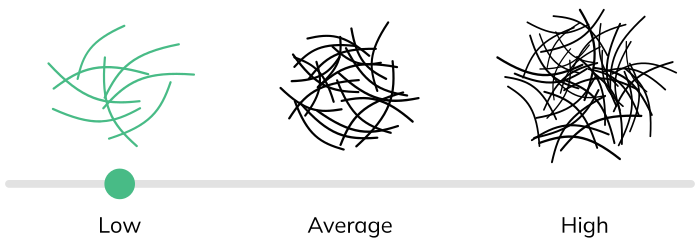
Welsh terriers don’t shed too much. Their double coat tends to hold onto dead hair until it’s removed through hand-stripping or brushing. This means you’ll generally see fewer loose hairs on clothing and furniture than with a typical smooth-coated dog.
However, these dogs aren’t truly hypoallergenic. Dander and saliva can still trigger allergies in sensitive people. If someone in your home has allergies, it’s wise to spend time around Welsh terriers before committing.
What Health Problems Do Welsh Terriers Have?
The Welsh terrier is considered a healthy breed, especially when responsibly bred. Like all breeds, they do have some health predispositions.
Commonly mentioned concerns include orthopedic conditions, such as Legg–Calve–Perthes disease in young dogs and luxating patellas (loose kneecaps). Eye issues like lens luxation and glaucoma have also been reported in the breed.
Skin allergies, ear infections (especially if ears aren’t kept clean and dry), and nail problems, such as onychodystrophy, can also show up in some dogs.
Regular vet checkups and screening tests can help catch issues before they become severe. You should also keep your dog at a healthy weight, feed a balanced diet, and provide appropriate exercise to protect their joint health and overall well-being.
How Long Do Welsh Terriers Live?
On average, a Welsh terrier’s lifespan can range from 12-15 years. Genetics, diet, exercise, and veterinary care all play a role in how long and healthy a dog’s life will be.
You can support your Welshie’s long, healthy life by focusing on preventive care. This includes maintaining a healthy weight, staying up to date on vaccines and parasite control, scheduling annual or semi-annual checkups, and addressing minor problems before they become major issues.
What Should a Welsh Terrier Eat?
Give your Welsh terrier high-quality food that matches their age, size, and activity level. Options include premium kibble, a mix of kibble and wet food, or a fresh or raw diet planned with a vet.
Welsh terriers are small but active, so it’s easy to overfeed them. Obesity can shorten their lifespan and put extra strain on their joints and organs. Look for a visible waist from above and ribs that you can feel without seeing.
Treats are fine in moderation but shouldn’t make up more than about 10% of daily calories. Always introduce new foods slowly and talk with your vet if you’re considering a diet change.
[image: https://www.123rf.com/photo_110160421_welsh-terrier-in-front-of-white-background.html alt text: Side view of a Welsh terrier showing their wiry black-and-tan coat against a white studio background.]
Is a Welsh Terrier the Right Dog for Me?
A Welsh terrier can be a wonderful addition to your life if you’re looking for a small(ish) dog with a big personality that knows when to be affectionate and when to enjoy their independence.
This breed is perfect for active individuals or families who enjoy long walks, hikes, and active play, and are ready to invest time in training and exercise.