Treeing Walker Coonhound: Your Complete Guide
The treeing Walker coonhound is a spirited, athletic, and highly skilled scent hound that has earned a loyal following among hunters and active dog lovers. Originally bred in the United States, these dogs are tireless workers in the field, capable of tracking raccoons up trees for hours at a time.
While they were developed as powerful hunting dogs, the modern treeing Walker coonhound is also a beloved companion animal, cherished for their loyal, brave, and intelligent nature. However, owning one of these highly energetic hounds requires dedication and an understanding of their unique needs.
This guide covers key features of the breed, including typical behavior, exercise needs, grooming habits, and potential health concerns. You will also find information on training, compatibility with families and other pets, and what daily life looks like with a hound that loves to follow its nose.
Table of Contents
Quick Look at the Treeing Walker Coonhound
Below is a quick glance at this special breed in terms of their physical characteristics, lifespan, temperament and grooming needs.
| Weight/Height | Weight: 50 to 70 pounds. Height: 20 to 27 inches. |
| Coat Type | Short, smooth, glossy, low-maintenance. |
| Grooming Needs |  |
| Shedding |  |
| Temperament | Friendly, energetic, intelligent, loyal, social. |
| Good With Kids |  |
| Good With Other Animals | |
| Intelligence | |
| Easy to Train | |
| Energy Level |  |
| Barking Habits | |
| Lifespan | 10 – 14 years. |
What Is the History of Treeing Walker Coonhounds?
The treeing Walker coonhound began taking shape in the American colonies during the 18th century. Early hunters needed fast, determined scent hounds that could track game across large tracts of land. English foxhounds imported by Thomas Walker in 1742 and later by George Washington in 1770 formed the base of what became known as the “Virginia hounds.”
As raccoon hunting grew more common, breeders selectively refined these hounds into quicker, more agile partners. Two major contributors were John W. Walker and George Washington Maupin. Working in Kentucky during the late 1700s and early 1800s, they focused on producing dogs with speed, stamina, and a strong trailing instinct. Their work shaped the early Walker hound line.
A major shift occurred when breeders introduced Tennessee Lead, a black-and-tan dog of unknown origin. Despite its unclear background, Tennessee Lead was exceptionally fast and accurate on scent trails. Adding him into the Walker breeding program strengthened the line’s tracking ability and sharpened the traits that define the modern treeing Walker coonhound.
Recognition came in stages. The United Kennel Club (UKC) first grouped these dogs within the English coonhound category in 1905. Over time, breeders pushed for separate classification because the Walker line behaved and worked differently from the others. In 1945, the UKC officially recognized the Treeing Walker Coonhound as its own breed. The American Kennel Club (AKC) later followed, granting full recognition in 2012.
What Do Treeing Walker Coonhounds Look Like?
Treeing Walker coonhounds have a clean, athletic build designed for long hours of movement. Their bodies are lean but muscular, giving them the power to sprint and the endurance to track scents across large areas. A deep chest supports strong lungs, and long legs help them cover ground quickly while keeping a light, efficient stride.
Their heads are symmetrical with a slightly domed skull, a straight muzzle, and wide-set dark eyes that give them a focused, alert expression. Long, pendulous ears hang close to the cheeks. These ears help carry scent toward the nose, a valuable trait in a hound meant for tracking.
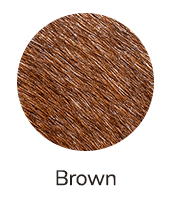
Their coats are smooth, short, and dense enough to protect them from brush in the field. Most treeing Walker coonhounds appear in a tricolor pattern of white, black, and tan. Some may have more white, some may appear mostly black with tan points, and others carry evenly balanced patches of all three colors.


What Size Is a Treeing Walker Coonhound?
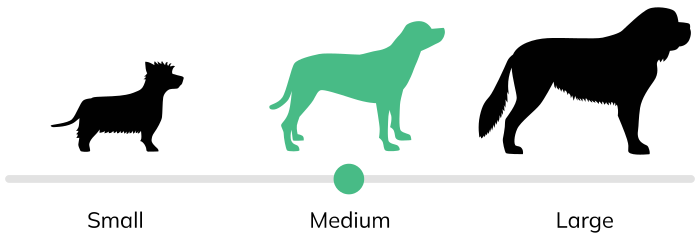
Treeing Walker coonhounds are medium to large hounds with a size that supports both speed and endurance. Most adults fall within a fairly consistent range, though males tend to be slightly larger than females. They are built for endurance and speed rather than bulk.
Males usually stand 22 to 27 inches tall at the shoulder and weigh around 55 to 70 pounds. Females generally measure 20 to 25 inches tall and weigh about 50 to 65 pounds. Their height gives them long, efficient strides, while their lighter build helps them move quickly without losing stamina during long tracking sessions.
What Is a Treeing Walker Coonhounds Coat Type and Length?
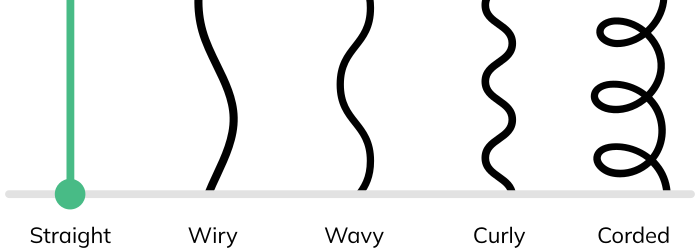
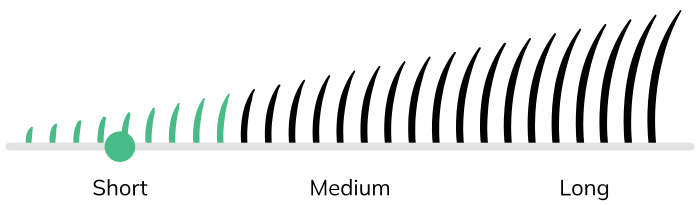
Treeing Walker coonhounds have a short, smooth coat that lies close to the body. The texture feels sleek and firm rather than soft or fluffy, which helps protect the dog when moving through brush or wooded areas. Because the coat is so streamlined, it dries quickly and rarely traps debris.
The length is uniformly short across the body, including the ears, legs, and tail. This makes grooming simple and keeps the dog comfortable during active outdoor work. The coat’s natural shine becomes more noticeable with regular brushing, but even minimal upkeep keeps it looking healthy.
What Is a Treeing Walker Coonhound’s Temperament?
When you consider the treeing Walker coonhound personality, expect a dog that is eager to engage in family activities and is constantly alert to its surroundings. This breed is full of enthusiasm, intelligence, and loyalty, making them outstanding companions for the right owner. They thrive on human interaction and generally possess a cheerful and friendly disposition.
However, their hunting heritage means they come equipped with an intense drive and a powerful scenting instinct. This focus on scents can translate into an independent streak, as a good smell is far more compelling than a human command. They need consistent mental and physical stimulation to prevent boredom, which can lead to destructive behaviors.
Are Treeing Walker Coonhounds Good With Kids?
Treeing Walker coonhounds are typically wonderful with children. Their patient and friendly nature makes them a strong fit for families, and their energetic spirit allows them to keep up with active kids who enjoy play. Many settle comfortably into busy households and appreciate the constant interaction that family life provides.
Supervision is still important, especially with very young children. Guiding kids on how to approach and handle the dog helps create safe and positive interactions. Early socialization and consistent training also support good manners, making the dog more confident and predictable in family settings.
Are Treeing Walker Coonhounds Good With Other Animals?
Treeing Walker coonhounds usually get along well with other dogs. They were bred to work in packs, so they tend to accept canine companions easily and often enjoy having another dog to play or explore with. Slow, structured introductions help them settle in even faster.
Smaller pets require much more caution. This breed has a naturally strong prey drive, which comes from generations of hunting work. Cats, rabbits, and other small animals may trigger chasing behavior, especially if the dog has not been raised around them or has not received positive behavioral training that teaches calm responses.
Even with good socialization, unfamiliar small animals can still pose a challenge. Some treeing Walker coonhounds can learn to live peacefully with a household cat, but they should never be left unsupervised with new or fast-moving pets. This careful management keeps both the dog and other animals safe.
Are Treeing Walker Coonhounds Aggressive?
Aggression is not typical for the treeing Walker coonhound. Most members of this breed are cheerful, sociable, and non-territorial. They tend to greet people with curiosity rather than suspicion and often form strong, affectionate bonds with the families who care for them.
That said, any dog can develop behavioral issues if they lack structure or socialization. Treeing Walker coonhounds have very high energy needs, so limited exercise can create frustration that may appear as unwanted behavior. Consistent training, early exposure to new experiences, and plenty of daily activity help ensure they grow into friendly and well-adjusted companions.
Do Treeing Walker Coonhounds Bark?
If you are considering a treeing Walker coonhound, be prepared for noise, as this breed has a high tendency to vocalize. They were bred to “speak” with a loud, distinctive bark or “chop” that alerts hunters when they have treed their prey.
This love of barking means they aren’t ideal candidates for apartment living or homes with strict noise restrictions. They will use their voice to express excitement, boredom, or, most commonly, to announce that they have picked up an interesting scent. Consistent training and addressing the root cause of the barking (usually boredom or loneliness) are key to managing this trait.
Are Treeing Walker Coonhounds Affectionate?
Treeing Walker coonhounds are very affectionate dogs, especially with the people they trust. They enjoy being close to their families and often seek physical contact through gentle leaning, cuddling, or curling up nearby after a long day of activity. Their social nature makes them eager to bond, and they tend to thrive in homes where they receive regular interaction.
They warm up to strangers fairly quickly as well. While they may show initial curiosity or alertness, they typically shift into a friendly and welcoming attitude once they sense a positive environment. Their affectionate streak, paired with their energetic personality, makes them engaging companions for households that enjoy giving their dogs plenty of attention.
Are Treeing Walker Coonhounds Intelligent?
Treeing Walker Coonhounds are highly intelligent, curious, and alert dogs. This high level of smarts is essential for a breed designed for the independent and complex task of hunting, where they must track scents, navigate terrain, and make decisions on their own without constant guidance. This intelligence means they quickly grasp new commands and concepts.
It’s crucial to understand that their intelligence often pairs with independent thinking. While they can learn commands quickly, they may choose to follow their nose instead of repeating a cue they find less interesting. However, their natural intuition becomes one of their best qualities with the right approach.

Are Treeing Walker Coonhounds Energetic?
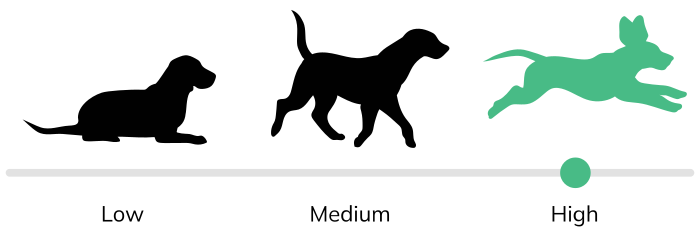
Treeing Walker coonhounds are an extremely high-energy breed, requiring significant and consistent exercise. Their breeding history means they have the stamina to run and work for hours on end. They need multiple long, brisk walks or runs daily, combined with vigorous playtime in a securely fenced yard.
If their immense energy needs are not met, they are prone to boredom, which often manifests as destructive behavior around the house, such as chewing, digging, or excessive vocalization. They are best suited for active owners who enjoy jogging, hiking, or simply dedicating substantial time each day to physical activity.
Are Treeing Walker Coonhounds Easy to Train?
Treeing Walker coonhounds respond well to training when the approach is positive and engaging. They are intelligent and capable learners, but their strong scent drive can make them easily distracted during structured sessions. Training works best when it taps into their natural interests, such as using treats, toys, or scent-based rewards.
Short, consistent sessions help them stay focused. Because they sometimes follow their instincts over commands, patience is important. Nonetheless, they are excellent candidates for agility training, complex trick learning, and advanced scent work, where their intelligence and natural drive are channeled into fun activities.
Are Treeing Walker Coonhounds Good Watchdogs?
Treeing Walker coonhounds are alert and attentive, which allows them to notice changes in their environment quickly. They often vocalize when something unfamiliar catches their attention, so they can be effective at letting you know when someone approaches the home. Their sharp hearing and natural tendency to announce activity make them reliable early warning dogs.
However, they are not naturally protective or territorial. Most treeing Walker coonhounds greet new people with friendliness rather than suspicion. While they will alert you to movement or noise, they are not typically suited for duties that require guarding or defensive behavior. Their strengths lie in awareness, communication, and a willingness to stay connected with their family.
Are Treeing Walker Coonhounds Good Service Dogs?
Treeing Walker coonhounds can learn a wide range of skills, but they are not commonly chosen as service dogs. Their strong prey drive and focus on outdoor scents can make it challenging for them to maintain long periods of consistent attention in public settings. For tasks that require high reliability in busy environments, their instincts may work against them.
Still, some can excel in supportive roles. Their affectionate nature and eagerness to bond can make them suitable emotional support animals (ESAs) for people who benefit from companionship and routine. They also respond well to positive reinforcement, which helps them learn basic behaviors and calming cues.
How to Care for a Treeing Walker Coonhound?
Caring for a treeing Walker coonhound involves providing plenty of physical activity, consistent training, and a routine supporting their body and mind. These dogs thrive when they can explore, exercise, and spend time with their families. A predictable schedule with opportunities to use their scenting skills helps them stay balanced and content.
Do You Need to Groom a Treeing Walker Coonhound?
Grooming needs for the treeing Walker coonhound are generally low. Their short, smooth coat is easy to maintain and does not require professional clipping. A quick weekly brushing with a rubber curry brush is typically enough to remove loose hair and keep their coat shiny.
However, attention to their floppy ears is critical. Due to their structure, their ears trap moisture and debris, making them prone to infections. They should be checked and cleaned weekly.

Do Treeing Walker Coonhounds Shed?
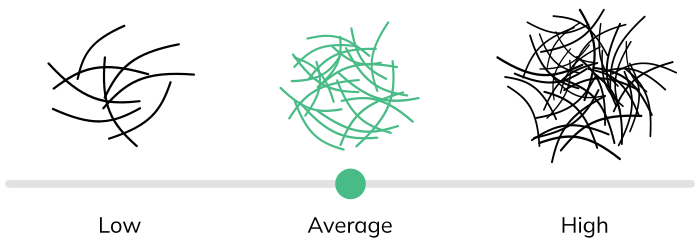
Treeing Walker Coonhounds are considered average shedders, mostly due to their short hair. They shed a consistent, moderate amount year-round, which increases seasonally, usually in the spring and fall.
Also, note that they aren’t hypoallergenic. Regular, weekly brushing helps manage loose hair and minimizes the amount of hair left around the house.
What Health Problems Do Treeing Walker Coonhounds Have?
Treeing Walker coonhounds are generally healthy dogs, but like all breeds, they can be prone to certain genetic and acquired health issues. This includes ailments like hip dysplasia, ear infections, progressive retinal atrophy (PRA), and bloat (Gastric Dilatation-Volvulus or GDV).
Preventing these issues involves obtaining a dog from a reputable breeder who screens for genetic diseases, maintaining a healthy weight through diet and exercise, and scheduling regular veterinary check-ups.
How Long Do Treeing Walker Coonhounds Live?
The average treeing Walker coonhound lifespan is approximately 10 to 14 years. Consistent veterinary care, proper nutrition, and meeting their high demands for daily exercise are the best ways to ensure a long and healthy life for your dog.
What Should a Treeing Walker Coonhound Eat?
A treeing Walker coonhound should be fed a high-quality, balanced diet formulated for medium to large, high-energy working breeds. The amount they need can vary significantly based on their age, size, and activity level. Since this breed is highly energetic, they typically require more calories than an average dog of the same weight.
Is a Treeing Walker Coonhound the Right Dog for Me?
A treeing Walker coonhound is a great choice for people who enjoy an active, engaging companion. This breed thrives with owners who can provide daily exercise, outdoor exploration, and structured training. Families who love hiking, long walks, or scent-based games often find this breed especially rewarding.
They may not suit households that prefer quiet routines or low-activity pets. Their vocal nature and high energy can be challenging without enough stimulation. With the right environment, however, a treeing Walker coonhound becomes a loyal, affectionate, and enthusiastic companion that brings warmth and excitement to daily life.