Swiss Mountain Dog: Your Complete Guide
The Swiss mountain dog (officially the greater Swiss mountain dog) is one of Switzerland’s mountain dogs, as the breed name makes it clear. The other three are the Bernese mountain dog, the Entlebucher mountain dog, and the Appenzeller sennenhund. Out of all these breeds, the Swiss mountain dog shares a close resemblance to the Bernese mountain dog the most in terms of their appearance, thanks to both being two of the largest.
However, shortly known as Swissies, these dogs are considered to be the hardiest compared to other Swiss mountain dog breeds, not only due to their large size that earned them the “greater” name, but also the protective streak that made them renowned guardians in the Swiss Alps.
While these dogs share similar traits with other Swiss mountain dog breeds, Swissies have unique characteristics that everyone interested in getting one should know. Continue reading this Dog Academy breed guide to learn everything there is to know about the Swiss mountain dog. We will cover the breed’s size, coat type, temperament, intelligence, trainability, grooming needs, health, and more.
Table of Contents
Quick Look at the Swiss Mountain Dog
Here’s a quick look at the Swiss mountain dog. You will find a detailed explanation of each point in the coming sections below.
| Weight/Height | 85-140 pounds / 24-29 inches |
| Coat Type | Short, smooth coat |
| Grooming Needs |  |
| Shedding | |
| Temperament | Affectionate, work-oriented, loyal, intelligent |
| Good With Kids |  |
| Good With Other Animals | |
| Intelligence | |
| Easy to Train | |
| Energy Level | |
| Barking Habits | |
| Lifespan | 8-11 years |
What Is the History of Swiss Mountain Dogs?
Swiss mountain dogs are not only the largest of all the Swiss mountain dog breeds but also the oldest. The history of these dogs goes as far back as 2,000 years, likely as a descendant of mastiff-type dogs brought into the Swiss Alps by Roman soldiers. These dogs were mixed in with the local dogs kept by Swiss farmers to have the Swiss mountain dog we have today.
As for what they were utilized for, Swiss mountain dogs were all-purpose dogs that were valued for their strength, large size, endurance, and, most importantly, reliability. They pulled carts full of dairy products, protected farms and livestock, and served as drovers to move cattle between pastures.
However, with industrialization, the need for Swiss mountain dogs was greatly reduced, and the numbers of true Swissies declined to the point of extinction in the 1800s. Fortunately for us, the Swiss mountain dog was rediscovered in the early 20th century, and efforts were made to revive the breed. In just a few decades following their rediscovery, there was already a healthy population of Swiss mountain dogs.
There still isn’t a big need for working dogs in the Swiss Alps, but the Swiss mountain dog has global recognition, though they aren’t as popular as their close cousin, the Bernese mountain dog. Swissies are currently the 82nd most popular dog breed in the United States, according to the American Kennel Club’s most popular dog breeds list.
What Do Swiss Mountain Dogs Look Like?



The Swiss mountain dog has the same color as the other mountain dog breeds from Switzerland. They have a clearly defined tricolor coat that’s symmetrical and easy to recognize at a distance, though the Swissies that are on the lighter end of the scale can easily be mistaken for other Swiss mountain dog breeds.
When it comes to constructing the coat, black is the base color with red markings above the eyes, cheeks, sides of the chest, and legs. The white covers the majority of the muzzle, chest, parts of the neck, and sometimes the feet. While this is the color that a Swissie should appear according to the AKC’s breed standards, they can also come in red and white in addition to blue, white, and tan colors.
What Size Is a Swiss Mountain Dog?
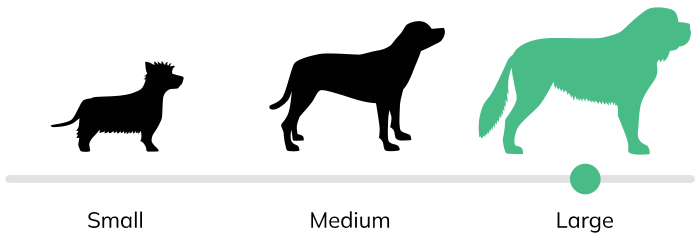
The “greater” in the Swiss mountain dog’s name is a testament to this breed’s size. They are the largest of all the Swiss mountain dog breeds, with females weighing between 85 and 110 pounds and standing 24 to 27 inches tall at the shoulder. Males, on the other hand, can reach an impressive 115 to 140 pounds in weight and 26 to 29 inches in height.
What Is a Swiss Mountain Dog’s Coat Type and Length?

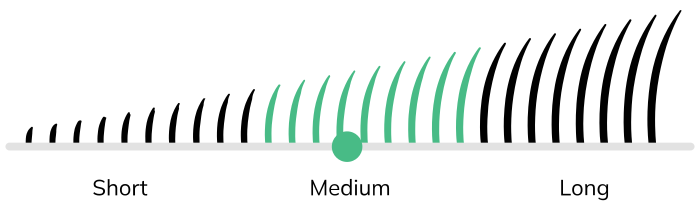
The Swiss mountain dog has a short, smooth coat, much like the Entlebucher mountain dog and the Appenzeller sennenhund. It is a working dog’s coat with a fairly thick undercoat that enables them to withstand cold weather. The coat also naturally repels water and dirt, making it low-maintenance. We will cover their exact grooming needs in the coming parts below.
What Is a Swiss Mountain Dog’s Temperament?
The Swiss mountain dog has an interesting temperament. While the love language of many protective dog breeds is to guard and serve, Swiss mountain dogs are the lovey-dovey type that enjoys receiving and giving kisses and cuddles more than anything. They love being at the center of attention and getting all the affection they can get.
However, there’s more to the personality traits of these dogs. You will discover more about the Swiss mountain dog’s temperament in terms of their relationship with kids and other animals, tendency to act aggressively, barking habits, and more on their affectionate side.
Are Swiss Mountain Dogs Good With Kids?
The Swiss mountain dog is considered to be one of the best large dog breeds for families, thanks to their tendency to stay calm around children and affectionate nature. They are also emotionally stable and slow to anger, which makes them tolerant of many things that children might do. Swissies also bond strongly with children in the family and do equally well with both quiet and active children.
Even though these are fantastic remarks about the Swiss mountain dog’s compatibility with children, an adult’s supervision is still essential, especially if you have young children. The sheer size of this breed alone requires close supervision to ensure they aren’t a risk to young children.
Are Swiss Mountain Dogs Good With Other Animals?
Swiss mountain dogs generally do well with other dogs. With proper socialization and training, owners shouldn’t have worries about their Swissies getting along with even dogs they meet during walks. However, note that some can have same-sex aggression, which can also be managed with socialization and training.
Swiss mountain dogs don’t have a high prey drive, so you won’t need to be concerned with their behavior around smaller pets like cats and guinea pigs. They can coexist with them peacefully, though their large size can be a problem, requiring supervision around smaller animals, just as they do with young children.
Are Swiss Mountain Dogs Aggressive?
Swiss mountain dogs aren’t aggressive at all. These dogs are naturally protective but well-balanced. As long as you provide lots of opportunities for socialization and training to a Swiss mountain dog, aggression isn’t going to be an issue.
Despite this, note that some Swiss mountain dogs may be more prone to certain aggressive acts, like guarding resources or overly territorial behavior in certain parts of the home. It is essential to work with these dogs gently during training to ensure their instincts are managed in the best way possible.
Do Swiss Mountain Dogs Bark?
Swissies are average barkers. We can’t say that they bark a lot, but saying that they are quiet would also be an understatement. They bark when they see a need for it, like a stranger approaching their territory or something unusual happening.
However, Swiss mountain dogs have a very deep, loud bark. Even though they don’t bark too much, how loud their bark is can be a little too much for some. Keep this in mind if you live somewhere with noise restrictions or have neighbors living close by.
Are Swiss Mountain Dogs Affectionate?
Swiss mountain dogs are loving guard dogs that enjoy showing and receiving affection from their family members. They tend to approach everyone equally, so they will demand pets and cuddles from anyone without being picky. Despite their large size, they can act like lap dogs, which is something that owners should avoid allowing their Swissies to do during puppyhood. Otherwise, you may end up with a 140-pound dog that isn’t aware of their size.
Swissies also warm up to new people quickly (for a guard dog). If you have guests coming over often, this can be a good trait, as they will likely start wagging their tail after seeing them a few times.
Are Swiss Mountain Dogs Intelligent?

As you can expect from a working dog that kept various titles to serve their owners, Swiss mountain dogs are highly intelligent and capable dogs. They are adaptable dogs that can learn a wide range of commands without much effort, though their trainability is greatly impacted by the method. We cover their trainability in detail below.
The intelligence of the Swiss mountain dog requires a great amount of mental stimulation to satisfy. They can be quick to get bored with their routine and look for alternative ways to satisfy their curious minds. Oftentimes, this results in behavioral issues like excessive barking and destructive acts. If you’re interested in getting a Swiss mountain dog, be prepared to provide the mental enrichment these dogs need.
Are Swiss Mountain Dogs Energetic?
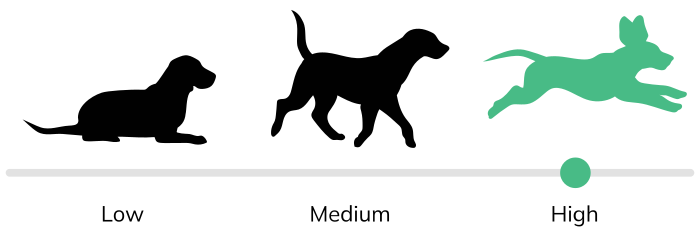
Swissies are hardworking dogs with incredible stamina despite their large size. They are big bundles of energy and can work by the owner’s side for hours on end. Anyone planning to get a Swiss mountain dog should be ready to provide the exercise these dogs need, which can be a little too much, even for people who lead moderately-active lives.
Swissies should be walked for at least an hour a day with some playtime, mentally enriching activities, and socialization incorporated. Like every dog, a lack of exercise can lead to behavioral issues, which can be more challenging to handle with these dogs than others due to their size and strength. Along with mental stimulation, exercise is an important factor to consider with these dogs.
Are Swiss Mountain Dogs Easy to Train?
The work-oriented nature of the Swiss mountain dog, along with their high intelligence, makes these dogs capable learners for any task you throw their way. They can easily learn complicated tasks, provided you take the right training approach with Swissies, which is anything that follows reward-based methods. Despite their hardy nature, they have a sensitive side that can make them lose interest in training too quickly.
Are Swiss Mountain Dogs Good Watchdogs?
Swiss mountain dogs were utilized for this very purpose for centuries, so it is no doubt that they make effective watchdogs. Even though they may have a tendency to bark more than your average dog, their physical capabilities and territorial nature mean that they can be more than just watchdogs and also become guardian dogs with little to no training. For these reasons, Swissies are amazing if you need a dog to protect your property.
Are Swiss Mountain Dogs Good Service Dogs?
Swissies certainly have the intelligence, work ethic, and loyalty service dog needs, but their protective nature can get in the way of them from becoming effective service dogs. They can be too wary around strangers, which means that they can switch from a service dog to a protection dog in different public situations due to their strong protective instincts.
However, individual temperament plays an important role here, as some Swiss mountain dogs are less protective than others and can be quite sociable around strangers with an upbringing that focuses on interactions with unfamiliar people. These Swissies can at least be tried for service dog work.
How to Care for a Swiss Mountain Dog?
We’ve shared the Swiss mountain dog’s care needs as far as training, socialization, exercise, and mental stimulation are concerned. There are also other things to keep in mind about the Swiss mountain dog’s care needs in terms of grooming, feeding, and health. Here’s a quick overview of these to provide you with a full picture of what it is like to be a Swiss mountain dog owner.
Do You Need to Groom a Swiss Mountain Dog?

Swissies need grooming like every other dog breed. They should be brushed weekly using a rubber grooming mitt to remove dead hair and keep their coat in pristine condition. Although they aren’t prone to mats or tangles with their short coats, regular brushing is still a requirement to keep the coat of this breed at its best.
In addition to these, owners should also meet the basic grooming needs of their Swiss mountain dogs, such as nail trimming, dental care, and ear cleaning.
Do Swiss Mountain Dogs Shed?

The Swiss mountain dog is a dog that can endure the fairly harsh winters of the Swiss Alps, thanks to their moderately thick undercoat that sheds an average amount year-round. While regular brushing can help manage shedding, they may need deshedding treatments during seasonal changes. This means you may need to take them to a groomer two to three times a year for this purpose.
What Health Problems Do Swiss Mountain Dogs Have?
Swissies aren’t prone to developing breed-specific health issues. They are more at risk of typical large dog health problems like hip and elbow dysplasia, joint problems, and other orthopedic conditions, along with bloat, which can be life-threatening. In females, some bloodlines can be at risk of urinary incontinence, a condition that’s more prevalent among older Swiss mountain dogs.
With proper care and routine vet visits, you can help your Swiss mountain dog avoid these health problems or at least manage them without affecting their quality of life significantly.
How Long Do Swiss Mountain Dogs Live?
The lifespan for Swissies is between 8 and 11 years, which is around the average for other Swiss mountain dog breeds.
What Should a Swiss Mountain Dog Eat?
A wide range of diets is ideal for Swiss mountain dogs, from commercially available dog food to homemade diets to even feeding them raw. While most dog food formulated for large and active dog breeds is great for Swissies, any homemade or raw diet must be carefully balanced with the help of a qualified veterinarian or an animal nutritionist. Otherwise, they can be at risk of various health conditions related to malnutrition.
Is a Swiss Mountain Dog the Right Dog for Me?
The Swiss mountain dog is the right dog for you if you’re looking for a large and affectionate yet just as protective and loyal dog. However, you must have the experience that matches what these dogs require. If you’re not the natural human leader that these dogs seek, a Swiss mountain dog can quickly become too difficult to manage, even if you dedicate long hours to socialization and training.
Before getting a Swiss mountain dog, be sure that you have adequate experience with similar dog breeds. If you do, then you will be rewarded with a cuddly and affectionate guardian ready to serve you and your family.