Komondor: Your Complete Guide
The Komondor is a large breed initially developed to be a protective flock dog. They have an athletic, robust physique and are particularly famous for their unique white corded fur, which is tough in texture and naturally cascades down all over their body. Fortunately, the Komondor’s personality isn’t as tough as their coat.
They’re a proud, gentle giant who loves nothing more than pleasing their owners.
If you’re considering welcoming a Komondor into your home (and heart), it’s crucial to learn about their care needs and the level of commitment this breed requires. Purposefully bred for work, they fare best with those who can give them a job and lots of exercise and attention each day.
They also need a family that has the space to accommodate them and can effectively manage their large size.
Below, we’ll help you figure out whether the Komondor is the right breed for you. We’ll cover the basics, including what they look like and their history, as well as what it takes to give them the life they rightfully deserve.
Table of Contents
Quick Look at the Komondor
Below is a quick glance at this special breed in terms of their physical characteristics, lifespan, temperament, and grooming needs.
| Weight/Height | At least 25.5 inches tall, weighing 80 pounds or more |
| Coat Type | Long, corded double coat |
| Grooming Needs |  |
| Shedding |  |
| Temperament | Loyal, protective, intelligent, and alert |
| Good With Kids |  |
| Good With Other Animals |  |
| Intelligence | |
| Easy to Train | |
| Energy Level | |
| Barking Habits |  |
| Lifespan | 10 to 12 years |
What Is the History of Komondorok?
The Komondor is a relatively rare ancient breed whose origins can be traced back to Hungary many centuries ago. They are thought to have descended from Caucasian shepherds and were selectively bred to protect flocks of sheep from wild predators like coyotes and wolves.
Their famous white corded fur isn’t just for looks; it also served a purpose. It helped them to blend in among the sheep and catch any predators they encountered on the job. Its thick, dense nature also acted as armor and protected their skin from wild animal bites, rough terrain, and extreme weather.
Over the years, Komondoroks built a (well-deserved) reputation for being some of the best livestock guardian dogs around. Their tough coats, protective instincts, and courageous natures have allowed them to go on to excel in many different roles. The American Kennel Club (AKC) recognized the Komondor as a breed in 1937.
What Do Komondorok Look Like?
The Komondor is a large, powerful dog with a deep chest, wide muzzle, and muscular hindquarters. Despite their imposing physique, they are agile and light on their feet — a quality that allowed them to stealthily surprise predators and keep flocks safe.
The Komondor’s head is relatively large in proportion to their overall build. They also have a well-arched neck and pendant-shaped ears. Of course, as we’ve touched on already, the Komondor’s most defining physical characteristic is their white, corded coat.
Other colors are not accepted by the AKC’s official breed standard, though puppies may have some cream or buff.

What Size Is a Komondor?
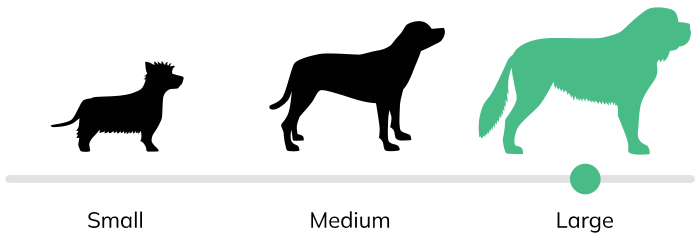
The Komondor is a large breed that weighs at least 80 pounds or more in adulthood. Genetic and lifestyle factors can both influence the Komondor’s size, though in general, you should expect males to be larger than females.
Males usually stand at least 27.5 inches at the withers and weigh 100 pounds or more, while females stand around 25.5 inches tall and weigh between 80 and 100 pounds on average.
What Is a Komondor’s Coat Type and Length?
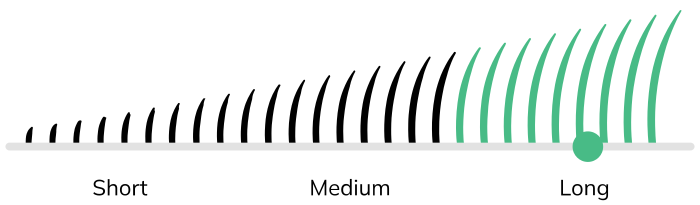
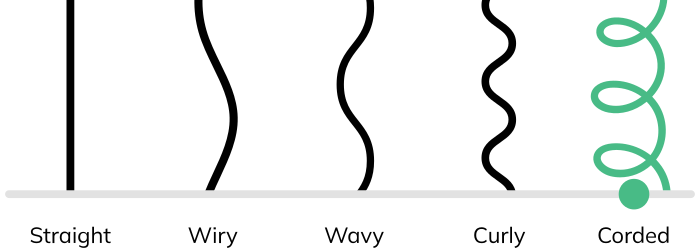
The Komondor has a protective double coat. Their top coat consists of coarse, long hairs, while the undercoat is made of dense, soft, and woolly fur. These layers naturally cling and attach together as they grow, leading to the formation of the strong, heavy cords that are a hallmark of the breed. These cords will need to be maintained with care to ensure no painful mats occur.
What Is a Komondor’s Temperament?
The Komondor has a long history as a flock dog, and many of the personality traits seen today in the breed are a result of this lineage. You can expect them to be courageous, devoted, and alert, as well as fiercely protective of their family.
The Komonor has a strong will and isn’t afraid to follow their instincts. While this quality means they’re intuitive and able to react quickly, it can potentially manifest as stubbornness. They require a firm, confident leader who can maintain consistent boundaries and commit to regular training.
Despite their independent streak, Komondorok are generally people-oriented dogs who see their owners as their whole world. They can experience separation anxiety if left alone for extended periods, which can lead to destructive, unruly behavior.
Are Komondorok Good With Kids?
Komondorok are faithful and patient with kids of all ages. However, they’re best suited to families with older children who understand how to respectfully handle them. Their large size and protective, vigilant nature can be overwhelming for small children. Komondorok can also be boisterous during play, which can potentially lead to accidental knocks and injuries.
No matter your kids’ ages or experience with animals, supervision is always essential to ensure gentle, healthy interactions between them and your Komondor.
Are Komondorok Good With Other Animals?
Komondorok can live happily with other dogs as long as they’ve been well-socialized, and ideally, raised together with them. However, they can be standoffish and wary around other dogs they don’t consider part of their family.
It’s best to avoid taking your Komondor to off-leash dog parks and to stick to quieter, more remote walking routes. You should also always supervise your Komondor’s interactions with other dogs, no matter how familiar they are with each other.
The Komondor isn’t particularly known to have a high prey drive, and they can often adapt to households with small pets like cats. They’ll generally get along well if introduced together in a positive and gradual manner. Just be mindful that their large size and energetic nature can be overwhelming and potentially lead to injuries, so again, close supervision is a must.
Are Komondorok Aggressive?
Komondorok were bred to be protective livestock guardian dogs. While they aren’t ever likely to be aggressive toward those they form strong bonds with, their vigilant natures can lead them to be standoffish around strangers and other animals. They may growl, snap, or lash out, particularly if they feel threatened.
The Komondor’s large, robust build also means that aggressive behavior can have potentially dangerous consequences. That’s why it’s crucial you begin their training and socialization as early as possible. This will help to ensure they grow into a well-adjusted adult whose vigilant side stays at a manageable, healthy level.
Do Komondorok Bark?
Like most livestock guardian breeds, Komondorok are vocal dogs and will often bark to alert their owners to passersby, unfamiliar animals, strange noises, and practically anything that catches their attention.
While this makes them fantastic watchdogs (more on this shortly), it does mean they aren’t suitable for areas with strict noise restrictions. Their barks are also loud and powerful, so they’re likely to be heard from quite some distance.
Are Komondorok Affectionate?
Komondorok are fiercely loyal and devoted dogs. While they may not be as cuddly as certain breeds out there, they still appreciate a good scratch behind the ears and love to be near their loved ones. Don’t be surprised if they come up to you for affection after a “hard” day of keeping you safe from potential threats (aka passersby at the window).
Are Komondorok Intelligent?
The Komondor is an exceptionally intelligent dog who can excel at training, as long as they’re motivated in the right way. They’re also alert and acutely aware of what’s happening around them at all times.
Keeping the Komondor’s mind stimulated and engaged throughout the day is essential. Without enough mental stimulation, they can quickly become restless and anxious, which can manifest as pesky habits (and even destructive behaviors). Komondorok benefit from being given a job to do, though they’ll also enjoy challenging puzzle toys, interactive play, and dog sports.

Are Komondorok Energetic?
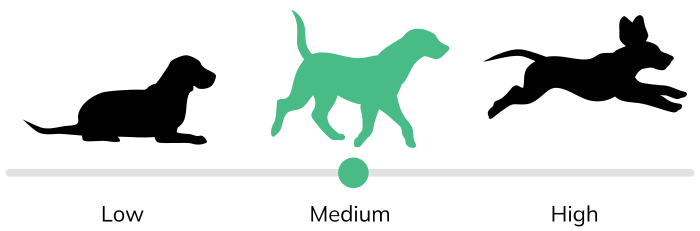
Despite their working dog lineage, the Komondor is generally a laidback breed. Most Komondorok only need around 45 minutes of exercise each day to feel content and happy. This should ideally be stretched across two walks throughout the day, and supplemented with mentally-enriching playtime.
Are Komondorok Easy to Train?
Komondorok are intelligent and sharp dogs who can learn an extensive range of commands. However, they aren’t the easiest to train and are best suited to experienced owners. They are independent-spirited and can be stubborn, particularly if they feel they can’t trust their owners’ guidance.
The best way to train a Komondor — and to show them that they can put their trust in you — is to follow positive reinforcement techniques. These measures build a trusting, loving bond and use rewards like treats to keep Komondorok engaged and motivated. Never use harsh corrections on a Komondor, as this can cause them to become overwhelmed and fearful.
Since Komondorok are vigilant dogs, their socialization should be prioritized from the very start to ensure they see the world as a safe place. Expose them to various settings, animals, and people, and make sure to go at a pace that’s comfortable for them.
Throughout your Komondor’s life, you also need to ensure you stick to a consistent training schedule and keep firm on established boundaries. Don’t be afraid to reach out for professional help if you encounter any challenging behavioral concerns. The sooner these are addressed, the easier they’ll be to nip in the bud.
Are Komondorok Good Watchdogs?
Komondorok make phenomenal watchdogs, which isn’t a surprise considering they were bred for this very purpose! They’re extremely vigilant, protective, and brave. You can rely on them to bark to alert you of anything amiss. They also won’t hesitate to jump into action and defend you if they suspect any danger.
Are Komondorok Good Service Dogs?
Komondorok can make good service dogs, as they’re intelligent, people-oriented, and love to be given a job. They’re also strong enough to assist with physical tasks like wheelchair pulling. However, they can be more difficult to train than other breeds. They can also be stubborn from time to time, which may prevent them from performing service commands reliably.
You should also be mindful that the Komondor is naturally vigilant. They can be standoffish around strangers and struggle to feel at ease in unfamiliar, public spaces. This can rule them out from a lot of service dog work.
While you may want to consider another breed for service dog work, Komondorok can thrive at a different type of therapeutic role: An emotional support animal (ESA). This is because they’re affectionate, protective, and perceptive of their owners’ emotions.
How to Care for a Komondor?
The Komondor is a breed that’s best suited to experienced owners. While they don’t need a huge amount of exercise, they do require consistent training, a firm, confident owner, and regular grooming to keep their fur looking its best. They’ll also benefit from plenty of socialization, as they are naturally vigilant dogs.
While we’ve addressed many of their care needs above, we’ll take a closer look at their grooming needs, health, and dietary requirements below.
Do You Need to Groom a Komondor?
The Komondor’s corded coat requires regular upkeep, though not in the way you would typically expect. Unlike other dogs, who often need to be brushed two to three times a week, the Komondor’s coat should never be brushed. Brushing your Komondor can cause significant pain and prevent their cords from forming properly.
Instead of brushing, you’ll need to work on maintaining their cords. Take sections of their coat at a time, and using your fingers, carefully wrap their hair together to form cords in your desired thickness and shape. Always start from the skin, and work with the natural growth to help their cords form without matting.
You will also need to gently tease out any dirt or debris you encounter.
This process can be time-consuming and challenging to manage on your own, so it’s important to seek help from a professional groomer experienced with the breed. A professional groomer will also be able to assist with trimming, nail cutting, and coat washing.

Do Komondorok Shed?
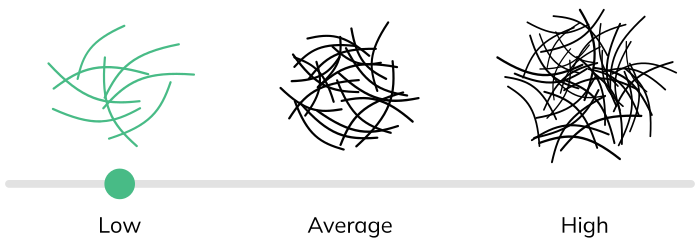
Komondorok rarely shed, and their loose fur and dander also naturally get trapped in their cords. While this means they may be suitable for people who have fur allergies, it’s important to be mindful that you’ll still need to work closely with their coats almost daily to maintain them.
It’s best to meet a Komondor in person to get a better understanding of whether your allergies will react to their coat.
What Health Problems Do Komondorok Have?
The Komondor is a generally healthy and resilient dog, and the breed isn’t associated with any particular health concerns. This is in part thanks to the efforts of breed clubs like the Komondor Club of America. These organizations have worked tirelessly over the years to maintain the breed standard and ensure that breeders thoroughly test their breeding stocks’ health.
However, like most large breeds, Komondorok are at a greater risk of elbow and hip dysplasia. They are also more susceptible to a life-threatening condition called bloat, where the stomach fills up with gas, liquid, or food, and dangerous twists.
Bloat requires urgent veterinary treatment, so be sure to familiarize yourself with the common signs of bloat. You can help to prevent bloat by spreading your Komondor’s total caloric intake across the day, rather than one big meal. You should also avoid exercising them immediately after they’ve eaten.
The Komondor is also more susceptible to ear infections, as the shape of their ears naturally traps moisture and debris. Make sure to clean their ears with a dog-friendly solution every few weeks, and examine their ears closely for inflammation, irritation, or wax buildup.
How Long Do Komondorok Live?
The Komondor’s lifespan is relatively long, considering the large size of the breed. Most Komondorok live for 10 to 12 years on average, though some can even live for a lot longer with regular veterinary checkups, good care, and proper nutrition.
What Should a Komondor Eat?
The Komondor’s diet should be well-balanced and filled with nutrients that support their large, muscular physique, health, and energy level. They particularly benefit from high-quality protein sources, such as lean cuts of chicken and beef. Their food should also include healthy fats, complex carbohydrates, vitamins, and minerals to promote overall immune health.
An adult Komondor should be fed their food across two separate meals; one feeding in the morning and again in the evening. Their exact daily caloric intake will depend on their size, age, weight, and activity level, so it’s best to consult a veterinarian to determine an appropriate amount.
Is a Komondor the Right Dog for Me?
The Komondor is a robust, protective dog that thrives as much as a livestock guardian dog as they does as a family companion. While they can take some time to warm up to people, they’re a gentle giant beneath their thick corded coat, and their affectionate side will soon shine through.
That said, the Komondor is naturally vigilant and requires a lot of training and socialization early on. They’re best suited to owners who have experience managing livestock guardian dogs or are prepared to put in the time and effort into learning about their specific needs.
If you’re up for the challenge and have the means (and space) to give the Komondor a perfect home, then you’re ready to begin your search for your forever friend. You can choose to purchase a Komondor puppy from an ethical breeder, or alternatively, adopt and give a rescue Komondor a second chance at life.