Greater Swiss Mountain Dog: Your Complete Guide
The greater Swiss mountain dog, or the Swissie for short, is one of the four Swiss mountain dogs, also known as the Sennenhund. They are perhaps the most versatile among all the Swiss mountain dogs; Swissies were utilized for pulling carts filled with dairy products, moving cattle, guarding farms, and overall as an all-purpose farm helper dog.
These made them a renowned dog in Switzerland and across Europe, and they eventually found their way to the US. However, greater Swiss mountain dogs weren’t utilized for the same purposes in the US; they are now commonly kept as family companions by those living in rural areas. If this sounds like you or you’re simply curious about the greater Swiss mountain dog, we’ve got you covered before investing yourself more in this breed.
Read on to learn all about this unique Swiss mountain dog’s temperament, physical traits, trainability, exercise needs, intelligence, and much more.
Table of Contents
Quick Look at the Greater Swiss Mountain Dog
Below is a table that summarizes everything you will learn about the greater Swiss mountain dog in this article.
| Weight/Height | 85-140 pounds / 24-29 inches |
| Coat Type | Short, smooth coat |
| Grooming Needs |  |
| Shedding |  |
| Temperament | Affectionate, loyal, balanced, watchful |
| Good With Kids |  |
| Good With Other Animals | |
| Intelligence | |
| Easy to Train | |
| Energy Level | |
| Barking Habits | |
| Lifespan | 8-11 years |
What Is the History of Greater Swiss Mountain Dogs?
The Swiss mountain dogs are thought to descend from large Molosser-type dogs that were brought to Europe by the Romans. Over time, these war dogs were mixed with local farm dogs in Switzerland, producing the now Swiss mountain dog breeds we know today.
Among these dogs, the greater Swiss mountain dog is the largest, which doesn’t come as a surprise, as they are the ones that share the most mastiff traits, like a blocky head and a heavier bone structure. However, what separates the greater Swiss mountain dog from others isn’t just size. They also took on various duties rather than specializing in one, making them reliable working dogs for pretty much anything in the Swiss Alps.
As Switzerland industrialized, the need for Swiss mountain dogs declined. However, it was the greater Swiss mountain dog that was affected the most. The fact that they were a farmer’s dog rather than a popular breed all over the country also contributed to this, which led to Swissies facing extinction. Thankfully, a healthy population was achieved by the turn of the 20th century with the efforts of breed enthusiasts.
As for the greater Swiss mountain dog’s arrival in the United States, the first dogs were imported in the 1960s. The American Kennel Club first recognized the breed under the Miscellaneous Group in 1968 and granted full recognition as part of the Working Group in 1995.
What Do Greater Swiss Mountain Dogs Look Like?
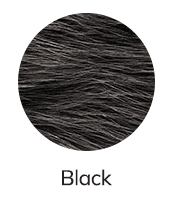
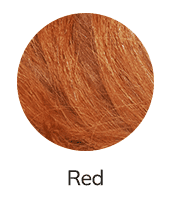
The greater Swiss mountain dog has a coat that’s a combination of black, white, and red. The majority of the coat is black, with parts of white covering the chest and paws. The red markings can be seen on the sides of the head, temple, and inner legs. They appear similar to the Bernese mountain dog, which is also among the four Swiss mountain dog breeds.

What Size Is a Greater Swiss Mountain Dog?
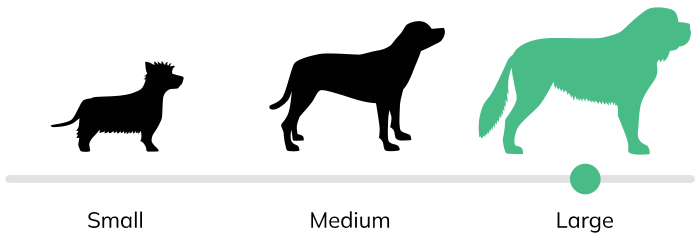
As their name suggests, greater Swiss mountain dogs are large dogs that weigh 85 to 140 pounds and stand as tall as 29 inches at the shoulder. With their height and weight ranges, greater Swiss mountain dogs certainly have the stature to back up their name.
What Is a Greater Swiss Mountain Dogs Coat Type and Length?
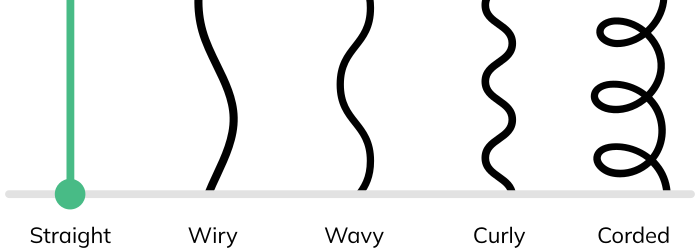
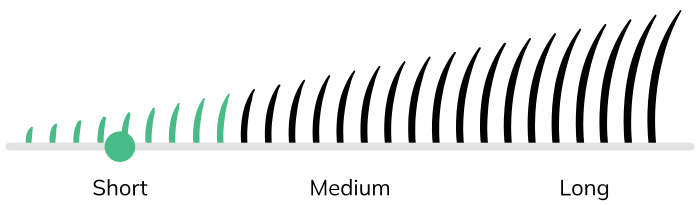
The greater Swiss mountain dog has a short, smooth coat, but it isn’t the same kind that you would find in a pit bull-type dog or a similar dog with low insulation. These dogs have coats that can endure freezing temperatures, which is often what happens in the Swiss Alps. There’s a thick undercoat that supports the short, smooth outercoat, which means that greater Swiss mountain dogs shed quite a lot, especially during seasonal changes.
What Is a Greater Swiss Mountain Dog’s Temperament?
The greater Swiss mountain dog is a loving dog with a strong devotion to their family. While they may be big, they are gentle and patient dogs that act as quiet, watchful companions. At the same time, Swissies are alert and observant dogs that have a good amount of protective instincts. They bark to alert the owner to anything unusual, but they aren’t overly territorial or aggressive.
While this gives a glimpse at the greater Swiss mountain dog’s temperament, here’s more about this breed’s common personality traits.
Are Greater Swiss Mountain Dogs Good With Kids?
The great Swiss mountain dog is one of the best large dogs for families with kids. These dogs form strong bonds with kids of all ages and are known to be patient and calm in their presence. They do well with both younger and older kids, and their playfulness makes them a great choice for families looking for a dog to keep kids active.
If you have kids, the great Swiss mountain dog is likely going to be a good choice. Still, they are large dogs at the end of the day; supervision is critical to ensure playtime and excitement don’t lead to an unruly dog. Kids in the family should also be taught how to behave around dogs.
Are Greater Swiss Mountain Dogs Good With Other Animals?
The greater Swiss mountain dog is a dog that gets along well with other animals in the family. They even have the tendency to get along well with smaller animals in the family, thanks to their relatively low prey drives. Swissies don’t have an inherent desire to chase after small animals, as they weren’t utilized for hunting purposes.
If you have other dogs or pets in the family, you can comfortably add a Swissie to the pack without constantly supervising every interaction. Nonetheless, greater Swiss mountain dogs are large dogs that grow rapidly. They shouldn’t be left alone with smaller pets like guinea pigs, hamsters, and birds to ensure their large size doesn’t cause problems, not their behavior.
Are Greater Swiss Mountain Dogs Aggressive?
The greater Swiss mountain dog isn’t inherently an aggressive breed. However, their protective nature can make them more prone to aggression than other dog breeds. They are naturally wary of strangers, which is a good trait to have in a guard dog, but it must be balanced with proper socialization so that a Swissie knows when to be protective and when to be calm and well-behaved.
One note about the Swissie regarding this is that some can have same-sex dog aggression. This is much more common in male greater Swiss mountain dogs than females and typically appears after maturity, which can take up to 24 months with Swissies. This should be kept in mind, and owners should prioritize socialization during walks and playtime to manage this behavior if it appears.
Do Greater Swiss Mountain Dogs Bark?
Swissies aren’t big barkers. They usually bark when there’s a need for it, such as a stranger approaching the yard or hearing an unusual sound. Otherwise, they are pretty quiet dogs that won’t announce everything they hear.
While this makes them ideal for living in an apartment, their large size should be kept in mind. Greater Swiss mountain dogs can adapt to apartment living only if they receive enough exercise and mental stimulation throughout the day.
Are Greater Swiss Mountain Dogs Affectionate?
Swissies, much like other Swiss mountain dog breeds, are extremely affectionate. They bond strongly with every member of their family and enjoy receiving any attention they can get. When greater Swiss mountain dogs are satisfied with their day, they become lap dogs who are unaware of their size at night, ready for cuddles.
As you can expect from their protective side, this affectionate nature is typically reserved for their loved ones. It takes a while for greater Swiss mountain dogs to warm up to strangers, but once they do so, it wouldn’t be surprising for one to demand pets and attention just as they do from their immediate family.
Are Greater Swiss Mountain Dogs Intelligent?
The greater Swiss mountain dog is a highly intelligent dog breed. The intelligence of the breed is the primary reason why they were utilized for a variety of purposes by Swiss farmers; it isn’t only their impressive physical abilities that make them an all-rounder dog. They were working independently without requiring constant supervision, and as a result, Swissies were a valuable asset for dairy farmers before industrialization.
While an intelligent dog usually means an easy-to-train canine, it is worth noting that the intelligence of the greater Swiss mountain dog, along with their independent nature, can lead to mixed results in training, which we cover in detail below.

Are Greater Swiss Mountain Dogs Energetic?
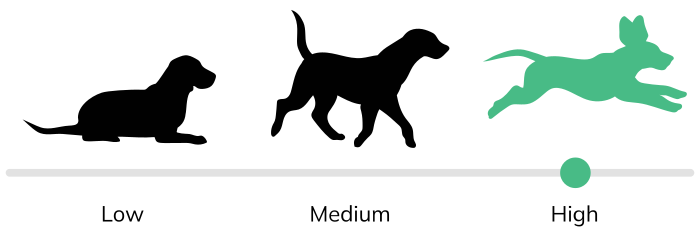
The greater Swiss mountain dog is categorized as a medium to high-energy dog. They aren’t super high in energy like a Belgian Malinois, but also more energetic than a typical medium-energy breed. With this, Swissies require about an hour of leisurely exercise that can be in the form of walks, playtime, mentally enriching activities, or a combination of all these to get the physical and mental activity they need.
Otherwise, like every dog, a greater Swiss mountain dog can exhibit behavioral issues due to a lack of exercise, which typically manifests itself in the form of excess barking, destructiveness, and disobedience.
Are Greater Swiss Mountain Dogs Easy to Train?
The greater Swiss mountain dog can be easy to train, depending on individual temperament. While some are eager to please, others are strong-willed and don’t have a desire to do what they’re told. Although some greater Swiss mountain dogs require more patience during training, using positive reinforcement training is a must regardless of individual trainability.
If you’re planning to buy or adopt a greater Swiss mountain dog for a specific purpose, pay attention to trainability during puppy selection to ensure you get a Swissie that matches your expectations.
Are Greater Swiss Mountain Dogs Good Watchdogs?
The greater Swiss mountain dog is a fairly protective dog that does well as a watchdog. They are naturally alert and aware of their surroundings, enabling them to notice unfamiliar people and unusual sounds. If anything out of the ordinary appears, they will alert the owner with their deep, powerful bark. Greater Swiss mountain dogs can also be a good deterrent in addition to announcing unusual instances with their large size.
Are Greater Swiss Mountain Dogs Good Service Dogs?
Typically, the greater Swiss mountain dog isn’t a breed preferred for service dog work due to their low level of trainability required for this type of work. The protective nature of the greater Swiss mountain dog also raises concerns about their reliability, which can make them leave their duties and shift their focus to people or animals around.
However, with their affectionate temperament, a greater Swiss mountain dog can be an excellent emotional support animal. They can have a calming presence and give a sense of protection with their imposing size for those who are struggling with a psychiatric disability.
How to Care for a Greater Swiss Mountain Dog?
In addition to everything we’ve covered about caring for a greater Swiss mountain dog, here’s more about their grooming, health, and feeding needs. By having a full understanding of their care needs, you can finalize your decision on whether the greater Swiss mountain dog is the dog for you.
Do You Need to Groom a Greater Swiss Mountain Dog?
The greater Swiss mountain dog has average grooming needs. They don’t require much care as far as their coat is concerned; brushing it using a rubber grooming mitt to remove dead hair weekly or every other week is enough to keep it in top condition.
While their coat doesn’t require much care, owners should build a grooming routine around trimming their nails, cleaning their ears, brushing their teeth, and using paw care products. Even with all these, it is safe to say that Swissies are overall low-maintenance dogs.

Do Greater Swiss Mountain Dogs Shed?
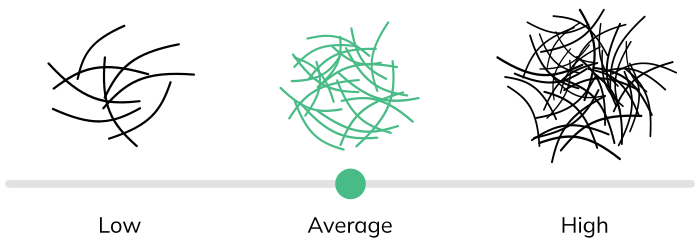
Greater Swiss mountain dogs are average shedders. It shouldn’t be a major issue for most owners, though it is worth noting that they shed significantly more than average during seasonal changes as their coat prepares for the next season. Those who are interested in getting a greater Swiss mountain dog should keep this in mind, as their short, smooth coat can be deceiving.
What Health Problems Do Greater Swiss Mountain Dogs Have?
Swissies are overall healthy, but like all dogs, they suffer from certain canine health conditions, many of which are large dog problems, like elbow dysplasia, joint issues, and bloat. In addition to these large dog health problems, greater Swiss mountain dogs are also at risk of urinary incontinence, epilepsy, and splenic torsion.
Anyone interested in getting a greater Swiss mountain dog should consider these health issues and educate themselves on the early symptoms once they get one. Routine vet visits also play an important role in identifying any health problems early.
How Long Do Greater Swiss Mountain Dogs Live?
The greater Swiss mountain dog has a life expectancy of 8 to 11 years, which is average considering their size. However, note that lifestyle, genetics, diet, and environmental factors play a great role in lifespan.
What Should a Greater Swiss Mountain Dog Eat?
The Swissie, like any other dog breed, should be on a balanced diet that supports their overall lifestyle and well-being. Many greater Swiss mountain dogs thrive on commercial dog food, but homemade, raw, and fresh food diets are also just as suitable. If in doubt about what to feed your greater Swiss mountain dog, consult an animal nutritionist to see your options. Check out our best dog food guides to learn more about dog nutrition.
Is a Greater Swiss Mountain Dog the Right Dog for Me?
The greater Swiss mountain dog is an active, robust, and affectionate breed that makes a great family companion for experienced families with children. They bond strongly with small family members and enjoy playtime. If you’re planning to add a unique dog to the family and have the experience to match what this dog requires, you will find the greater Swiss mountain dog to be an excellent pick.
However, this isn’t to say that the Swissie is only for families. These dogs are an equally good choice for individuals and couples looking for a canine companion. Any household with enough experience ready to welcome a large dog will find the greater Swiss mountain dog to be a fitting breed.