Gordon Setter: Your Complete Guide
At first glance, the Gordon setter has an aristocratic presence. From their height to their graceful movements, they exude quiet dignity. Many assume the breed is high-maintenance or just for show, only to discover its rich working history and practical, reliable temperament.
These dogs were bred to work long hours in demanding environments, and that background still influences how they think, move, and interact with people today. If you’re looking for a hunting companion or a family dog, or both, you’ll love how naturally a Gordon setter fits into an active outdoor lifestyle and an everyday home routine.
You shouldn’t decide if this breed is right for you based on appearances alone. This guide explores the Gordon setter’s history, physical traits, personality, grooming, health, and lifestyle needs to give a complete picture.
Table of Contents
Quick Look at the Gordon Setter
Here’s a quick glance at Gordon setter’s physical features, personality traits, temperament, and care needs.
| Weight/Height | Male: 55-80 lbs. and 24-27 inches tall
Female: 45-70 lbs. and 23-26 inches tall |
| Coat Type | Silky, straight/slightly wavy, medium-length, double coat |
| Grooming Needs |  |
| Shedding |  |
| Temperament | Confident, loyal, fearless, alert, eager |
| Good With Kids | |
| Good With Other Animals | |
| Intelligence |  |
| Easy to Train |  |
| Energy Level | |
| Barking Habits | |
| Lifespan | 12-13 years |
What Is the History of Gordon Setters?
The Gordon setter originated in Scotland during the 17th and 18th centuries and is named after Alexander Gordon, the 4th Duke of Gordon. The Duke played an important role in refining the breed at Gordon Castle by selectively breeding setters that were strong, resilient, and capable of working long hours in rough terrain.
These dogs were developed primarily as bird dogs, tasked with locating game birds and “setting” or freezing in place to indicate their position to hunters. Unlike some lighter, faster setters, the Gordon setter was bred for stamina and reliability rather than sheer speed.
Their solid frame allowed them to work through dense brush and uneven landscapes, making it particularly valuable in the Scottish Highlands. The breed’s black-and-tan coloring set it apart from other setters and contributed to its regal reputation.
The American Kennel Club (AKC) officially recognized the Gordon setter in 1878, and the breed eventually gained popularity beyond the UK, particularly in the United States.
While still prized as a hunting companion, the breed gradually found a place as a loyal family dog. Despite changes in lifestyle and hunting practices, the Gordon setter has retained its strong work ethic, intelligence, and close relationship with humans.
What Do Gordon Setters Look Like?

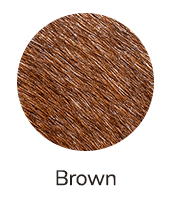
Gordon setters are sporting dogs with strong bones, well-developed muscles, and a balanced frame that allows them to work for long hours without getting tired. Their heads are deep and slightly rounded, with a pronounced stop and a long, straight muzzle that gives them a thoughtful, intelligent expression.
Dark brown eyes convey warmth and wisdom, while the ears are long, set low, and hang close to the head, covered in soft, silky hair. The athletic body is supported by strong legs and a deep chest. Gordon setters move with a smooth, effortless gait, similar to that of long-distance hunting dogs.
The neck is long and slightly arched, flowing cleanly into a straight back and well-muscled hindquarters. The tail is thick at the base and gradually tapers toward the end, carried level with the back or slightly below.
Coat color is one of the Gordon setter’s most recognizable traits. The base coat is always black, with rich tan markings above the eyes, on the muzzle, chest, legs, and under the tail. These markings stand out clearly against the dark base.
While minor variations in marking intensity can occur, the black-and-tan pattern is consistent across the breed.
What Size Is a Gordon Setter?
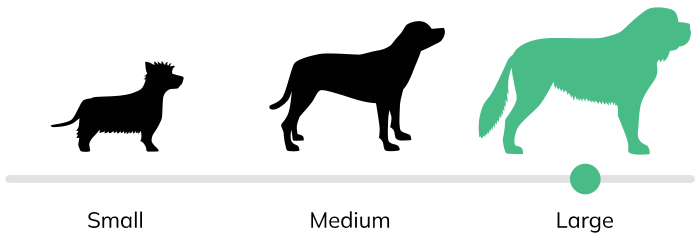
Gordon setters are classified as a large breed. Adult males stand between 24 and 27 inches tall and weigh around 55 to 80 pounds. Females are slightly smaller, measuring 23 to 26 inches in height and weighing 45 to 70 pounds.
Individual size can vary depending on genetics, diet, and activity level, but the breed standard emphasizes bone and substance over bulkiness.
Despite their size, Gordon setters move with grace and fluidity. Their weight is well distributed across a muscular frame, which allows them to be agile. Owners should be mindful of maintaining a healthy weight, as excess pounds can strain joints and reduce mobility over time.
What Is a Gordon Setter’s Coat Type and Length?
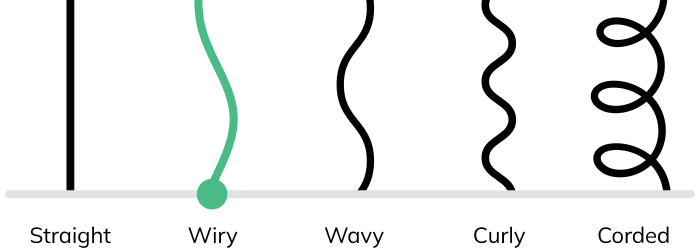
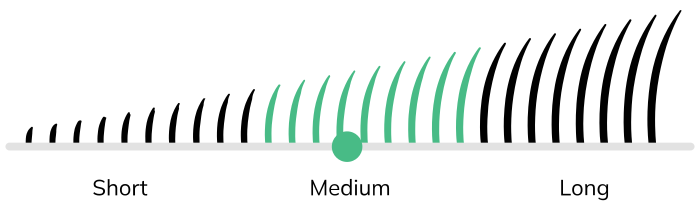
The Gordon setter has a long, silky coat that lies flat against the body. The texture is smooth (or slightly wavy), with a natural shine that reflects good health. Feathering is present on the ears, chest, belly, back of legs, and tail, adding to the breed’s elegant outline without becoming overly heavy or woolly.
Coat length is moderate to long, particularly in mature dogs. While the coat offers protection from weather and terrain, it also requires regular care to prevent matting, especially in the feathered areas.
What Is a Gordon Setter’s Temperament?
The Gordon setter has a balanced temperament shaped by generations of purposeful breeding. These dogs are alert and confident, always aware of their surroundings but rarely anxious. They also have a cheerful side and show interest in people, activities, and routines.
Their fearless nature helps them stay composed in new or demanding situations, which is one reason they were trusted as working dogs for long hours. They also love having a sense of purpose or task, as it gives them the confidence to think and act on their own.
People who’ve lived with this breed describe the Gordon setter personality as devoted and people-oriented. These dogs have a strong desire to stay close to family members. However, they’re not overly clingy and can entertain themselves when needed. They also tend to be reserved around strangers, but they warm up quickly once trust is established.
Are Gordon Setters Good With Kids?
Gordon setters do well in homes with children, especially school-aged or older kids who can follow rules and give the dog space. They enjoy walks, backyard play, and relaxed time with the family.
For families with toddlers or young children, extra caution is required. Gordon setters aren’t aggressive, but their size and energy can be too much for small kids. Supervise interactions and train the dog not to jump to keep children safe.
Children should also be taught to treat the dog gently. With proper training and clear boundaries in place, your Gordon setter will become a trusted family member in no time.
Are Gordon Setters Good With Other Animals?
Gordon setters can get along well with other dogs, especially when they spend a lot of time together from a young age. The breed’s cooperative nature makes them comfortable in multi-dog households. However, their hunting background means they have a strong prey drive for small animals like rabbits, rodents, and birds.
They can get along with cats, but success depends largely on early exposure and consistent training. While many Gordon setters learn to coexist peacefully with feline companions, caution is advised around smaller pets due to their tendency to chase.
Are Gordon Setters Aggressive?
Gordon setters have a calm temperament and aren’t naturally aggressive. With proper socialization and a stable environment, they tend to approach new situations cautiously rather than aggressively.
Their strong bond with their family can make them protective, but this usually shows up as alertness rather than hostility. These dogs have a natural confidence that helps them remain composed, and they rarely resort to snapping or growling without apparent cause.
However, like any dog, a Gordon setter can show defensive behavior if they feel threatened, frightened, or poorly handled. Issues such as lack of training or exercise, inconsistent boundaries, or insufficient social exposure can contribute to unwanted behaviors. That’s why starting training early helps shape a confident, well-mannered adult dog.
Do Gordon Setters Bark?
Gordon setters aren’t naturally loud dogs, but they’ll bark when they feel it’s necessary. They might bark to alert their family to visitors, unusual sounds, or activity outside the home. This makes them useful as alert dogs, though their barking is usually measured and controlled.
If left alone for long periods or given too little exercise, a Gordon setter may begin barking more often out of frustration. This is why you need to provide them with regular walks, playtime, and mental challenges to keep barking under control.
Are Gordon Setters Affectionate?
Yes, these dogs are super affectionate and loving toward their family. They enjoy physical closeness and gentle petting, though they’re not true lapdogs due to their size. If given the choice between lying across your feet or being in another room alone, they’d always choose to stay close to you.
However, Gordon setters aren’t overly demanding or needy. They can be left alone for reasonable periods and handle their own entertainment, as long as their physical and emotional needs are met first to prevent anxiety or destructive behavior.
Are Gordon Setters Intelligent?

Gordon setters possess a high level of intelligence paired with patience and situational awareness. They’re alert dogs that take in their surroundings and can anticipate what’s coming next. This makes them responsive to subtle cues from their owners and capable of learning beyond basic obedience.
These dogs have a good memory and excellent problem-solving skills. Their intelligence, however, is closely tied to their independence. They can think for themselves, which is helpful in field work, but can sometimes be mistaken for stubbornness.
This breed prefers training that includes variety and purpose, such as scent work, advanced obedience, or interactive games. Without enough mental activity, a Gordon setter may lose interest or become distracted, which can give the impression that they’re ignoring commands.
Are Gordon Setters Energetic?
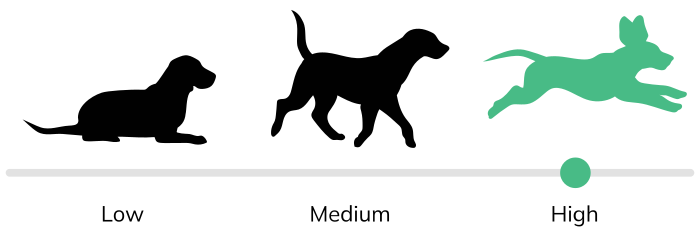
Yes, these dogs require daily exercise (at least two hours a day), including long walks, play sessions, and opportunities to run in secure areas. They’re not hyperactive, though, and tend to settle calmly indoors once their exercise needs are fulfilled.
Mental stimulation is just as important as physical activity. Puzzle toys, training sessions, scent work, and interactive games help prevent boredom and destructive behaviors in this breed.
Gordon setters also make great partners for outdoor activities, such as hiking, jogging, cycling, and running. You can also play fetch with them or watch them perform confidently at agility courses and obstacle training.
Are Gordon Setters Easy to Train?
Gordon setters are highly trainable, but they’re not mechanical learners. The success of the training sessions depends on the method used.
On one hand, these dogs are intelligent and willing to learn, and on the other, they’re strong-minded enough to think for themselves. This means they prefer understanding the reason behind a task instead of following commands blindly.
The easiest way to train a Gordon setter is by using positive reinforcement. When you give them a clear command and offer a treat, praise, or a favorite toy for following it, you’re more likely to see results. Using this approach, you can teach your furry companion fun tricks and complex behaviors, such as off-leash walks and sport-based skills.
Are Gordon Setters Good Watchdogs?
Gordon setters make decent watchdogs due to their alertness and tendency to bark when something seems out of place. Most of the time, their size alone can discourage strangers.
That said, no matter how attentive a Gordon setter is to their environment and how loyal they are to their families, you shouldn’t expect them to act like aggressive guard dogs. That’s because they aren’t naturally territorial or suspicious by nature.
Are Gordon Setters Good Service Dogs?
Service dog work demands intense focus, fast task repetition, and constant responsiveness in busy environments. Gordon setters may find this level of structure mentally demanding over time. Their hunting instinct, for one, can pull their focus away from a task when they spot a bird or smell a tempting scent.
With proper training and the right personality, some Gordon setters may be able to perform psychiatric support tasks. Their unwavering loyalty, comforting presence, and calm confidence can be reassuring to people who need companionship or grounding in stressful or emotionally challenging situations.
How to Care for a Gordon Setter?
To care for a Gordon setter, you need to focus on three main things: exercise, routine, and companionship.
These dogs need to move every day, whether that means walks, runs, playtime, or outdoor activities. They also enjoy having simple tasks or training sessions that give them something to do. Gordon setters need time with their people. They enjoy being part of everyday life and do best in homes where they’re not left alone for long hours.
Once you have a plan to meet your furry baby’s daily needs, you can focus on routine care like brushing, feeding, and health checkups.
Do You Need to Groom a Gordon Setter?

Unlike curly or other double-coated breeds, the Gordon setter’s silky coat doesn’t trap excessive debris, but it does benefit from weekly brushing to stay clean and tangle-free. You’ll especially want to brush the feathered areas to remove loose hair and prevent mats.
Occasional trimming (about once a month) around the ears, on the feet, and near the tail area may be needed to prevent dirt buildup and maintain a neat appearance. You should also trim your dog’s nails regularly and get their ears checked and cleaned to reduce the risk of infections.
Professional grooming isn’t always necessary for these dogs, but it can be helpful every few months, particularly for owners who prefer a polished look. It’s also important to bathe your Gordon setter about once a month, along with proper conditioning, to help keep the coat clean and prevent dry skin or dandruff.
Do Gordon Setters Shed?
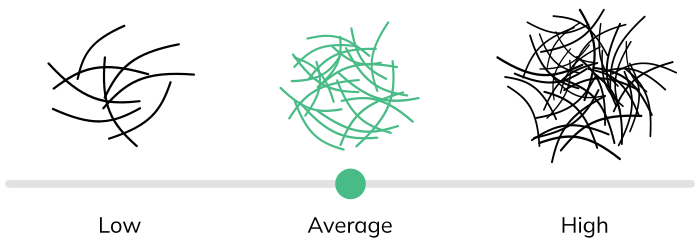
Yes, Gordon setters shed, but they’re not heavy shedders compared to many other large breeds. Their long coat can make shedding more noticeable if grooming is neglected, but regular brushing helps remove loose hair before it builds up.
Weekly brushing is usually enough to keep shedding at a manageable level. Many owners find that it makes a noticeable difference in how much hair they see on furniture and clothing.
Shedding may increase in spring and fall in preparation for warmer or cooler weather. Proper grooming routines, including monthly baths and conditioning, help limit shedding and reduce dry skin that can make it worse.
Needless to say, this breed isn’t hypoallergenic and might not be suitable for allergy-sensitive households.
What Health Problems Do Gordon Setters Have?
Like all large, deep-chested breeds, Gordon setters can be at risk for bloat. This life-threatening stomach condition can develop quickly and requires immediate veterinary attention. It’s important to learn the warning signs and know what steps to take if it happens. Generally, feeding smaller meals and avoiding intense exercise around mealtime helps reduce the risk.
As Gordon setters age, cancer becomes an increasingly common concern. Other health conditions you should look out for include hip and elbow dysplasia, ataxia, progressive retinal atrophy, and dental problems.
Choosing a puppy from a responsible breeder is important, as reputable breeders screen for these health issues and use DNA testing to reduce the risk of inherited diseases.
How Long Do Gordon Setters Live?
The Gordon setter lifespan ranges from 12 to 13 years. Many factors influence this, including genetics, diet, exercise, and access to preventive veterinary care. Dogs from health-tested breeding lines tend to have better long-term outcomes.
What Should a Gordon Setter Eat?
A Gordon setter’s diet should support slow, steady development. Feeding food that’s too high in protein, especially over 26%, isn’t recommended, as it can force rapid growth and increase the risk of health issues.
Instead, you should choose high-quality dry or wet dog food that provides balanced nutrition. A fiber content of at least 4% is helpful for digestion and stool quality.
Offer healthy add-ins in moderation, such as unsalted chicken, salmon, safe fruits, and cooked vegetables. Avoid foods with added salt, as it can be harmful.

Is a Gordon Setter the Right Dog for Me?
The Gordon setter is a great choice if you want a devoted dog with working ability and a family-friendly temperament. This breed is perfect for people who are present and involved on a daily basis.
While Gordon setters aren’t hyperactive dogs, they do need daily movement and mental engagement to stay happy. Make sure you have access to a fenced yard or an outdoor space where this breed can burn off energy. If you’re ready to take on their exercise, grooming, and training responsibilities, a Gordon setter will return your love and devotion tenfold.