Flat-Coated Retriever: Your Complete Guide
A flat-coated retriever has a shiny, smooth coat, feathered ears and tail, and a strong, athletic build. They also have a longer head, a straighter muzzle, and a flowing silhouette that distinguishes them from other retrievers.
Flat-coated retrievers were originally bred in England in the 19th century as versatile gundogs for birds and other prey. They were prized for their ability to retrieve game both on land and in water with speed, strength, and intelligence. Today, flat-coated retrievers are best known as “Peter Pan of dogs” for their lasting puppy-like energy and joyful spirit.
As charming and energetic as they are, flat-coated retrievers have unique needs that every potential owner should understand. This guide highlights their personality, temperament, trainability, grooming requirements, and overall care. You’ll get a clear sense of what life with one of these joyful, loyal dogs is really like.
Table of Contents
Quick Look at the Flat-Coated Retriever
The table below summarizes the flat-coated retriever’s notable traits, including size, coat, lifespan, and temperament.
| Weight/Height | 60-70 pounds / 22-24.5 inches |
| Coat Type | Straight, glossy, and dense coat |
| Grooming Needs |  |
| Shedding |  |
| Temperament | Friendly, energetic, playful, intelligent, outgoing |
| Good With Kids |  |
| Good With Other Animals | |
| Intelligence |  |
| Easy to Train | |
| Energy Level | |
| Barking Habits | |
| Lifespan | 8-14 years |
What Is the History of Flat-Coated Retrievers?
Flat-coated retrievers originated in Britain in the mid-to-late 1800s, when retrieving dogs were essential for shooting sports. Hunters and gamekeepers needed a retriever that could work steadily in the field and bring back game gently. The breed was developed by crossing now-extinct St. John’s water dogs with other British sporting breeds.
Initially, flat-coated retrievers were grouped under the broad category of wavy-coated retrievers. In 1864, breeder J. Hull began one of the first dedicated breeding programs for the flat-coated retriever. His efforts were followed by Sewallis Evelyn Shirley in 1873, the founder of The Kennel Club in Britain, who helped stabilize the breed and distinguish it from the curly-coated retriever.
By the late 19th and early 20th centuries, flat-coated retrievers were among the most popular retrievers in Britain. They were highly prized by gamekeepers and sportsmen for their speed, endurance, and cooperative nature in the field. Their work ethic and affectionate temperament also made them ideal companions. The American Kennel Club officially recognized the breed in 1915.
After World War I and World War II, their popularity declined as other retrievers became more favored. Dedicated breeders maintained the flat-coat’s working ability, temperament, and appearance. Today, flat-coated retrievers reflect their origins as capable gundogs with a strong bond to people and purpose.
What Do Flat-Coated Retrievers Look Like?
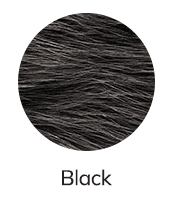
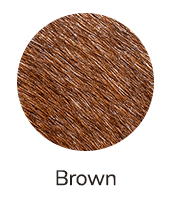
Flat-coated retrievers have a long, straight muzzle, a slightly rounded skull, dark, expressive eyes, low-set ears, and a strong, well-proportioned body that completes their silhouette.
Their coat is one of the breed’s most distinctive features. It is dense, straight, and glossy with abundant feathering on the ears, chest, legs, and tail. The most common colors are solid black or liver (a rich, dark brown shade). Colors other than these, such as yellow or cream, as well as any markings or patches, are considered faults and not recognized by breed standards.
What Size Is a Flat-Coated Retriever?
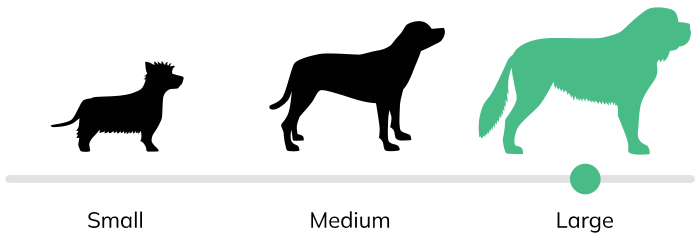
Flat-coated retrievers are medium- to large-sized dogs with a graceful, athletic build that reflects their sporting heritage. Adult males usually stand 23 to 24.5 inches at the shoulder and weigh 60 to 80 pounds. Female flat-coats are slightly smaller, generally measuring 22 to 23.5 inches tall and weighing 55 to 70 pounds.
Although these ranges represent the breed’s standard size, individual dogs can vary slightly depending on genetics and breeding lines. All flat-coated retrievers maintain a well-proportioned, muscular frame that supports their energetic and active lifestyle.
What Is a Flat-Coated Retriever’s Coat Type and Length?
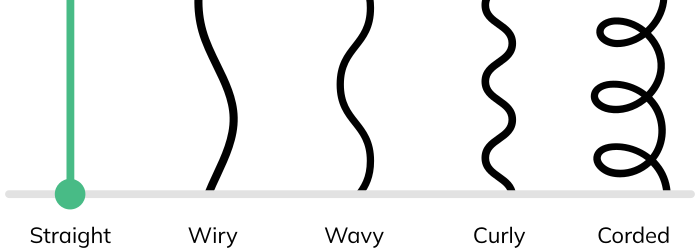
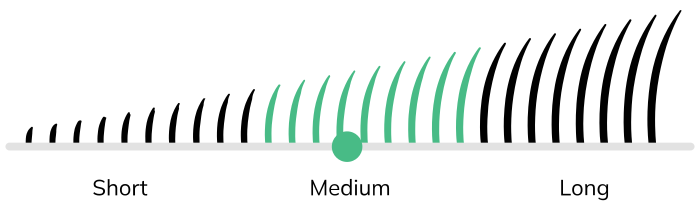
The flat-coated retriever has a short, smooth coat on the face, chest, and front legs. Their coat transitions to longer, silky feathering along the underbelly, rear legs, tail, and sometimes the ears. This combination of textures gives the breed its signature flowing appearance.
Aside from their looks, their coat is highly functional. It provides protection from cold water, brush, and rough terrain. Flat-coats require regular brushing to prevent tangles and matting, particularly in the feathered areas. Seasonal shedding is also normal for this breed.
What Is a Flat-Coated Retriever’s Temperament?
The flat-coated retriever is often described as one of the most joyful and people-loving retriever breeds. They greet everyone with an enthusiastic wag, love chasing balls or sticks, and seem to wear a permanent, cheerful expression. Even at three years and older, they retain their playful, puppy-like energy and can be found dashing around with the same exuberance they had as pups.
This boundless energy reflects their heritage as a sporting breed. Flat-coated retrievers need plenty of physical exercise and mental stimulation to prevent boredom-induced behaviors. They may chew on objects or bark excessively if they don’t get enough mental or physical stimulation. Activities like long walks, swimming, and fetch are all excellent ways to keep them engaged and maintain their athletic build and sharp mind.
Flat-coated retrievers are also highly trainable and deeply loyal to their families. They respond well to positive reinforcement, enjoy learning new commands, and often pick up tricks quickly. Their intelligence and desire to work alongside humans make them excellent candidates for obedience training, agility, and other canine sports.
Are Flat-Coated Retrievers Good With Kids?
Flat-coated retrievers are one of the most child-friendly dog breeds. They’re playful, friendly, and love being part of the action, whether it’s running around outside or just hanging out indoors. Their energy matches well with kids. They are able to tolerate occasional rough hugs and noisy play sessions.
Despite their gentle, affectionate nature, a flat-coated retriever needs supervision around young children due to their size and exuberance. They can be a bit mouthy when excited, which might startle or knock over small children if play gets too rough. It’s important to teach both the dog and the children how to interact safely, so everyone enjoys playtime without accidents or stress.
Are Flat-Coated Retrievers Good With Other Animals?
The flat-coated retriever personality is playful and friendly. They get along well with other animals, including cats and dogs.
That said, they have strong hunting instincts. They might run to chase smaller animals, such as guinea pigs, hamsters, or birds. They may also go after wildlife, such as squirrels or rabbits, when outside. That’s the reason breeders suggest early socialization, gradual introductions, and ongoing guidance when raising them.
Are Flat-Coated Retrievers Aggressive?
No, flat-coated retrievers are not aggressive. They’re naturally friendly, outgoing, and eager to make friends. If they ever growl, snap, or act defensively, it’s usually a response to fear, surprise, or an unfamiliar situation. This is not a reflection of their breed, but rather a normal reaction that any dog might have in a moment of uncertainty.
That said, flat-coats are sensitive and don’t respond well to harsh corrections or rough handling. They need consistent training and positive reinforcement to build confidence and encourage their friendly, trusting behavior.
Do Flat-Coated Retrievers Bark?
Flat-coated retrievers are fairly vocal, but they aren’t constant yappers. They bark to alert you to something unusual, to greet someone, or when they’re excited during play. Their bark is deep and strong, but it rarely carries any real threat. It’s more about getting attention or expressing excitement than being aggressive.
This makes them easy to live with, even in apartments or quieter homes. However, they still need regular exercise and mental stimulation to stay happy and calm indoors. If barking becomes an issue, training can help keep it under control.
Are Flat-Coated Retrievers Affectionate?
Flat-coated retrievers are extremely affectionate dogs. They enjoy being close to their people and are happy to be petted, leaned on, or included in family activities. They also sometimes act like lapdogs. They’ll try to curl up beside you or rest their head in your lap without realizing how big they are.
They’re also quite friendly with new people. Most will approach strangers with curiosity and excitement once they feel comfortable. Their loving, people-oriented nature makes them dogs that truly enjoy companionship and physical affection.
Are Flat-Coated Retrievers Intelligent?

Yes, flat-coated retrievers are highly intelligent. They were originally bred to help hunters retrieve game, so quick thinking and problem-solving skills are in their blood. To test their intelligence, give them a puzzle toy or hide a treat and watch them solve it in minutes. You can also place a favorite toy just out of reach and see them nudge it closer with their nose or paw.
They also perform exceptionally well in reward-based training sessions. From hand signals to verbal commands, they pick up new cues quickly and rarely forget what they’ve learned. They are also smart enough to keep an eye on what’s happening around the house and pick up on people’s moods quite well.
Are Flat-Coated Retrievers Energetic?
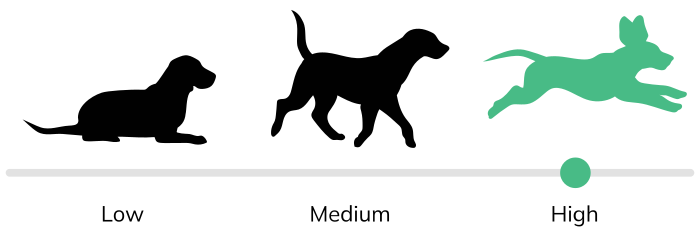
Flat-coated retrievers are a high-energy, active breed that require 1.5 to 2 hours of exercise each day. A quick walk around the block is not enough. They need a mix of physical and mental activities, including long runs, swimming, puzzle toys, and training exercises to challenge their minds and burn off energy.
Flat-coats who don’t get sufficient exercise often develop destructive behaviors, such as excessive barking, chewing, or damaging things around the house. Owners who can’t provide enough daily activity may have difficulty raising this breed.
Are Flat-Coated Retrievers Easy to Train?
Yes, flat-coated retrievers enjoy learning and paying attention to their people. During training, they pick up commands quickly and remember them without much repetition. Once they understand what you’re asking, they love doing it again and again just to please you.
Their intelligence and athletic build also make them well-suited for advanced training. Many flat-coats perform well in obedience, agility, and trick training. Just provide their favorite treats and praise at various times, and they’ll show you all their potential.
Are Flat-Coated Retrievers Good Watchdogs?
Flat-coated retrievers are not good watchdogs in the traditional sense. If someone knocks on the door, they’re more likely to run up wagging their tail, sniff the visitor, and hope for a scratch or belly rub. Their non-territorial nature and friendly disposition make them see almost everyone as a friend rather than a threat.
However, flat-coated retrievers can still act as watchdogs in their own way. They’ll notice every visitor and announce their arrival with a cheerful bark. Although not trained to protect, their bark will let you know someone is at the door or moving around nearby.
Are Flat-Coated Retrievers Good Service Dogs?
Flat-coated retrievers can make wonderful service animals. They can easily make people laugh with their little antics or silly gestures. They also have a remarkable ability to sense when someone is feeling sad, anxious, or lonely. Their caring, intuitive nature makes them great companions for those who need comfort and companionship.
Flat-coats are better suited for task-oriented roles, such as mobility assistance or retrieval. It makes them happiest when they have a purpose and can channel their energy and intelligence into helping others. They can also learn different routines quickly. However, like all service-oriented dogs, they require proper training and socialization to remain calm and focused in new environments.
How to Care for a Flat-Coated Retriever?
The flat-coated retriever has both physical and emotional needs. A good care routine could start with a brisk morning walk around the neighborhood, followed by a lively game of fetch or tug in the yard to help burn off their boundless energy. After playtime, brush their thick, shiny coat to keep it healthy and tangle-free. Most flat-coats love grooming time and may take the opportunity to get extra pets.
They also require mental stimulation throughout the day. Dedicate a few hours of the day to teaching them a new trick, playing scent games, or challenging their minds with puzzle toys. Round out the day with a nutritious meal and some cuddle time on the couch.
Do You Need to Groom a Flat-Coated Retriever?

Yes, grooming is an important part of caring for a flat-coated retriever. These dogs have a dense, medium coat, which can tangle and mat if not maintained. You need to brush your pup once a week to keep the coat healthy and reduce shedding. Plus, they also need routine nail trims, ear checks, and teeth brushing to stay comfortable and healthy.
Many owners choose to visit a groomer every few months, but frequent appointments can be overwhelming for your dog.
Do Flat-Coated Retrievers Shed?
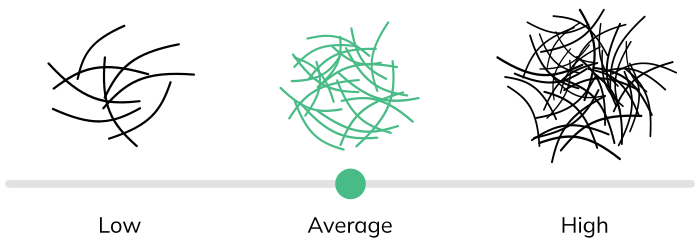
Yes, flat-coated retrievers shed hair in average quantity. You’ll notice slightly heavier shedding during spring and fall. This is completely normal, as they are just swapping coats for the changing seasons.
If you notice heavier shedding outside these times, it could indicate a deeper issue. Some dogs may shed more due to stress, poor nutrition, hormonal changes, or underlying health problems. Monitor your pup’s shedding and overall health, and consult a veterinarian if you notice sudden, excessive, or unusual hair loss.
What Health Problems Do Flat-Coated Retrievers Have?
Flat-coated retrievers are prone to cancer, hip and elbow dysplasia, heart problems, eye disorders, and skin allergies. These conditions can develop at different ages and might not become noticeable until serious symptoms appear. If you want to keep your pup healthy and active, it’s essential to schedule regular vet visits from puppyhood. The vets can run routine screenings and full-body exams to keep their health in check.
Besides this, you can support your pup’s health by providing a balanced diet, regular exercise, and mental stimulation. Also, pay close attention to any changes in their behavior, appetite, or mobility. These are often early signs of health issues that need prompt attention.
How Long Do Flat-Coated Retrievers Live?
The flat-coated retriever lifespan is 8 to 14 years. They stay energetic, playful, and full of life for most of their years, but around 7 or 8, you might notice them slowing down a bit. At this age, attentive care and a healthy, nutritious diet can help them stay active and enjoy more years by your side.
What Should a Flat-Coated Retriever Eat?
Flat-coated retrievers are active dogs with hearty appetites. As puppies, they need frequent meals of high-quality puppy food to support their rapid growth and developing bones. Adult dogs usually do well with 3 to 4 cups of premium dry dog food a day, split into two meals. Some owners also give lean meats, vegetables, or omega-3 supplements to support their pup’s coat and joint health.
This breed can easily gain weight if they eat too much or don’t get enough exercise. Keep an eye on portions, make sure they get plenty of activity, and provide a balanced diet. We recommend consulting your veterinarian before adding supplements or making major changes to your dog’s diet.
Is a Flat-Coated Retriever the Right Dog for Me?
Flat-coated retrievers are lively, friendly, and energetic. Their personality is evident in every wag, playful bounce, and happy nudge for attention. Homes with children and other pets suit this breed well. They require plenty of daily exercise and mental stimulation to keep their minds sharp and their bodies healthy.
Their lifespan is generally 8 to 14 years, but with proper care, some even live beyond this range. Note that flat-coated retrievers are medium to large dogs, usually weighing between 55 and 80 pounds. If you have the time, space, and energy to keep up with their active lifestyle, a flat-coated retriever can be a joyful, loyal, and affectionate companion for your home.