Eurasier: Your Complete Guide
If any breed could claim the title of the calmest, most emotionally balanced family dog, it’s the Eurasier. These dogs were bred to adapt to household routines and family life. There’s nothing that brings them more joy than being close to their people and doing their best to please them.
No dog is perfect for every household, though. While a Eurasier’s calm nature makes them easy to live with, not every family is ready to meet their need for routine, closeness, and regular interaction. It’s important to understand the breed’s needs, habits, and long-term care requirements before welcoming a Eurasier into your home.
This guide answers the most important questions regarding the temperament, training needs, grooming demands, and health considerations of these dogs. Let’s find out if you have the kind of home and routine that works well for this family-oriented breed.
Table of Contents
Quick Look at the Eurasier
Here’s a quick breakdown of the Eurasier’s key characteristics, including size, appearance, temperament, shedding level, and overall lifestyle needs.
| Weight/Height | 40-70 lbs. / 19-24 inches |
| Coat Type | Medium-long, dense double coat |
| Grooming Needs |  |
| Shedding | |
| Temperament | Calm, confident, loyal, family-oriented |
| Good With Kids |  |
| Good With Other Animals | |
| Intelligence |  |
| Easy to Train | |
| Energy Level | |
| Barking Habits | |
| Lifespan | 12-16 years |
What Is the History of Eurasiers?
The Eurasier is a modern breed developed in Germany in the 1960s. Julius Wipfel began the breeding program after deciding he wanted a dog that was intelligent, emotionally balanced, and easier to live with than his previous spitz-type dog. He was inspired by the social behavior of wolves, but wanted a dog that could comfortably live in a home.
To do this, Wipfel first crossed a chow chow with a wolfspitz, which resulted in puppies known as wolf-chows. These dogs were calm and smart, but breeders felt they could be more friendly. In 1972, Samoyeds were added to the mix to improve temperament.
The new breed was named Eurasier to represent its European and Asian background. It was officially recognized in 1973, and the breed standard was later updated in 1994.
What Do Eurasiers Look Like?




Eurasiers have a distinctly wolf-like appearance, but it’s softened by warm expressions and a plush, fluffy coat. Their body is slightly longer than tall, with a strong, well-proportioned build that never looks heavy or awkward. Everything about their body looks balanced, which helps explain why they move so smoothly.
Their faces are what many people fall in love with at first sight. Medium-sized, triangular ears stand erect on a wedge-shaped head. This, together with dark, almond-shaped eyes, makes these dogs look like they’re always quietly observing everything around them.
The edges of the lips are tight and clearly defined, with black pigmentation that adds to their clean, expressive look. Many Eurasiers also have a distinct black mask and reverse markings, which further enhance their wolf-like facial features. The tail is thickly furred and carried curled over the back or resting to the side, as seen in other Spitz-type breeds.
These dogs give off a calm, composed presence rather than an intense or intimidating one. Their coat comes in many colors, including black, red, cream, wolf sable, wolf-gray, and black-and-tan. Pure white and liver-colored coats aren’t part of the breed standard.
What Size Is an Eurasier?
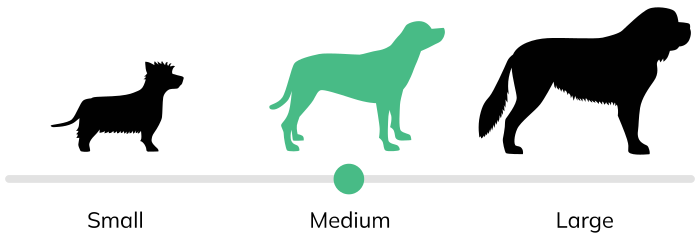
Eurasiers are medium-sized dogs. Their bodies are sturdy enough for outdoor activities while still manageable for everyday living.
Adult males range from 20.5 to 23.5 inches in height (52-60 cm) and weigh between 48 and 66 lbs (22-30 kg). Females are slightly smaller, with an average height of 19 to 22 inches (48-56 cm) and a weight range of 40 to 57 lbs (18-26 kg). These differences are normal and reflect the breed’s natural sexual dimorphism.
While there can be some variation, a typical Eurasier falls near the middle of these ranges. For males, the target height and weight are around 22 inches (56 cm) and 57 lbs (26 kg), while females are about 20.5 inches (52 cm) tall and weigh roughly 48 lbs (22 kg). Overall, Eurasiers should never appear too bulky or too delicate.
What Is an Eurasier’s Coat Type and Length?
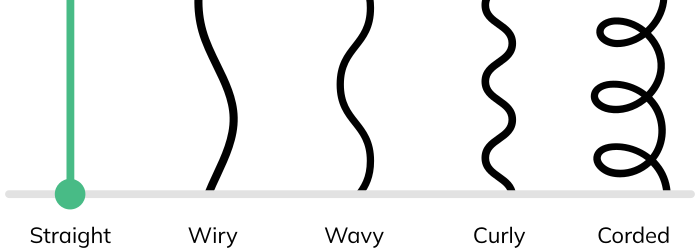
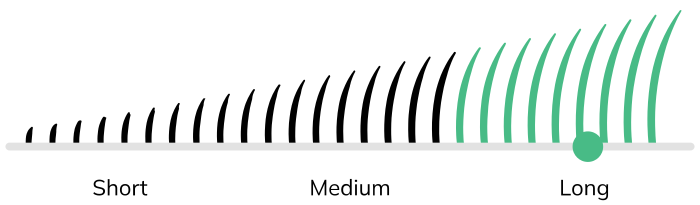
Eurasiers have a thick double coat that helps protect them from cold and wet conditions. Underneath, there’s a warm, dense, soft undercoat that keeps them insulated, and over that lies a layer of medium-long, straight guard hair that lies loosely against the body. This outer coat is what most people notice first because it gives these dogs their full, plush look.
The coat isn’t uniform everywhere, though. Hair on the muzzle, face, ears, and front legs is shorter, which helps keep those areas neat and clean. On the tail and the backs of the legs, you’ll see longer guard hair that gives a softer, more feathered appearance.
Around the neck, the hair is slightly longer than on the rest of the body, but it doesn’t form a mane like you might see on some other breeds.
What Is a Eurasier’s Temperament?
The Eurasier personality is best described as calm, observant, and loyal. These dogs are naturally self-assured and even-tempered, which means they tend to handle new situations without becoming easily stressed or reactive.
They have a high tolerance for everyday noise, activity, and mild frustration, and they’re not the type to overreact or become provoked without reason. This makes them especially pleasant to live with in a family setting.
Eurasiers also form strong bonds with their families and prefer to be emotionally close to their loved ones rather than constantly seeking physical contact or attention. They aren’t usually needy, but they don’t do well when ignored or left alone for long periods.
When meeting new people, these dogs are usually polite and non-intrusive rather than overly friendly or suspicious.
Are Eurasiers Good With Kids?
Eurasiers tend to do very well with children because of their stable, emotionally balanced temperament. They’re patient, observant, and not one to overreact, which helps them stay calm in busy family environments. Instead of feeding off excitement, these dogs bring a sense of composure to the household.
This breed prefers gentle play and calm interactions over rough handling, so your children should always respect boundaries and treat the dog kindly. In families where kids are loud or very active, Eurasiers may choose to step away rather than engage, which is a healthy sign of their self-control.
Even if a child provokes them or does something that makes them stressed/overwhelmed, Eurasiers are more likely to retreat than to snap. Nevertheless, you’ll have to teach your kids appropriate behavior around dogs and supervise all interactions for safety purposes.
Are Eurasiers Good With Other Animals?
If you properly socialize a Eurasier from a young age, they can coexist peacefully with other animals. Those that are raised with other dogs usually develop respectful, stable relationships and aren’t prone to bullying or territorial behavior. They tend to read social cues well and avoid unnecessary conflict.
With cats and smaller pets, Eurasiers tend to be more curious than aggressive. They don’t have a strong prey drive, which makes them easier to manage and more trustworthy around animals like cats, rabbits, and guinea pigs than many spitz breeds. They may watch closely at first, but often lose interest once they understand the animal is part of the household.
Early introductions and supervised interactions are still necessary, but once boundaries are established, many Eurasiers settle comfortably into homes with multiple animals. They might still act more aloof than playful, though, which is normal.
Are Eurasiers Aggressive?
Eurasiers were bred specifically to be emotionally steady companions, so aggression is not a common trait in the breed. Their natural reservedness and aloofness shouldn’t be confused with hostility. These dogs are unlikely to show food aggression, territorial behavior, or sudden reactivity, even in stressful situations.
Rather than snapping or growling when uncomfortable, most Eurasiers choose to remove themselves from the situation. This self-control is one of the breed’s most valued traits.
That said, no dog is immune to behavioral issues. Poor socialization, fear, inconsistent handling, neglect, or lack of guidance can lead to problems in any breed. Eurasiers do best when raised with love, understanding, and clear boundaries. In well-adjusted environments, these dogs are always calm and stable with a strong sense of emotional control.
Do Eurasiers Bark?
Barking isn’t an issue with most Eurasiers. While these dogs are attentive and watchful, they rarely bark to hear themselves. They rely more on body language and quiet observation.
When a Eurasier does bark, it’s usually to alert you to something unfamiliar or express mild concern. This makes them a good option for people living in apartments or small homes who prefer a quieter household.
That said, like any dog, a Eurasier can develop barking habits if their needs aren’t met. Lack of mental stimulation, long periods alone, or inconsistent routines can lead to frustration and vocal behavior. To prevent unnecessary barking, make sure they have appropriate outlets for their energy and curiosity.
Are Eurasiers Affectionate?
Yes, but their idea of affection is simply being there. These dogs form strong attachments with their people, but don’t constantly ask for attention. Staying close, keeping an eye on what you’re doing, and sharing space is how they express love.
While Eurasiers aren’t usually the type to climb into your lap, they may enjoy physical affection like petting and gentle cuddling, especially with the people they trust most. Also, their reserved nature with strangers makes their bond with their family feel even stronger.
Are Eurasiers Intelligent?

Yes, Eurasiers are intelligent, but they don’t always show it in obvious ways. They’re quick learners when training makes sense to them, especially when you follow consistent routines and communicate clearly.
Rather than showing off, these dogs use their intelligence to stay aware of what’s happening around them. They read situations before responding instead of acting impulsively.
Eurasiers are especially good at picking up on household patterns and emotional cues. They tend to learn boundaries and expectations faster than many breeds, even without constant repetition. However, they’re not robots. Forceful or repetitive training can cause them to shut down. You need to guide them gently and use positive reinforcement to bring out their best.
Are Eurasiers Energetic?
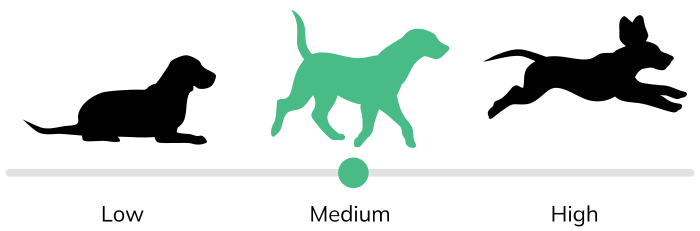
The Eurasier has a moderate energy level that suits everyday family life. These dogs need regular activity, such as daily walks and some playtime, but they don’t require intense workouts or hours of exercise. This makes them a good option for people who enjoy routine activity without the pressure of keeping up with a high-drive dog.
Once you meet their exercise needs, these dogs are happy to relax at home and settle into the household routine. They tend to pace themselves naturally and don’t become restless or destructive when given appropriate outlets for physical and mental stimulation. That’s why this breed adapts well to different lifestyles.
Are Eurasiers Easy to Train?
Eurasiers are easy to train if you work with them instead of trying to control them. They’re smart dogs that pay close attention, but they don’t respond well to being pushed or drilled. Training works best when it feels like a collaborative effort, with guidance and encouragement rather than strict commands.
These dogs may not be show-off performers, but they’re excellent at learning what’s expected of them in everyday life. You’ll be surprised by how quickly they pick up on house rules, leash manners, and basic obedience.
Since this breed likes to spend time with people, we recommend investing your time and energy into crate training during the early days to prevent separation anxiety. Apart from this, you can train a Eurasier for therapy work and agility courses, as they have the mental ability and focus to learn complex tasks. Make sure you follow positive training methods for the best results.
Are Eurasiers Good Watchdogs?
Eurasiers can be decent watchdogs, but only if your expectations are realistic. They’re alert enough to notice any changes in their surroundings and will immediately warn you of unusual activity. However, they aren’t territorial or aggressive by nature and are unlikely to guard property or confront intruders.
This makes them well-suited for families who want a dog that keeps an eye on things without creating unnecessary noise or tension in the home.
Are Eurasiers Good Service Dogs?
While Eurasiers are intelligent and emotionally perceptive, they’re not the best choice for public access service dog work. That’s because they’re not naturally task-driven in the same way as breeds traditionally used for mobility assistance or guide work.
Their calm temperament, emotional awareness, and strong bond with their owners make them better suited for psychiatric service work, emotional support, or therapy roles rather than highly demanding physical service tasks. These dogs tend to stay composed in calm environments and are highly attuned to their handler’s emotions.
That said, Eurasiers are sensitive dogs and do best with gentle, positive training methods. They may struggle in high-pressure or constantly changing environments that require fast responses or long hours of intense work.
If you qualify for a psychiatric service dog, a Eurasier can provide you with emotional/therapy support and perform grounding tasks when properly trained and placed in a calm, predictable setting.
How to Care for an Eurasier?
The initial days after bringing a Eurasier home can be a period of adjustment for both you and the dog. With this breed, you’d want to introduce routines early, including feeding times, walks, and quiet rest periods. By keeping things calm and predictable, you can help your Eurasier feel safe and settle in faster.
You should also spend plenty of time together. Moderate exercise is also required on a daily basis. You can pair it with positive training sessions, puzzles, and problem-solving activities to keep your furry friend’s mind busy. Besides this, regular vet checkups, a balanced diet, socialization, and basic grooming will help support their overall health.
Do You Need to Groom a Eurasier?

Grooming is part of the Eurasier care plan, but it doesn’t require complicated routines or constant trips to a groomer. Their coat naturally resists dirt, so brushing once or twice a week is generally enough to keep it healthy and prevent loose hair from piling up.
You can also bathe your dog from time to time, but don’t overdo it, as it can strip the coat of its natural oils. Other grooming tasks, such as wiping paws after walks, checking ears, trimming fur between paw pads, and brushing teeth, are also important. These small habits will prevent dirt buildup and reduce the need for frequent bathing.
Do Eurasiers Shed?
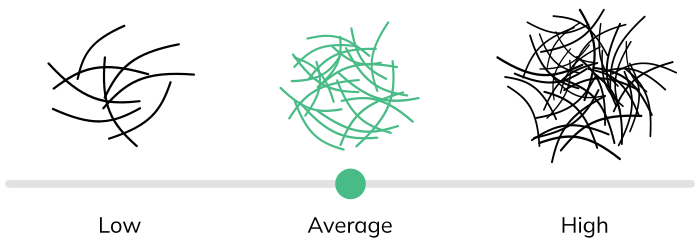
Yes, as a double-coated breed, Eurasiers shed moderately year-round. Shedding becomes heavy during seasonal coat changes in spring and fall. This is when they lose a large amount of undercoat as their body adjusts to temperature changes. Feel free to brush your dog daily during this time to manage shedding and keep loose fur under control.
Keep in mind that these dogs aren’t a good choice for people looking for a low-shedding or hypoallergenic dog.
What Health Problems Do Eurasiers Have?
Eurasiers are prone to certain inherited health issues. This includes patellar luxation, where the kneecap slips out of place in dogs that are very active or overweight. Thyroid issues like hypothyroidism are another condition that Eurasiers seem more prone to than some breeds, and managing that usually involves regular blood testing and lifelong medication if needed.
Hip dysplasia, which affects the normal development of the hip joint, is also something vets commonly monitor as dogs grow and age. Eye issues, such as distichiasis (extra eyelashes), entropion, and ectropion, can also occur, though they’re less common and vary in severity.
Even though these conditions sound serious, they’re not guaranteed to affect every Eurasier. Good breeders screen for health problems before breeding, and regular vet care can help catch health issues early.
How Long Do Eurasiers Live?
The Eurasier lifespan (12 to 16 years) is fairly long compared to many medium-sized breeds. You can help Eurasiers live longer by keeping them at a healthy weight, giving them regular exercise, and maintaining preventive veterinary care.
What Should a Eurasier Eat?
It’s best to feed your Eurasier high-quality commercial dog food designed for medium-sized breeds with moderate energy levels. Many people prefer raw diets and home-cooked meals after consulting with their vet.
Make sure you follow regular mealtimes and avoid overfeeding. The portion size should depend on the dog’s activity level, age, and metabolism. Eurasiers are picky eaters, so you’d also want to switch to a different type of food every few days to keep them from getting bored.
Is a Eurasier the Right Dog for Me?
Eurasiers do best with families, couples, or individuals who spend a fair amount of time at home and follow a predictable daily routine. They offer calmness and emotional stability.
However, if you have kids at home, make sure they understand how to interact gently with dogs before you bring one home. Similarly, if you have a multi-pet household, you’ll have to introduce your Eurasier to the other animals in a controlled setting and set aside time for socialization every day.