English Pointer: Your Complete Guide
Also known as the classic pointer, the English pointer is the most prominent dog breed in the pointer family, a term used to describe hunting dogs that locate and “point” game birds for hunters.
While many of these dogs are still utilized as hunting dogs, most English pointers in today’s world enjoy their lives as family companions. They are affectionate and gentle dogs that fit right into all kinds of households, though they pair best with families that can meet their daily exercise and mental stimulation needs.
If you’re considering the English pointer as your next dog, you’re in the right place. This Dog Academy guide will walk you through everything you need to know about the English pointer, covering the breed’s temperament, physical traits, coat care, family life, intelligence, grooming needs, and more. Read to the end to get a complete guide to the English pointer before buying or adopting one.
Table of Contents
Quick Look at the English Pointer
The table below summarizes the characteristics of the English pointer. It can give you an idea of what to expect from this breed before diving into detail.
| Weight/Height | 45 to 75 pounds / 23-28 inches |
| Coat Type | Short, smooth coat, sleek to the touch |
| Grooming Needs |  |
| Shedding |  |
| Temperament | Affectionate, loyal, responsive, hardworking |
| Good With Kids | |
| Good With Other Animals |  |
| Intelligence | |
| Easy to Train | |
| Energy Level | |
| Barking Habits | |
| Lifespan | 12-15 years |
What Is the History of English Pointers?
The English pointer we have today emerged in England in the early 1700s. Although the exact origins are unknown, it is thought that the English pointer was developed from a variety of foxhounds, greyhounds, setters, and bloodhounds.
The English pointer is considered the classic pointer because it is the foundation of many other pointer breeds. The English pointer is the oldest and most influential gun dog breed. This breed’s genetics were widely used to refine hunting dog breeds, equipping them with better scenting ability, stamina, pointing instincts, and agility.
As for their history in the United States, the English pointer is one of the nine dogs that the American Kennel Club first recognized in 1878. The English pointer was also one of the most popular hunting dogs from 1900 to the 1950s, but as recreational hunting declined from the 1960s, so did the numbers of English pointers. Today, English pointers aren’t as popular as they once were, but they are still easily recognized.
What Do English Pointers Look Like?
The English pointer comes in a variety of coat colors. Most English pointers are white with orange/red markings throughout the body. The full list of recognized coat colors includes black and white, lemon and white, liver and white, orange and white, lemon, liver, orange, white, and black.



What Size Is an English Pointer?
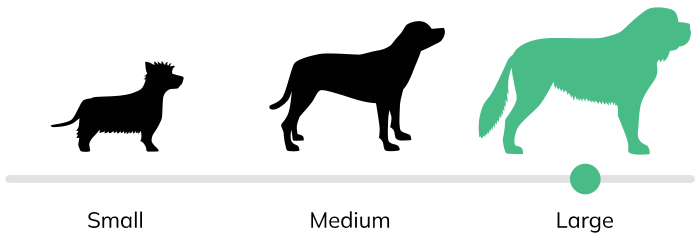
The English pointer is a large dog with a slender body type. Males weigh between 55 and 75 pounds, whereas females weigh between 45 and 65 pounds. In terms of height, females can reach up to 26 inches tall at the shoulder and males up to 28 inches. Although English pointers are very tall, they are incredibly agile for their size, a trait that has made them renowned hunting dogs.
What Is an English Pointer’s Coat Type and Length?
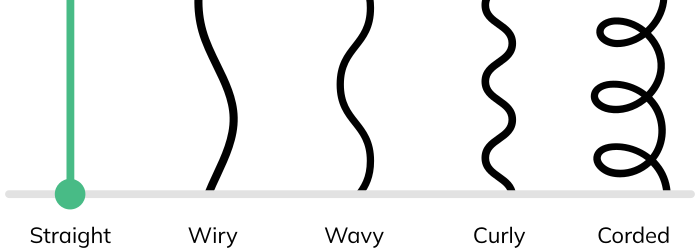
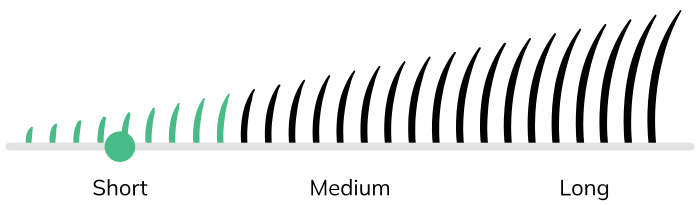
The English pointer has a short, smooth coat that’s quite sleek to the touch. The coat is naturally water- and dirt-repellent, enabling them to carry out their hunting dog duties no matter the weather. With this coat type, English pointers don’t require much grooming, but their shedding level might surprise you – continue reading below to learn more about their grooming needs and shedding level.
What Is an English Pointer’s Temperament?
The English pointer carries many of the traits you would expect from a pointer. They are highly driven dogs with a hardworking personality. Any task that you throw at them, they are willing to execute flawlessly. This is why they’ve been among the most effective pointers throughout the centuries they’ve existed and have been used to create many other pointer varieties.
When not working, English pointers become loving family dogs that want nothing more than to give and receive affection. They are the lovey-dovey type that bonds strongly with their family members, particularly those who get involved with their exercise during the day.
While these quickly summarize the English pointer’s personality traits, there’s much more to cover. Below, you will learn more about their temperament as we look at their family life, aggression, barking tendencies, and more.
Are English Pointers Good With Kids?
English pointers generally get along well with kids in the family. Although they are highly driven and energetic dogs, they tend to be calm and patient in the presence of their family members, which makes them an ideal dog for households with children.
However, the large size of the English pointer and their tendency not to always be aware of it can make them dangerous around young children. That’s why supervision is essential in ensuring that kids and English pointers get along well. Despite the English pointer’s personality, which ultimately is quite tolerant in nature, kids in the family should always be taught to respect dogs and interact safely, no matter what.
Are English Pointers Good With Other Animals?
English pointers are social creatures that don’t have an inherent desire to challenge other dogs. They enjoy being a part of a pack, regardless of their social status within. If you have dogs at home, you shouldn’t have even the slightest doubt about getting an English pointer. Still, a proper introduction is critical in ensuring an English pointer gets along well with other dogs in the family.
With other pets, it mainly comes down to individual temperament. While most English pointers will learn not to mess with cats, they may have an instinct to chase small animals on the move, including cats, hamsters, squirrels, and guinea pigs. If you have small prey animals, take this into consideration; you will need to keep them somewhere your English pointer can’t reach to ensure their safety.
Are English Pointers Aggressive?
English pointers aren’t aggressive at all. As long as an English pointer is properly socialized, those who plan on getting one of these dogs shouldn’t have any worries. Plus, they take training well, so any behavioral issue that results in aggression can be fixed by following appropriate training techniques.
However, English pointers are often prone to reactivity, which shouldn’t be mistaken for aggression. Reactive dogs simply don’t know how to appropriately respond to the stimuli around them, whether it is other dogs or strangers. If this becomes a problem for your English pointer, you can utilize our dedicated course on addressing reactivity.
Do English Pointers Bark?
Surprisingly, English pointers aren’t huge barkers. While they certainly bark a bit more than your average dog, they don’t always use their powerful bark to communicate. When an English pointer barks, there’s usually a good reason for it.
Nevertheless, reactive English pointers can be prone to excessive barking, which we also have a course on. Any behavioral issue, whether it is reactivity, excessive barking, or aggression, must be addressed using positive reinforcement training. English pointers are quick to develop a negative association with repeated behaviors, so the opposite can have severe consequences on their training journey.
Are English Pointers Affectionate?
English pointers are among the most affectionate hunting dogs. When these dogs are content with their day and don’t have any excess energy to release, they become such loving dogs that want nothing but the owner’s attention. They enjoy cuddles and being pet, and despite their large size, can become lap dogs.
This affectionate side of the English pointer isn’t always reserved for their immediate family. Some English pointers can be surprisingly friendly, to the point of being golden retriever friendly. These English pointers tend to warm up to strangers almost immediately, and as you can expect, they don’t make the best guard dogs. However, as mentioned, individual temperament plays a great role in this overall.
Are English Pointers Intelligent?
The English pointer is a highly intelligent dog breed. The breed’s intelligence is one of the main reasons it was used as the foundation for many other pointer breeds. They are quick to understand new things and read social situations well, making them highly capable, thanks to their big brains.
However, this much intelligence doesn’t always translate to trainability. English pointers are well-known for their stubborn streak, which we cover in detail below.

Are English Pointers Energetic?
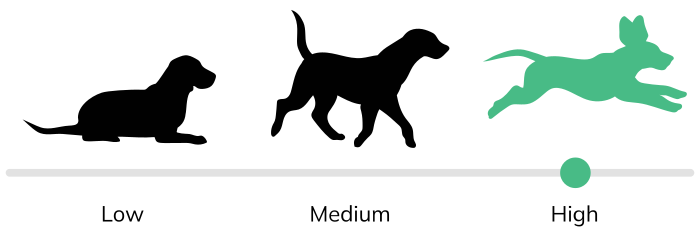
As you can expect from a driven hunting dog, English pointers are one of the most energetic dog breeds on the planet. They can work tirelessly alongside their owners in the field, and this stamina, as well as their hardworking nature, make English pointers great candidates for a variety of dog sports. This includes field trials, scent work, hunting competitions, agility, and the AKC Rally.
With all this, prospective owners must be ready for a dog that requires a lot of exercise. These dogs should be provided with a minimum of an hour of daily exercise that’s a combination of walks, playtime, and mentally enriching activities. If they don’t get the exercise they need, English pointers can be quick to develop behavioral issues, so it must be a consideration for those interested in this breed.
Are English Pointers Easy to Train?
English pointers, despite their highly intelligent brains, don’t have the best trainability due to their tendency to be stubborn. This, however, isn’t a surprise, as most hunting dogs have independent personalities that would rather follow where their nose or instincts lead them, rather than the owner’s direction. After all, it was the English pointer that pointed where the game was hiding, not their human companions.
However, owners can work around this by introducing training early and employing positive training techniques to train their dogs. By knowing what motivates your English pointer and using that as a reward, whether it is a treat, short playtime, or possessing their favorite toy, you will then be able to get the most out of their trainability.
Are English Pointers Good Watchdogs?
Whether or not an English pointer is a good watchdog depends entirely on individual temperament. While some are vigilant dogs that will bark at anything suspicious that comes near their territory, others will simply greet everyone with a wagging tail. Most English pointers, however, tend to act in the first way.
If you want your English pointer to take on guarding duties, bring this up to the breeder. They can help you select a puppy that’s going to be the most protective. If adopting, however, observe the English pointer’s temperament closely to understand their level of territorial streak.
Are English Pointers Good Service Dogs?
Like many other hunting dogs, English pointers don’t make great service dogs due to their independent personalities and tendency to follow what catches their interest. While they certainly have what it takes to be trained for service dog work, most English pointers struggle when it comes to the reliability part. Therefore, it would be wrong to say that the English pointer makes a good service dog.
How to Care for an English Pointer?
Overall, the primary care needs of an English pointer are exercise and mental stimulation. They aren’t just companion dogs; English pointers were bred for generation after generation to be the perfect hunting dog for pointing game. They have demanding needs when it comes to exercise and mental stimulation that every prospective owner planning to get one must be ready to meet.
However, like every dog, they also have basic care needs. Below, we cover what to expect from caring for an English pointer, covering grooming, feeding, and health. These will help you decide whether the overall care needs of the English pointer make the breed an ideal dog for you.
Do You Need to Groom an English Pointer?
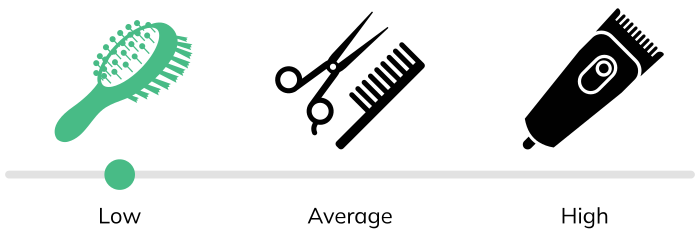
Unlike their other needs, English pointers are very low-maintenance when it comes to grooming. The coat of this breed only needs weekly brushing using a rubber grooming mitt. They should be bathed when dirty or smelly and don’t require any professional grooming. However, you can still take them to a professional groomer for nail trims, ear cleaning, and other grooming needs.
Do English Pointers Shed?
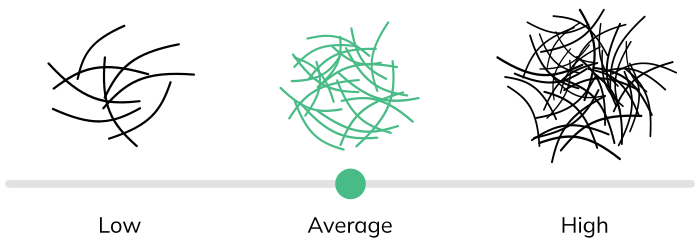
English pointers are average shedders. They don’t shed as much as dog breeds with a thick undercoat, such as huskies, but they are also far from hypoallergenic. If shedding becomes a problem, we recommend increasing the brushing frequency to a few times a week and deshedding treatments every now and then to manage it.
What Health Problems Do English Pointers Have?
As you will find out from the breed’s lifespan in a moment, the English pointer is overall a healthy dog breed. Although they are prone to certain health conditions like any other dog breed, English pointers typically develop health problems much later in their life.
However, English pointers are at risk of bloat, which can be a life-threatening condition due to being large and deep-chested. Owners must educate themselves on the early signs of it to ensure their dog’s well-being. Besides this, the health problems to watch out for include hip dysplasia, elbow dysplasia, thyroid issues, and eye problems like entropion, cataracts, and progressive retinal atrophy.
How Long Do English Pointers Live?
The English pointer lifespan is long-lived, especially compared to dog breeds that are around the same size. They have an average lifespan of 12 to 15 years, though factors like genetics, lifestyle, diet, and environment can impact lifespan significantly for the better or worse.
What Should an English Pointer Eat?
The English pointer is a working dog that requires appropriate feeding. They are energetic dogs that need nutrition that caters to their needs. Generally, they benefit from dog foods formulated for energetic and large breeds, which tend to be packed with proteins and supplements like glucosamine.
If you’re in doubt about what you’re feeding your English pointer, consult an animal nutritionist or your veterinarian. You can also check our dog food reviews to find the best commercially available dog food for your English pointer.
Is an English Pointer the Right Dog for Me?
The English pointer is a highly energetic and devoted dog breed with origins as a hunting dog. They are affectionate with the family and fit well into households with existing dogs. Given that exercise and mental stimulation are a big part of their needs, these dogs make a particularly good choice for those leading an active lifestyle, especially for owners who love the outdoors.
To decide whether or not the English pointer is the right dog for you, evaluate your lifestyle. If your answer to the question “Are you overall an active person?” is yes, then the answer to whether an English pointer is the right dog for you is likely to be yes as well.
If you have even the slightest doubt, we highly recommend reconsidering your decision, as English pointers can be too much to handle if they don’t receive adequate daily exercise and mental stimulation.