Elkhound: Your Complete Guide
The Norwegian elkhound, more commonly referred to as the elkhound, is a mid to large-sized breed with a dense double coat, beautiful, kind eyes, and a loving, loyal personality. One look at this dog and you will want to bury your face in its fluffy coat, and elkhounds are all too happy to oblige. They are intensely affectionate dogs that grow very close to their families.
It isn’t all roses, however. They can suffer from heat strokes much more easily than other dogs due to their thick fur, and will need colder climates or owners who can keep them cool during hotter weeks. They also require a lot of exercise daily, and younger pooches will require consistent training and socialization time with other dogs until they learn to behave themselves.
If you are interested in adopting or learning more about the Norwegian elkhound, we are all too happy to help. This article will take a look at the history, health, and care requirements of the breed. To learn more about this lovable dog, follow our complete guide on the elkhound below.
Table of Contents
Quick Look at the Elkhound
Below is a quick glance at this special breed in terms of their physical characteristics, lifespan, temperament, and grooming needs.
| Weight/Height | 48 – 55 pounds, 19 – 20 inches |
| Coat Type | Thick, fluffy doublecoat |
| Grooming Needs |  |
| Shedding | |
| Temperament | Friendly, loyal, and confident |
| Good With Kids | |
| Good With Other Animals | |
| Intelligence |  |
| Easy to Train | |
| Energy Level | |
| Barking Habits | |
| Lifespan | 12-15 years |
What Is the History of Elkhounds?
A person taking a halfhearted glance at the elkhound might mistakenly think they have spotted a fluffy wolf, and this is for good reason. Their sharp, lupine features come from their ancestry, where their predecessors were crossbred with wolves found specifically in Scandinavia.
These features can also be seen in other dog breeds that originated from this area, such as the Finnish lapphund, Swedish lapphund, the Lapponian herder, and more. Though the breed may be friendly and loving to all who come upon the charming canine, they have a more serious, attentive side that makes them excellent for hunting wolves, bears, and other larger animals.
While they were officially recognized by the American Kennel Club in 1913, the breed is much older than that. Due to their geographic origin and long-term domestication, it is heavily suggested that they lived with the Vikings. Archaeological discoveries support this, finding a breed almost identical to the elkhound commonly buried with their seafaring owners.
What Do Elkhounds Look Like?
Dogs all have their own charm: Chihuahua’s win you over with their awkward and quirky nature, Labradors melt your heart with their gentle demeanor and affectionate personality, etc. What you first notice about the elkhound is how genuinely stunning they are as an animal.
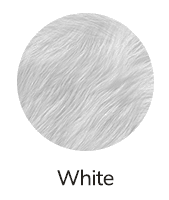
Their coat is beautiful, their piercing, observant eyes speak to their bright minds, and their markings are always unique to that specific canine. They come in a mixture of neutral colors with a tail that curls upward and forward along their back. While they are not a carbon copy of their feral cousins, they do look like chunky, stout wolves with more agreeable personalities.


What Size is an Elkhound?
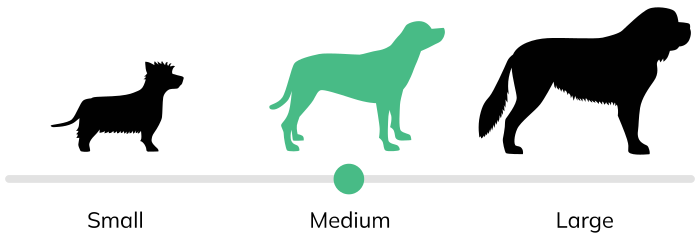
Elkhounds are somewhere in between medium and large, with most people considering them slightly above average-sized breeds. They won’t knock you off your feet when they jump up at you, but they are very powerful dogs, so do not underestimate their compact size. Most will typically sit between 19 and 20 inches and weigh between 48 and 55 pounds.
What Is an Elkhound’s Coat Type and Length?
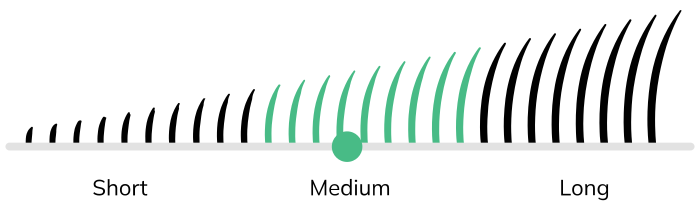
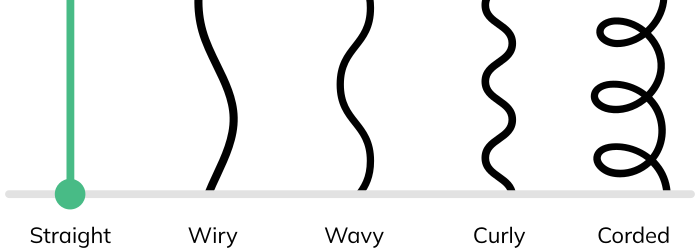
Their coat is beautiful and thick, and sits somewhere in the middle in length. While their brilliant color patterns of dense, woolly fur look like they could feature in a shampoo commercial, you will need to ensure it is looked after. They are fairly clean dogs, but their fur can get dirty, matted, or spread across every piece of furniture in your home if you aren’t diligent in grooming.
What Is an Elkhound’s Temperament?
Elkhounds carry themselves like the protagonist of some teenage adventure novel; they are uniquely friendly, deeply loyal, and have an admirable amount of self-confidence. If you set them to a task, they are going to do their absolute best to achieve results, whether they are impossible or not.
They will make you wonder if your other family members are doing enough, as the elkhound quickly and quietly becomes a vital part of your household. They are pack-oriented and grow very close with those around them, though they can be standoffish with pets, and their main character nature has them seeing family members as equals, not superiors.
Because of this, they can absolutely run through nervous or non-confident owners, and anyone who adopts one should be loving and patient, but firm when needed. They can be overly alert at first, and as we will repeat a few times throughout this article, you should try to reduce their barking as soon as you can.
Are Elkhounds Good With Kids?
Elkhounds are very sweet and friendly with kids, though they should be monitored while around them, as pack politics can play a large role in their behavior. If an elkhound sees a kid as a member of the pack, particularly a smaller kid, they may try to establish themselves as the dominant pack member, which can obviously cause issues.
This is not to say they will be mean or cruel to your child, but they may not know their own strength and should be rewarded for more sociable behavior. Your child should also be instructed in how to interact with dogs, and a healthy mutual respect will go a long way with both.
Are Elkhounds Good With Other Animals?
Elkhounds are generally good with other animals, though they do have a prey drive that is worth considering. That being said, your house cat is a little below their weight class in terms of game, and many will not see them as prey due to their history of hunting animals two to three times their size. That being said, you will still need to watch them around smaller animals.
Other dogs come with the same issues a child might; the elkhound is gonna try to establish itself as the leader of the two. This is fine if you have a laidback Labrador who isn’t overly concerned (or remotely aware) of the power struggle, though another stiff-necked breed may give you some trouble.
Owners looking to bring an elkhound into their family should focus on monitored interactions and daily socialization so the dog can become more outgoing. This will also make them more comfortable around new people and lessen the likelihood of a nervous reaction.
Are Elkhounds Aggressive?
Some people may assume elkhounds are aggressive, though this is rarely the case. They are self-confident, stubborn, and proud, which can lead them to be obstinate initially if they are fighting for dominance. This is almost always short-lived though and usually followed by a big, bright smile and tapdancing paws.
All that said, you will almost never hear about an elkhound being overly aggressive unless they have been raised wrong or were concerned about the safety of a loved one. These are protective, loving dogs; they are not bullies, bruisers, or bad canines, but competent companions who need social instruction and guidance to bring out their best attributes.
Do Elkhounds Bark?
Apartment-dwelling families will have sincere difficulty with the elkhound. They are boisterous, attentive, and completely open to the idea of barking all night long. While this makes them exceptional watchdogs, it also makes them a nuisance for neighbors who did not sign up for a wolf’s grandkid on the other side of their bedroom wall.
The biggest barrier to adopting an elkhound will be its vocalization. While you absolutely need to work on their barking habit, you should also try to get them accustomed to external stimuli. If you can curb a dog’s reactivity, you can lessen a lot of their more noisy outbursts.
Are Elkhounds Affectionate?
Yes. Elkhounds are notoriously sweet, fluffy, and friendly. Their occasional devious nature may upset some owners temporarily, until the elkhound decides to use its signature move of showing its belly. If you want a companion that will relax with you after a long walk, the elkhound is an excellent choice. They genuinely are incredibly tender animals.
Are Elkhounds Intelligent?
You can take one look at the elkhound and get a sense of their cognitive ability. They just look bright, and on average, most are. This breed can understand complicated commands, follow task-oriented activities, and love a chance to show off their sharp minds. If you want an agile and astute companion, you’ll find few better than the elkhound.

Are Elkhounds Energetic?
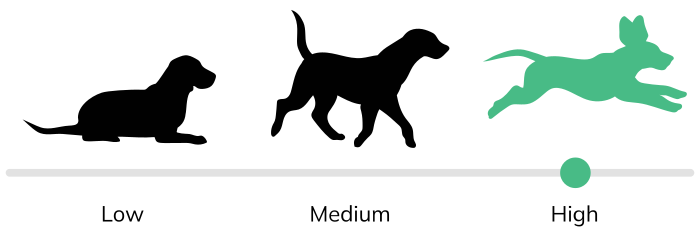
The elkhound used to track game for miles across snowy terrain without any rest or relaxation along the way. In 2026, most are spending their days lounging around with their owners and giving knowing nods to strangers on their daily walk. That does not mean they do not have the same stamina they used to, and their ample engine requires regular exercise to stay healthy.
There is no “ideal” regimen for this dog, but one to two hours of daily exercise is more than sufficient. This can look like a lot of different things: long walks around a nature trail, hiking up a mountain, playing in your backyard, spending time with other canine friends, etc. As long as they are able to stretch their legs for a couple of hours a day, they should be more than happy.
Are Elkhounds Easy to Train?
Elkhounds are considered very bright by most familiar with the breed, and their history of tasks and jobs has taught them to handle complex physical and mental challenges. They can be somewhat stubborn initially, particularly if they have a lot of energy, so patience and a bit of playtime can go a long way to help them focus.
That being said, they are a genuine pleasure to train, and the breed takes to sessions well. They love praise, enjoy spending time with their owners, and anyone who meets an elkhound is immediately aware of how intelligent the breed can be. Training a canine is a lot of work, however, so we recommend professional courses for those who aren’t familiar with it.
If you are interested in agility training, the elkhound is perfectly suited for the task. They are athletic dogs that are bright enough to overcome the challenges of an agility course and have the physical attributes to blaze a trail through tunnels and inclines alike.
Are Elkhounds Good Watchdogs?
While there are comparably proficient breeds, you won’t find a better watchdog than the elkhound. They have been hunting for centuries and have a natural alertness and keen senses to detect any sights or sounds. If there is anyone sneaking around your house, whether they be a burglar or an ambitious squirrel, your elkhound will be the first to let you know.
This naturally protective nature can have a downside, and it is very vocal and sharp. Their bark is shrill for the express purpose of alerting their owners to danger, but it can also alert your local police department to a noise complaint. If you are going to have an elkhound, it is incredibly important that you curb their barking habit if you are in a compact neighborhood or apartment.
Are Elkhounds Good Service Dogs?
Like all dogs, it will largely depend on the individual’s temperament. Trying to decide if a dog can make a good service dog before you even meet one can be a difficult task, but on average, elkhounds hold the intelligence, attention span, and personality to excel. You will need to curb their energy and ensure they can focus during service tasks, though they are absolutely competent enough.
In terms of psychiatric service, they are equally useful. The same can be said for emotional support, as these dogs are very pack-oriented from their wolf ancestry. They will be able to detect negative emotions and are naturally affectionate, loving, and attentive to those they consider family.
How to Care for an Elkhound?
The first thing to know about elkhounds is that they are incredibly affectionate. Care goes beyond the occasional walk with your dog; they will want time with you specifically. Give them daily exercise, and if you can include time where both of you engage in a shared activity, it can help form a lasting bond early on in your relationship.
They are an active and intelligent dog; there is no getting around that with a breed like the elkhound. They will need time to work out their muscles and challenges to flex their ample mental acuity. Because of this, many people celebrate how quickly and competently the breed can learn tricks. However, an energetic and intelligent dog can also cause chaos in your home.
Past that, you will want to ensure that they have time to grow comfortable around new people. Elkhounds tend to respond better to humans than other dogs, who they may not warm up to immediately. Socializing your elkhound early can minimize their territorial nature, and many owners will be surprised at how outgoing their dog can become.
Do You Need to Groom an Elkhound?
Their grooming needs are not excessive, but failing to maintain a consistent schedule may result in a pretty messy home. The elkhound has a large, double coat that requires infrequent but in-depth brushings about two to three times a week. This will increase during seasonal change, when most canines experience increases in shedding.
Regardless of breed, there are certain tasks that any worthy owner must make a priority. When your elkhound runs and rolls around outside, check their ears before they come in. The ears of a dog collect more dirt than a dust mop, and the area can quickly become infected. Similarly, when their nails begin to tap across the kitchen floor, you will need to trim them.
Because of their size and the insane fluff that comes with their coat, many owners prefer to go to a groomer. When your elkhound starts to smell more and more like the woods out back, a professional can help ensure that they get a thorough cleaning. Most elkhound owners will bathe their dog once every three months or so, as they are not a dirty breed on average.

Do Elkhounds Shed?
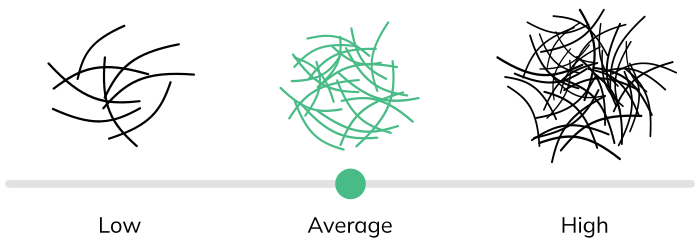
Elkhounds do shed, but not nearly as badly as one would expect. You would be forgiven for thinking that these dense dogs leave trails of neutral colored fur wherever they roam, though this is far from the truth. A dutiful owner who brushes their dog two to three times a week will find that the elkhound is entirely manageable.
As we discussed above, you may need to go over their fur once or twice, as the double coat can withhold quite a bit of fur, and it is much fuller than it may appear at first glance.
What Health Problems Do Elkhounds Have?
Like any dog breed, elkhounds are susceptible to various genetic conditions and medical issues. The following diseases are likely to occur, but are not guaranteed in the life of your own pooch. It is a good idea to familiarize yourself with common symptoms of each disease. This way, you can get them treated before their condition and quality of life are affected.
The following list contains some of the most common health problems an elfhound will face:
- Hypothyroidism – Hypothyroidism is a condition that affects the thyroid gland and can cause symptoms like epilepsy, increased weight, loss of energy, hair loss, and more. See a veterinarian for medication and learn about ideal diets to minimize symptoms.
- Progressive Retinal Atrophy – A disease that negatively impacts a dog’s vision, Progressive Retinal Atrophy or PRA is the slow and steady decline in a dog’s ability to see, with many struggling to see at night. While it may make the elkhound a bit more dependent on their owner, this disease will not be life-threatening.
- Fanconi Syndrome – Fanconi syndrome is a disease that is passed down from the parent to their litter and affects the kidneys. This disease can be deadly if left untreated, and common symptoms include loss of muscle, muscle soreness, loss of energy, frequent urination, and a dog that seems endlessly thirsty. To combat Fanconi syndrome, you will need to see a vet for the proper medication. Similarly, you will need to adjust what food they are eating and ensure that they have plenty of water to handle their increased levels of thirst.
- Hip Dysplasia – Hip Dysplasia happens as the dog matures physically. As the dog grows, the hip joints do not set properly and will eventually affect the cartilage. Over time, hip dysplasia can lead to worse conditions like arthritis, muscle atrophy, bone spurs, joint pain, and a restricted range of motion.
These diseases, for the most part, can have minimal impact if owners spot them early and take the proper precautions. Because of this, we heavily recommend checking out the different conditions above to get a better idea of what to look out for.
How Long Do Elkhounds Live?
If an owner is cognizant of their elkhound’s health and aware of any common issues that they may experience – such as the ones listed above – they can have long, healthy lives. On average, you can expect 12 to 15 happy years.
What Should an Elkhound Eat?
Elkhounds are a larger breed of dog that have larger energy reserves than average, which will translate to higher caloric requirements. An adult elkhound should be fed 2 to 2.5 cups of nutrient-rich food daily. Depending on your individual dog’s activity level, you can give a bit less if they are more sedentary and a bit more if they are sprinting in circles for hours at a time.
Is an Elkhound the Right Dog for Me?
If you want to get an elkhound, there are some things to consider. The most important is their limited heat tolerance, which means those in hotter climates will need to commit to looking after their elkhound carefully. Walk them early or as the sun is setting, give them ample water, and provide them with areas with plenty of shade when outside.
You will also want to make sure you have the time and energy to keep up with elkhounds. They can be very energetic, and their mid-sized frames can cover a lot of ground before the day is over. If you want a cozy, comfortable companion that you can venture out with on cooler days, the elkhound is a great choice. If you want an outside dog in Florida, there are better breeds.