Dogue de Bordeaux: Your Complete Guide
The dogue de Bordeaux is the French mastiff, and like many mastiff-type dogs, they are large, powerful, and family-oriented with strong protective instincts. Shortly known as the dogue, they fit into experienced families looking for a big dog to keep older children company and guard the home while everyone is away.
While the dogue de Bordeaux carries many of the traits typical of the mastiff family, it has unique characteristics that require everyone who’s interested in this breed to fully understand before adding one to the family. For example, the dogue de Bordeaux is a lot more affectionate than other mastiff-type dogs, often nudging and pushing their loved ones to get attention and acting unaware of their size, thinking that they are lap dogs.
Dogues have many other traits that make them stand out among not just mastiff-type dogs but any other, and in this article, we will provide an in-depth guide to this French mastiff. Continue reading as we cover everything you need to know about the dogue de Bordeaux before getting one.
Table of Contents
Quick Look at the Dogue de Bordeaux
Below is a table that summarizes the characteristics of the dogue de Bordeaux. We will cover each point in the coming parts below.
| Weight/Height | 100 pounds+ / 23-27 inches |
| Coat Type | Short, smooth coat |
| Grooming Needs |  |
| Shedding |  |
| Temperament | Affectionate, loyal, protective, calm |
| Good With Kids | |
| Good With Other Animals |  |
| Intelligence | |
| Easy to Train | |
| Energy Level | |
| Barking Habits | |
| Lifespan | 5-8 years |
What Is the History of Dogue de Bordeaux?
The history of the dogue de Bordeaux is a topic of debate to this day. While some suggest that the breed was developed by indigenous French breeders thousands of years ago, others claim that the dogue de Bordeaux is a result of breeding different mastiff-type dogs, pointing to the Greek, Tibetan, and Neopolitan mastiffs as their ancestry.
Regardless of their exact origins, it is safe to say that the dogue de Bordeaux is an ancient dog breed that has been protecting the farms and castles in France throughout the centuries it has existed.
While the dogue de Bordeaux existed for many centuries in Europe, it was virtually unknown in the United States until the 1989 Tom Hanks movie, Turner & Hooch. The movie’s popularity put the dogue de Bordeaux in the spotlight, and the American Kennel Club formally recognized the breed in 2008. Today, dogues are still very few in numbers in the United States, and most are kept as family guardians.
What Do Dogue de Bordeaux Look Like?
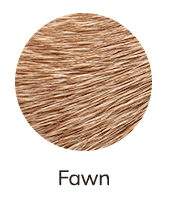
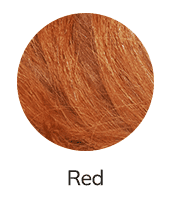
The dogue de Bordeaux, according to the breed standards, has only four accepted colors. These are fawn, red, mahogany, and isabella. While the first three are common knowledge, the last one, isabella, also known as isabelline, is described as a diluted version of liver that appears similar to lilac. Even though it is among the recognized coat colors, it is by far the rarest. Naturally, dogue de Bordeaux with this coat color are expensive.
What Size Is a Dogue de Bordeaux?
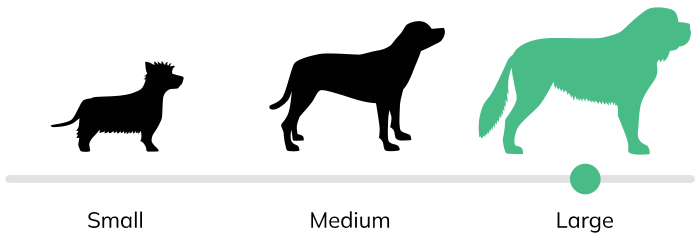
The same breed standards that accept the four coat colors mentioned above describe the weight of the dogue de Bordeaux for females as 99 pounds and up and 110 pounds and up for males. On average, however, females can be up to 120 pounds, and males can reach an impressive 150 pounds.
What Is a Dogue de Bordeaux’s Coat Type and Length?
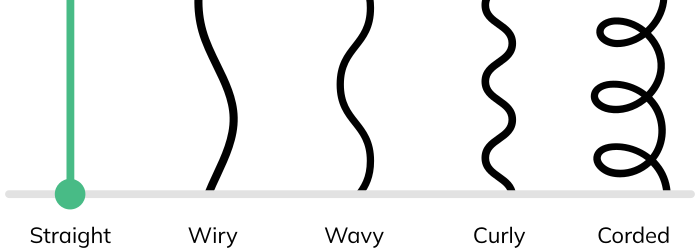
The dogue de Bordeaux has a short, smooth coat. While this coat type typically doesn’t require a lot of grooming, owners need to spare quite a bit of time for this due to their large size. Plus, the shedding levels of dogues can be surprising, which we cover in detail in the coming parts, along with their exact grooming needs below.

What Is a Dogue de Bordeaux’s Temperament?
The dogue de Bordeaux is a mastiff that has many of the traits one would expect from this type of dog. They are protective, watchful, and calm dogs that are content with their family’s calming presence around.
While these are typical, one trait that makes the dogue de Bordeaux stand out among other mastiff-type dogs is how devoted they are to their families. Some are even overly affectionate, to the point that they constantly demand pets and make all sorts of grunting noises and expressions to get their owner’s attention.
Along with these, the dogue de Bordeaux has other unique personality traits. Here’s more on their temperament to help you decide if the dogue de Bordeaux is a matching companion for you.
Are Dogue de Bordeaux Good With Kids?
The dogue de Bordeaux is a family-oriented dog that enjoys the presence of children. They bond strongly with them and often act as gentle guardians who are careful around smaller family members. The dogue de Bordeaux is also pretty tolerant and will get along well with children of all ages.
However, due to their robust frame, dogues are a better match for families with older children. Even though they are pretty careful around children, they are extremely heavy dogs; a happy dogue de Bordeaux moving around can accidentally knock over kids, which can lead to unwanted but serious injuries. Therefore, supervision is essential because of their size.
Are Dogue de Bordeaux Good With Other Animals?
The relationship of dogues with other animals tends to be mixed. While a dogue de Bordeaux tends to act gently and patiently around kids, they may not always show this to other animals in the family. They certainly get along well with other dogs in the family, but dogues tend to have a harder time accepting the presence of smaller animals due to their high prey drive. However, they can get along well with cats if raised together.
Outside the family, the dogue de Bordeaux can be selective during walks due to their territorial nature. That’s why socialization plays a key role in ensuring a dogue de Bordeaux doesn’t see friendly dogs they see during walks as a threat. Providing these dogs with adequate socialization is one of the most critical aspects every prospective owner must be fully prepared for.
Are Dogue de Bordeaux Aggressive?
The dogue de Bordeaux is a mastiff with strong protective instincts. Naturally, they are more prone to aggression than other dog breeds. However, a well-socialized dogue de Bordeaux will balance this and use their aggression only in necessary situations without being destructive to their environment, such as an intruder trying to break in or strangers approaching the yard.
This tendency to be aggressive is one of the reasons why they pair best with experienced owners who can help them channel their instincts in productive directions.
Do Dogue de Bordeaux Bark?
The dogue de Bordeaux is an average barker overall. If there’s something that gets their attention, you can count on a dogue de Bordeaux to use their powerful bark to announce. In fact, many only bark to alert, but others may also do so to get attention or express boredom.
While they aren’t big barkers, those who intend to get a dogue de Bordeaux should note that this breed is very loud. Even though they don’t bark continuously, everyone near them will know when a dogue de Bordeaux barks. This should be a consideration for those living in communities with noise restrictions, as the dogue de Bordeaux has a very loud, memorable bark.
Are Dogue de Bordeaux Affectionate?
The dogue de Bordeaux, without a doubt, is among the most affectionate mastiff-type dogs. They bond strongly with every member of their family and enjoy cuddles, praise, and any form of attention that they can get from their loved ones.
However, as you know by now, this affectionate nature is only reserved for their immediate family. A dogue de Bordeaux won’t take a complete stranger entering their territory lightly. If you have frequent guests, note that a dogue de Bordeaux will take time to accept their presence and won’t keep an enthusiastic look until they are sure that the guests don’t mean a threat to their family.
Are Dogue de Bordeaux Intelligent?
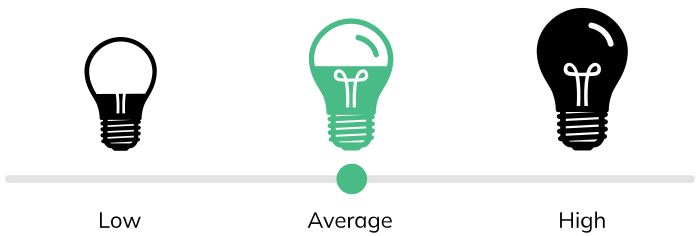
The dogue de Bordeaux, much like other mastiff-type dogs, has average intelligence. They are observant dogs that keep an eye out for their surroundings to ensure their family is safe from threats, which they excel at. However, it is best not to expect them to be the smartest dogs and set realistic expectations about their intelligence.
Are Dogue de Bordeaux Energetic?
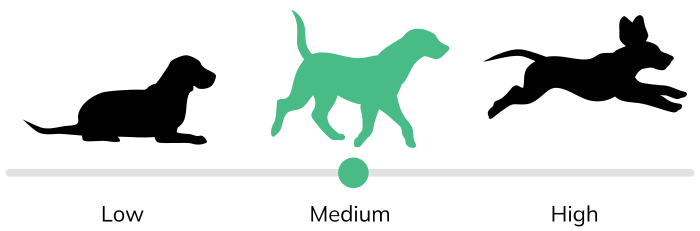
The dogue de Bordeaux, once again, like other mastiff-type dogs, is a low to medium energy breed. They don’t require intense exercise but benefit from daily walks and playtime. A quick stroll around the neighborhood twice a day, in addition to potty breaks, is typically enough to keep these dogs fit.
If you have a large space to give a dogue de Bordeaux, patrolling their territory can also provide them with a good deal of exercise. However, their daily guardian duties shouldn’t replace walks, as they also crave mental stimulation and socialization to prevent boredom. Otherwise, it can lead to behavioral issues, which, considering their large and powerful frame, can be difficult to manage, even for experienced owners.
Are Dogue de Bordeaux Easy to Train?
The trainability of the dogue de Bordeaux usually comes down to individual temperament. While some are highly trainable, others are stubborn and take time to train, even for basic commands like sit and stay.
Nonetheless, it is safe to say that most dogues act the latter way. You will need to be patient when training your dogue de Bordeaux and utilize positive reinforcement training to keep them motivated during training sessions.
Dog Academy has plenty of online courses that can help you train your dogue de Bordeaux. Whether you’re raising a puppy or adopting an adult from a shelter, browse our online courses to meet your dog’s training needs by taking charge of training.
Are Dogue de Bordeaux Good Watchdogs?
The dogue de Bordeaux doesn’t require an introduction for its capabilities as a watchdog. Even better, a dogue de Bordeaux can serve as a reliable guardian without any dedicated training. They are inherently protective and watchful dogs that will alert you in case of something suspicious or even take matters into their own hands and stand their ground to protect everything and everyone within their territory.
This bravery makes the dogue de Bordeaux an excellent dog breed for those who are looking for a guardian to protect their territory, given that they have adequate experience to handle one.
Are Dogue de Bordeaux Good Service Dogs?
With their protective and stubborn nature, we can comfortably say that the dogue de Bordeaux isn’t a good fit for service dog work. The trainability of the dogue de Bordeaux simply isn’t up to the bar required for service dog duties. Plus, their protectiveness means that they can struggle in different public situations, which can lead them to abandon their duties as service dogs and switch to being a guardian.
How to Care for a Dogue de Bordeaux?
Owners of this breed must attend to more than the above needs of the dogue de Bordeaux we’ve mentioned, like socialization, training, and exercise.
Here’s more on what it takes to care for a dogue de Bordeaux. In addition to the above, these will further help you determine whether the dogue de Bordeaux is an ideal dog breed for you, as some of their care needs can easily make this breed a high-maintenance dog for some, which will raise concerns about their suitability.
Do You Need to Groom a Dogue de Bordeaux?
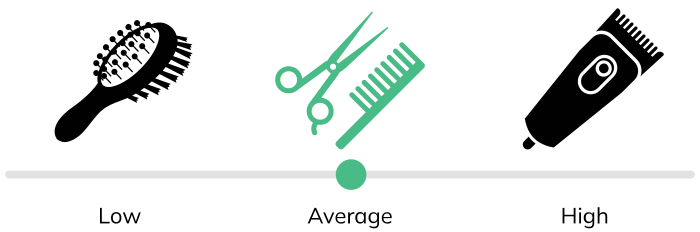
The dogue de Bordeaux has average grooming needs. The short, smooth coat of this breed can be brushed using a rubber grooming mitt every week or so to remove dead hair and manage shedding. Besides this, their basic grooming needs, such as nail trimming, dental care, ear cleaning, and paw care, should be met as needed. The folds on their face should also be cleaned regularly, especially the areas below the eyes.
Do Dogue de Bordeaux Shed?
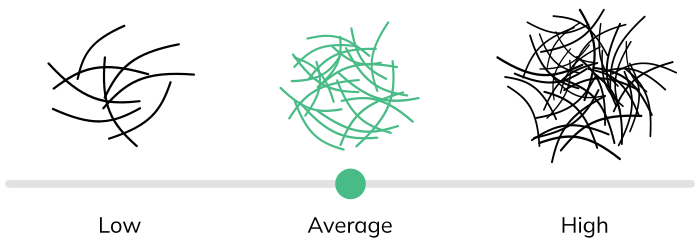
The dogue de Bordeaux is a dog that sheds average to high. Despite this, however, their large size may make it seem like they shed more, which means that shedding will be clearly visible at home. Nonetheless, it won’t be a major issue as long as you’re committed to meeting their grooming needs.
In addition to shedding, like other mastiff dogs, the dogue de Bordeaux drools quite a lot. You will see your dog drooling more when they catch an interesting scent or are craving food. Since a dogue de Bordeaux slobbering all over is inevitable, it is best to keep a towel around to clean up after them.
What Health Problems Do Dogue de Bordeaux Have?
The dogue de Bordeaux suffers from the large dog breed health problems like hip dysplasia and elbow dysplasia, along with heart disease, epilepsy, and chronic ear infections. Bloat is another serious concern with dogues, which can be a life-threatening issue; owners must educate themselves to be able to identify the early symptoms.
How Long Do Dogue de Bordeaux Live?
The dogue de Bordeaux has an average lifespan of five to eight years. Unfortunately, their lifespan is among the shortest, not just in mastiff-type dog breeds but overall. Those who intend to get a dogue de Bordeaux should keep their short lifespan in mind before committing to this breed.
What Should a Dogue de Bordeaux Eat?
The dogue de Bordeaux is a big dog that requires a lot of food per day. This must be kept in mind, as the feeding expenses of a dogue de Bordeaux will be a lot costlier than those of many other breeds.
As for what to feed them, dogues can thrive on a variety of diets, from commercially available dog food to fresh homemade food to raw diets. While this opens up a lot of possibilities for what to feed a dogue, it is best for owners to consult a certified animal nutritionist before switching their diet. Any homemade diet should also be formulated by a qualified person so that your dogue de Bordeaux gets all the nutrients they need for a happy, healthy life.
Is a Dogue de Bordeaux the Right Dog for Me?
The dogue de Bordeaux, much like other mastiff-type dogs, is a dog breed for experienced owners looking for a large, protective dog. They also require a big space and a territory to call their own, even if it is a small backyard. Without these, caring for a dogue de Bordeaux can be challenging despite their overall low-maintenance nature.
If you’re experienced with similar guardian breeds and are looking for a large dog that’s protective but even-tempered with the family, then the dogue de Bordeaux is likely to be an excellent fit.
Before getting one, however, spend enough time with the puppy you’re buying or the dog you’re adopting to ensure their individual characteristics match what you’re looking to have in your dogue. For instance, a dogue de Bordeaux that’s shy around strangers won’t be an ideal fit for a family that regularly has guests. By paying attention to their individual temperament, you’ll get the right dogue de Bordeaux for you.