Chug: Your Complete Guide
A combination of adorable oddballs, the chug is the end result of breeding Chihuahuas and pugs. While many have reservations about pugs or chihuahuas due to features that certain owners may find unattractive, the chug combines the best features of both breeds. Unfortunately, they did not shake off some of the bad habits that their parents possess.
A chug is going to bark often and with surprising volume. Because of their short snout, they will have breathing issues and be more sensitive to heat than other dogs, which means they cannot be left outside in hotter weather for long. While they are small dogs, they are also uniquely active ones; they will need regular exercise on a daily basis.
If you are considering getting this adorable crossbreed, there are some key things you must know about them, such as their grooming needs, dietary requirements, and more. This article is going to be your complete guide to chugs, from their many different variations of coats and colors to the brief history of this fairly new breed.
Table of Contents
Quick Look at the Chug
Below is a quick glance at this special breed in terms of their physical characteristics, lifespan, temperament, and grooming needs.
| Weight/Height | 10-20 pounds / 10-14 inches |
| Coat Type | Short and/or long |
| Grooming Needs |  |
| Shedding |  |
| Temperament | Feisty, friendly, attentive, goofy |
| Good With Kids | |
| Good With Other Animals |  |
| Intelligence | |
| Easy to Train | |
| Energy Level | |
| Barking Habits |  |
| Lifespan | 10-13 Years |
What Is the History of Chugs?
Unlike many modern dog breeds that have histories as interesting as most developed countries, the chug does not have a well-recorded origin. In fact, no one is entirely sure when and where the crossbreed came about, but it is agreed that they are relatively new. The common belief is that the chug was bred to eliminate the compact nose of the pug.
Chihuahua’s, one of their parent breeds, are suspected to date back as far as 10,000 years and have gotten their unique appearance from thousands of years of isolation from other breeds. While other dogs developed in Europe, Africa, Asia, and South America, the chihuahua was relatively isolated in North America. They were registered by the American Kennel Club in 1904.
The pug, the other breed responsible for the titular chug, comes from the Lo-Chiang-Sze breed, commonly called the “ancient pug.” The breed was originally used for companionship by royalty in China and was the grinning and grunting status symbol of their day. In the 18th century, the breed exploded in popularity throughout Western Europe.
Even Queen Victoria was well-known for her fascination with the breed, owning five herself. It wasn’t long before the popularity stretched across the pond, and by 1885, the pug had been formally recognized by the American Kennel Club. Without these two wildly popular toy breeds, the chug would not exist.
What Do Chugs Look Like?
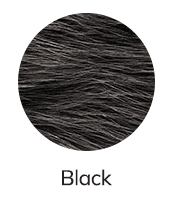
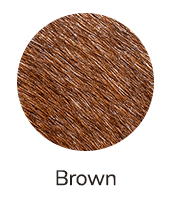


The color of a chug is largely dependent on the pedigree of its parents, with chugs coming in a variety of beautiful hues. Typically, a litter of chugs will feature coats of black, brown, cream, fawn, and white. Coats typically come in a uniform or two primary colors, with many having darker tones around their face and nose.
What Size Is a Chug?
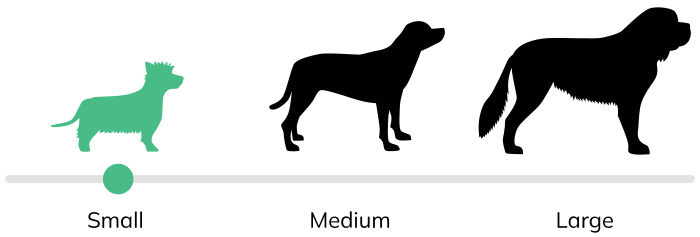
You can always expect a chug to be a small, manageable size that will fit into most homes, apartments, or solar-powered vans. They are dense individuals with a surprising amount of density in the mid-section, typically weighing in between 10 and 20 pounds. Chugs don’t get very tall, and most will sit between 10 and 14 inches.
What Is a Chug’s Coat Type and Length?



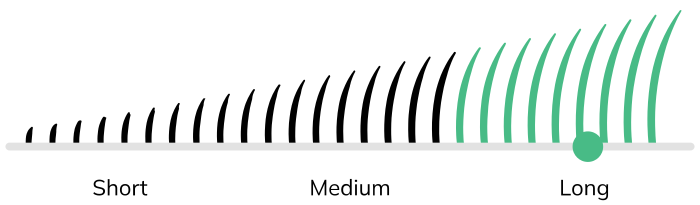
Most chugs seem to go the way of the pug and have short, straight coats, but prospective owners cannot depend on this for every litter they come across. The breed has some variety, and it isn’t impossible for a litter to be born with flowing, wavy coats that could make an Afghan hound jealous. That being said, most will have long or short coats of straight fur.
What Is a Chug’s Temperament?
If you are going to get a chug, you can expect a feisty dog that runs around your ankles in endless figure eights until playtime comes. They are sweet, funny, attentive, and wildly vocal until they are trained to respond more appropriately to external stimuli. While they are far from impossible dogs, they do require a patient, dutiful owner.
Are Chugs Good With Kids?
Chugs may be wary of younger kids at first, as they are a smaller breed. It is imperative that parents monitor early socialization to ensure that both the child and the dog are not overstepping boundaries. Once the two get used to each other, however, the breed is fairly good around younger members of the family, though they may not be best friends right away.
Are Chugs Good With Other Animals?
For the most part, chugs are pretty even-keeled around other pets in your home. As long as other dogs are not overly territorial or standoffish, your chug will typically fit into its role as the bouncy sidekick without issue. They are frailer than most breeds, however, so owners should monitor the chug around other dogs at first, particularly if there is a notable size difference.
When it comes to cats and critters of a similar size, chugs are less likely to terrorise cats, gerbils, birds, or other small animals that you may have adopted prior to the pudgy pup. They don’t have much of a prey drive, however, Chihuahuas do. There is a chance that prey drive could be passed down. Bear in mind that all dogs are individuals, and you’ll need to be mindful of what traits present as they grow and learn with you.
Are Chugs Aggressive?
They aren’t going to maim your mailman, but they may bark, growl, and occasionally snap at people who do not respect their personal space. The chihuahua genes are strong in the chug, and everyone is familiar with the surprising bravery of the tiny toy breed. The chug is no different, and while they aren’t mean, they will not hesitate to let someone know they are too close.
These traits can be worked out effectively by early socialization and proper, consistent training. That being said, a chug bite is going to wound your pride more than your exposed calf. Most people can tolerate a nip from a chug, but learning that a dog doesn’t like you is crushing to anyone.
Do Chugs Bark?
If you were expecting chugs to be seen and not heard, then you have never met a chihuahua or a pug with a point to prove. This breed is loud, alert, and quick to let everyone know that an 18-wheeler passed by on the nearby interstate. If you are going to get a chug, it is essential that you train them to reduce their barking before you get a noise complaint.
Are Chugs Affectionate?
Chugs are an affectionate dog, though some do tend towards favoritism. This means that while many will happily be the focal point of all familial attention, others will grow close to one or two family members specifically. Their high energy can also make it hard for them to sit still, so a walk or some play time may help encourage their more cuddly, sedentary side.
Are Chugs Intelligent?

Chugs have above-average intelligence, though they will not be able to memorize the same number of tricks, commands, and cues as a Border Collie or Australian Shepherd. That being said, many chugs have very high aptitudes and, with the right encouragement, can absolutely outshine expectations.
Are Chugs Energetic?
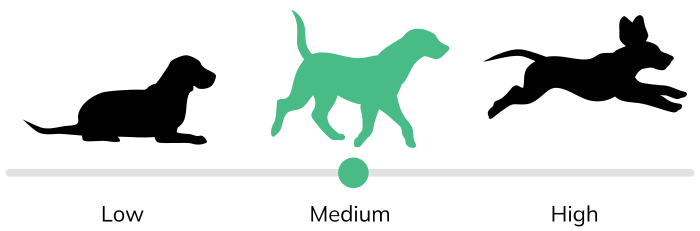
Similar to their barking, there really is no way to deal with the energy of the chug other than to work it out. Take them on long walks around the block, let them fly free at a dog park, give them ample play time with their favorite toy, but do not leave them to their own devices with a full tank of gas.
Chugs are clever enough to find ways to entertain themselves, and these ways will typically cost you hundreds of dollars in property damage or a long day spent cleaning trash off your floor. A well-exercised dog is a well-behaved dog nine times out of ten. A chug with too much energy and no way to expend it is guaranteed to cause problems.
Are Chugs Easy to Train?
Chugs are capable of learning advanced tricks and understanding more complicated commands, though most will struggle to pay attention without proper encouragement. Any breed with as much pep in their paw as the chug is going to have difficulties calming down and focusing, so it is important they have playtime prior to training sessions.
Training for a dog can begin once they start growing accustomed to your house and are old enough to begin socializing. For many people, the process is overwhelming, and they are right to be concerned. Bad habits often come from improper training techniques, which is why it is important to rely on professionally-led courses by verified trainers.
Are Chugs Good Watchdogs?
Chugs make excellent watchdogs and can perform quite well as mobile alarm systems. They are naturally alert, more paranoid than your strangest uncle, and happy to let you know if there is a sight or sound they find unsettling. There will need to be a balancing act here for most owners, as left unchecked, the barking can keep you and your neighbors up for hours.
Are Chugs Good Service Dogs?
Due to their size and typical temperament, chugs may struggle in many service positions; though they are not immediately excluded from the job. For those who need a dog that can retrieve medicine or alert them when their blood pressure is high, certain chugs with attentive natures can be miraculously helpful. Whether a chug can be a service dog will depend on its personality.
As emotional service animals (ESAs), they can be great. While they are not known for being overly affectionate, they do tend to gravitate towards one person. If you are the apple of your pooch’s eye, then having a chug as an ESA can prove incredibly helpful, lessening the more unpleasant symptoms of certain mental and emotional afflictions.
How to Care for a Chug?
Caring for a chug is not easy, but it won’t take up the entirety of your day either. The breed demands a certain amount of attention throughout the day, and they deserve an owner who can let them wander around and get their energy out. If you plan to get a chug, set aside an hour of time each day to play with them or give them ample time in a fenced-in backyard.
Their brains are something to consider as well. While their goofy actions and weird mannerisms might trick you into thinking they are on the dimmer side, that’s not at all accurate. They need mental stimulation, and toys and activities that force them to overcome challenges can help keep them content when you want to relax for the evening.
Finally, they have unique needs due to their ancestry. As we discussed in the introduction, this breed does not respond well to heat and may suffer from exhaustion if left in sweltering temperatures for too long. The breed is also well-known for its codependency, so learning how to reduce separation anxiety in your dog can prove massively beneficial.
Do You Need to Groom a Chug?
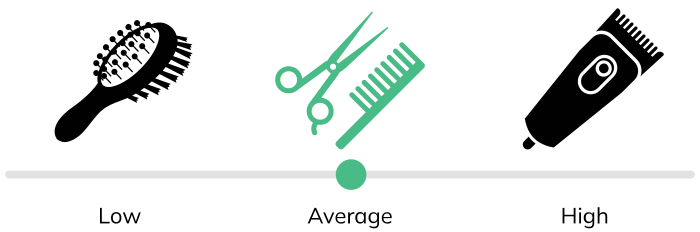
Grooming can be a chore for any dog owner, but it helps when your pooch can fit comfortably within your arms. Because of their size, brushing is fairly simple, once or twice a week should prove more than enough, except during periods when shedding intensifies. For chugs with wrinkly skin, owners should check for compacted dust or debris when they come in from outside.
The same is true for the breed’s ears. Ears are a common spot for infection among all dog breeds, and owners can avoid astronomic vet bills and a guilty conscience by checking for dirt or dander when their dog comes in for the evening. As with all dogs, when they start making clicking noises across hard surfaces, it is time to trim their nails.
While you can hire a groomer if your schedule is uniquely busy, bathing the dog will not take long, though it is anyone’s guess if they will be receptive to bathtime. They have small compact bodies, and while some have longer coats, they can still be cleaned fairly easily.
Do Chugs Shed?
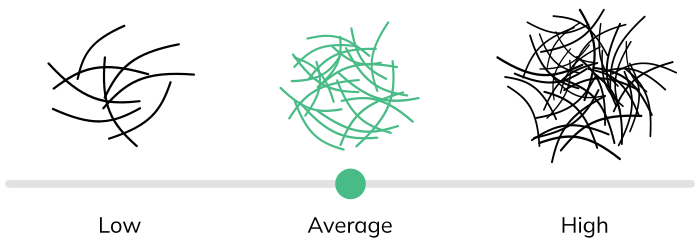
Chugs shed no more than the average pup, but they do have certain parts of the year where they dust off their excess coat, and you will begin to notice trails of fur wherever they roam. Because of their size, you won’t have to worry about clouds of cotton floating through your home, but it would benefit you to brush them fairly regularly to avoid excess hair.
What Health Problems Do Chugs Have?
Chugs tend to live fairly long lives, though they have a number of serious health concerns that should be known by owners so they can detect issues before they get out of hand.
The following are some of the more common illnesses that a chug can experience in their life:
- Brachycephalic syndrome: Dogs with a smaller nose and compact faces often suffer from breathing issues, loud breathing, loud snoring, and difficulties with exercise.
- Obesity: Any dog that struggles with exercise will also struggle with their weight. Because of this, it is important that owners keep up with their diet and exercise to avoid health issues as they progress in age.
- Eye issues (cataracts, glaucoma, chronic dry eye): Because of their big, pug pupils, the chug is uniquely susceptible to eye diseases. If you notice their eyes look irritated, redder than usual, cloudy, or if discharge is coming from their eyes, you should schedule a vet visit.
- Patellar Luxation: A condition where the kneecap of the dog slides out of its normal position within the leg. Both parent breeds are known to have this condition, and the chug is no exception. Keep an eye out for limping, your dog skipping past one leg, or sounds of pops or cracks from your dog’s legs.
How Long Do Chugs Live?
A healthy chug lifespan is often ten to thirteen years on average. This can vary quite a bit, with many living much longer lives, though these are outliers.
What Should a Chug Eat?
Due to the chug being a new breed, there is little information surrounding the breed’s dietary requirements. Speaking with the breeder or your local veterinarian can help determine the best diet for your specific dog. You should, at the very least, look for a vitamin-rich food designed for active, smaller breeds.
Is a Chug the Right Dog for Me?
For many people, the chug will be the designer breed that they never knew they needed. For others, the barking, endless energy, and stubborn streak may prove to be too much. Decide what you want from a dog, write a list if you have to, and decide if the chug hits more qualities than it misses. Also, remember that your dog may be entirely different from breed “standards.”