Chinook Dog: Your Complete Guide
The Chinook dog is one of the rarest American working dog breeds developed in New Hampshire in the early 1900s. This breed originates from a dog bred by explorer and sled-dog musher Arthur Treadwell Walden. However, it is this single dog named Chinook that gave the breed’s name today, not Walden, unlike breeds like the Biewer terrier.
While the Chinook dogs have come a long way since they were first developed, they retain many of their initial traits that led to the inception of this breed. These include a personality that gets along particularly well with children and a work-oriented nature that makes them able to learn pretty much anything that you challenge them with, from advanced obedience to all kinds of working dog roles.
However, as with any other dog breed, Chinook dogs have evolved over time, and in this article, we will take a look at everything you need to know about this breed to help you determine if the Chinook dog is the right breed for you.
Table of Contents
Quick Look at the Chinook Dog
Below is a quick glance at this special breed in terms of their physical characteristics, lifespan, temperament, and grooming needs.
| Weight/Height | 50-90 pounds / 22-26 inches |
| Coat Type | Medium-length double coat |
| Grooming Needs |  |
| Shedding |  |
| Temperament | Playful, energetic, loving, patient |
| Good With Kids |  |
| Good With Other Animals |  |
| Intelligence | |
| Easy to Train | |
| Energy Level | |
| Barking Habits | |
| Lifespan | 12-15 years |
What Is the History of Chinook Dogs?



The Chinook dog was founded by Arthur Treadwell Walden, an adventurer from New Hampshire. At the height of the Gold Rush, he went to Alaska and worked as a sled dog driver in Klondike for multiple years. With his devotion to sled dogs and everything he’d learned in Alaska, he began his own breeding program after returning to New Hampshire.
At the beginning of the 20th century, he started his breeding program with a mastiff-type dog and a husky. After several years of careful and selective breeding, Walden’s breeding program gained traction when he developed dogs that were excellent when it came to sledding and had a family-oriented demeanor that doubled not only as a working dog but also a family companion.
While the Chinook dog was pretty standardized over the years, the breed’s population dwindled to the point of extinction after Walden died in 1947. In fact, the Guinness World Records listed the Chinook dog as the rarest dog breed, with only 28 remaining. Out of these dogs, many were seniors or have been neutered/spayed, but luckily, there’s a healthy population of Chinook dogs today.
The history of the Chinook dog goes back more than a hundred years, but the American Kennel Club (AKC) only recognized the breed in 2013 after including them in the Foundation Stock Service. The Chinook dog is still very rare in today’s world, with most of these dogs being owned by those who want to have a rare breed.
What Do Chinook Dogs Look Like?
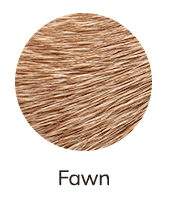
Chinook dogs have a wide range of coat color potentials. The permitted colors include red, golden, tawny, fawn, palomino (similar to gold), silver fawn, and gray red. However, there are also Chinook dogs with white, black, gray and tan, and black and tan colors. These aren’t included in the breed standards, but are still common coat colors seen in this breed.
What Size Is a Chinook Dog?
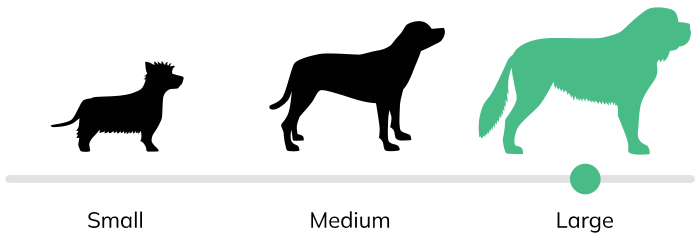
Chinook dogs are fairly large dogs, but definitely not as big as breeds that would be classified as giants. On average, male Chinook dogs stand 24 to 26 inches tall at the shoulder and weigh 55 to 90 pounds. Females are a lot smaller, weighing 50 to 65 pounds but standing just a few inches less, anywhere from 22 to 24 inches. Although they are overall large dogs, females can be considered medium-sized for some.
What Is a Chinook Dog’s Coat Type and Length?


The Chinook dog has a working dog coat that’s medium-length and double. The undercoat is fairly thick, so they can endure cold temperatures easily. The outer coat is straight and lies close to the body. It is quite coarse to the touch and naturally repels water and dirt. In colder months, the Chinook dog’s coat becomes plush and full, while it appears flatter and shorter as the undercoat drops towards hotter months.
What Is a Chinook Dog’s Temperament?
The Chinook has a very gentle and cooperative temperament for a dog with sled dog origins. They aren’t independent, though they can be at times, and enjoy working closely with people and teams. Naturally, Chinook dogs are highly people-oriented and eager to please.
With their people-oriented nature, they are also very affectionate with the family and welcoming of others. However, they still have a fairly noticeable protective streak that makes them a little aloof with strangers at first, so they are quite balanced in this regard. Nonetheless, those who intend to get a Chinook dog shouldn’t expect major guarding duties from these dogs.
While these provide some insights into the Chinook dog, here’s more about their personality traits.
Are Chinook Dogs Good With Kids?
Chinook dogs are such a gem when it comes to their relationship with kids in the family. They are patient, gentle, and tolerant, which checks many of the boxes for the perfect dog for many families. Even though they do well with kids of all ages, Chinook dogs are better suited for families with older children due to their fairly large size. A Chinook dog accidentally bumping into a young child can lead to unwanted outcomes.
As with any dog, an adult’s supervision is essential in ensuring everyone’s safety. Early socialization and teaching children respectful interactions go a long way in creating an environment where both kids and dogs can play safely and get the most out of every moment.
Are Chinook Dogs Good With Other Animals?
Chinooks are friendly dogs that enjoy interactions with other dogs, especially the ones in their immediate family. This sociable temperament comes from their background as sled dogs, where cooperation is essential for any success. They prefer harmony over dominance, not only with dogs similar in size but with any, so whether you have a small Yorkie or a gentle giant like the Newfoundland or any dog in between, the Chinook dog is going to be a good pick.
Chinook dogs are also very good with other household pets, be it cats, rodents, or rabbits. They don’t have a high prey drive, unlike many other sled dogs or dogs similar in size. Thanks to this, Chinook dogs don’t have a desire to run after small animals. As long as you introduce them to your other pets while they are still a puppy and supervise interactions, you will have everyone living together happily without any conflict.
Are Chinook Dogs Aggressive?
With everything we’ve covered about the Chinook dog so far, it is safe to say that they are far from aggressive. These dogs are naturally friendly and even-tempered, especially compared to other sled dog breeds. This friendly nature, along with their athletic capabilities, is one of the highlights of the breed’s temperament that led Arthur Treadwell Walden to pursue developing the Chinook dog.
Aggression should be the least of your concerns with Chinook dogs. That is, of course, as long as you take your time to train and socialize your Chinook dog, especially early on. Although they aren’t aggressive by default, they can exhibit some aggression if they don’t get adequate socialization and training to correct behavioral issues early in life.
Do Chinook Dogs Bark?
Chinook dogs are moderate barkers overall. They aren’t as vocal as huskies but nowhere near as quiet as breeds like the borzoi. These dogs may bark to alert, speak their mind, and let their owners know about discomfort or pain they’re experiencing.
However, Chinook dogs have a loud bark that will be heard by everyone around them, which can lead to conflict with neighbors if you have thin walls or live somewhere with noise restrictions. This must be kept in mind for anyone considering getting a Chinook dog. Fortunately, they respond well to training and can learn to be quiet. Check out our End Excessive Barking course to learn more about the fixes for this common issue.
Are Chinook Dogs Affectionate?
As mentioned, the affectionate nature of the Chinook dog is one of the breed’s defining traits. They bond strongly with their loved ones and have a big desire for physical closeness. However, their affection is typically calmer and steadier rather than clingy or demanding. You won’t find these dogs being pushy for attention; if you’re busy and can’t spare time for them, they tend to accept it well and do their own thing.
They also have a sociable side that makes them more open to unfamiliar people and animals. Most Chinook dogs approach new faces with playful interest rather than suspicion, which makes them open up to new people more than many other dog breeds. Nonetheless, proper socialization and training are essential aspects of raising a Chinook dog to prevent aggression and reactive behaviors so that they are confident in their environment.
Are Chinook Dogs Intelligent?

Like most sled dog breeds, the Chinook dog is highly intelligent. They have keen senses for what’s going on around them, especially for the emotions of the owner. This intelligence for the mood of the home, so to speak, makes them quite sensitive. They can develop a wide range of behavioral issues in chaotic households. Therefore, they are a better fit for calm but active households.
Additionally, the same as any other intelligent breed, Chinook dogs require a lot of mental stimulation to be happy and healthy. They look forward to getting out of their routine to explore new places, engage in interactive games, and play with friendly dogs. Providing these dogs a fulfilling life in this regard is just as important as their other care needs.
Are Chinook Dogs Energetic?
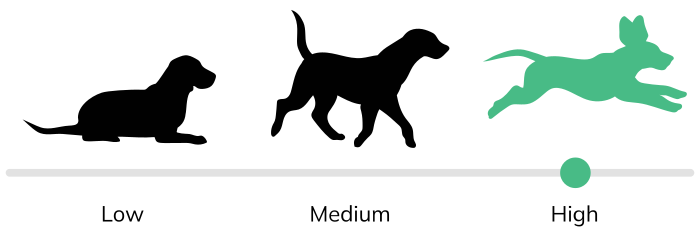
As working dogs, especially sled dogs, it is safe to say that Chinook dogs are equivalent to human athletes of the canine world. They are active dogs that enjoy rigorous exercise and working tirelessly alongside the owner. They are the perfect dog for those who want a hiking buddy, a dog to get involved in canine sports, and any outdoor activity suitable for dogs imaginable.
On a day-to-day basis, Chinook dogs should be exercised for a minimum of an hour and a half every day. To provide them adequate daily exercise, owners can incorporate walks, playtime, mental stimulation, socialization, and training to provide them the quality of life they deserve.
Are Chinook Dogs Easy to Train?
Chinook dogs are overall easy to train with their high intelligence and eager-to-please personalities. It doesn’t take much to teach these dogs basic commands, finish housetraining, and get a strong grip on essential skills like walking without pulling on the leash.
However, it is essential for Chinook dog owners to structure training with positive reinforcement. If you’re new to dog training or want expert help, take a look at our online dog training courses. All our video lessons follow positive reinforcement training principles and feature step-by-step instructions.
Are Chinook Dogs Good Watchdogs?
Chinook dogs are naturally attentive and aware of their surroundings, so they make fairly good watchdogs. However, they aren’t very protective, so after they bark to alert initially, it would be wrong to say that a Chinook dog would continue to stand their ground to deter anyone unfamiliar coming towards their territory. It all comes down to individual temperament, with some Chinook dogs being more protective and watchful than others.
Are Chinook Dogs Good Service Dogs?
Chinook dogs have all the qualities required for service dog work. Although Chinook dogs utilized as service dogs are very few in numbers, they can be trained for a wide range of service dog tasks, anything from assisting individuals with mobility issues to autism assistance. With their affectionate personalities, Chinook dogs also make excellent emotional support animals and therapy dogs.
How to Care for a Chinook Dog
Below is a quick look at the essential care needs of the Chinook dog, covering everything about grooming, health, and feeding.
Do You Need to Groom a Chinook Dog?

Chinook dogs have average grooming needs; they should be brushed one to two times a week for most parts of the year. When shedding gets more intense during the seasonal changes in spring and fall, you can increase the frequency of it to two to four times a week. Bathing should be occasional, about every few months or when dirty/smelly.
They also should have their nails trimmed as needed, teeth brushed daily, ears cleaned every other week, and have their paw looked for any damage, especially if spending time outdoors frequently. With all these, Chinook dogs have overall average grooming needs.
Do Chinook Dogs Shed?

Chinook dogs are average shedders, though some might shed close to the level that huskies do. They certainly aren’t hypoallergenic; having hair in your home and everywhere your Chinook dog spends time is something that’s daily for any owner of this breed.
What Health Problems Do Chinook Dogs Have?
The Chinook dog is among the healthiest dog breeds, but as with any other dog breed, future owners of this breed should educate themselves on the potential health issues this breed is prone to developing. Most notably, Chinook dogs are at risk of developing hip and elbow dysplasia, gastrointestinal disorders, progressive retinal atrophy, seizures, and drug sensitivities.
Regular vet visits, along with learning more about these possible health issues, can ensure your Chinook dog can live a long, healthy life. It is also essential for prospective owners to work with a responsible breeder who screens the health of their breeding stock so that you get a well-bred, healthy puppy that will be a lifelong companion.
How Long Do Chinook Dogs Live?
The average lifespan for Chinook dogs is between 12 and 15 years, which is standard for most healthy large dog breeds.
What Should a Chinook Dog Eat?
Chinook dogs can thrive on a variety of diets, including commercial dog food, a homemade diet that’s cooked or raw. While they do well on most commercial dog food designed for large, active breeds, homemade diets, whether cooked or raw, must be formulated by an animal nutritionist or a qualified vet to ensure a Chinook dog gets all the nutrients they need for a healthy life.
Is a Chinook Dog the Right Dog for Me?
The Chinook dog is an interesting breed with unique qualities. They are highly energetic, affectionate, and capable dogs that thrive in families that can meet their physical and mental needs on a daily basis. If you’re active, have adequate space to give these dogs, and possibly older children who love playing with dogs, you will find the Chinook dog to be an excellent breed to add to your family.
However, note that Chinook dogs are high-maintenance, especially as puppies and young adults. They need an involved owner who can provide them with consistent socialization, training, exercise, and mental stimulation. If you’re not up for this, consider a less energetic breed with a similar temperament. Learn more about other dog breeds on Dog Academy’s breeds page.