Briard: Your Complete Guide
The Briard is a fairly large dog with a fluffy coat originating from France, more specifically, the dairy-producing region of Brie. An adorable pooch with matching looks, Briards are actually quite the hardy dogs that were utilized for a wide range of purposes by the French dairy farmers, from herding sheep to protecting livestock to even pulling carts filled with dairy products.
While these origins have influenced the modern-day Briard, these dogs have long been utilized as family dogs for over a century, which contributed to their apparent traits today. In this breed guide, we will take a look at the Briard’s unique characteristics. Continue reading to find out all about their temperament, physical features, trainability, energy levels, health needs, and more.
Table of Contents
Quick Look at the Briard
Below is a quick look at the Briard in terms of their size, grooming needs, and family life. As you read, you will learn more about each point in the coming parts.
| Weight/Height | 55-100 pounds / 23-26 inches |
| Coat Type | Long, wavy double coat |
| Grooming Needs |  |
| Shedding |  |
| Temperament | Independent, reserved, smart, watchful |
| Good With Kids | |
| Good With Other Animals | |
| Intelligence | |
| Easy to Train | |
| Energy Level | |
| Barking Habits |  |
| Lifespan | 12-14 years |
What Is the History of Briards?
Although the Briard isn’t as famous as the Brie cheese, the two originate from the same place. The Briard originates from Brie, France, which is located in the northern part of the country, where a high percentage of the local population are dairy farmers.
As for their use case, Briards were utilized by dairy farmers as all-purpose dogs, though they were mainly tasked with herding sheep and providing protection, along with pulling carts filled with dairy products, providing companionship to children at homes, and alerting their owners to livestock thieves.
The Briard’s arrival in the United States from France dates back to the War of Independence. The most prominent figure in American history who had a relationship with the Briard is Thomas Jefferson. At the end of his tenure as the ambassador to France, Thomas Jefferson brought a pregnant Briard with him, and this dog’s pups became working dogs in his Virginia estate.
However, the American Kennel Club (AKC) didn’t recognize the breed in the early days when the kennel club was formed, even though there was a sizable Briard population in the United States. The AKC waited until 1928 to recognize the Briard as part of the herding group. Despite their origins and the AKC classification, most Briards today enjoy their lives as family companions.
What Do Briards Look Like?
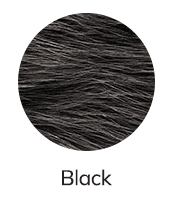
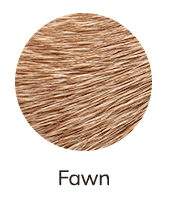

The Briard has several coat colors, which can be black, tawny, or gray, according to the breed standards. However, it is also possible to see Briards having a coat color that’s a combination of black and gray, black and tawny, tawny and gray, or solid white.
While these are the colors you can expect the briard to come in, they also have other unique physical characteristics. Briards have double dew claws, usually on the hind legs, which have allowed them to have a better grip while herding sheep. Another unique physical trait of the Briard is their J-shaped tail. As they grow up, usually around the six-month mark, the tail starts to curl up towards the tip to form a J-shape.
What Size Is a Briard?
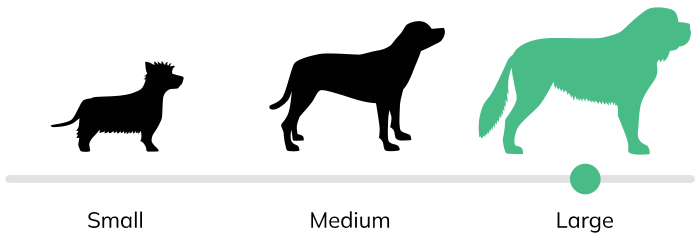
The Briard is overall a large dog. They can weigh anywhere between 55 and 100 pounds, which is a very broad range. If you’re planning on getting a Briard, be sure to work with a responsible breeder who can make an educated guess on the adult weight of the puppy you’re getting. Otherwise, you might end up with a significantly smaller or larger Briard than you anticipated. Check out our Puppies for Sale page to connect with breeders in your region.
What Is a Briard’s Coat Type and Length?
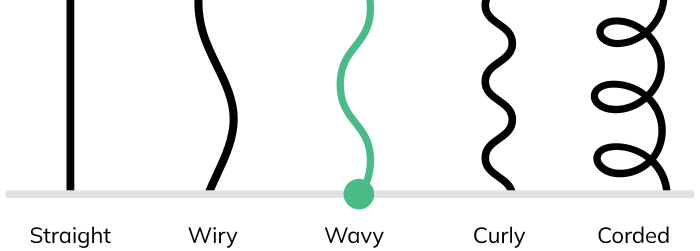
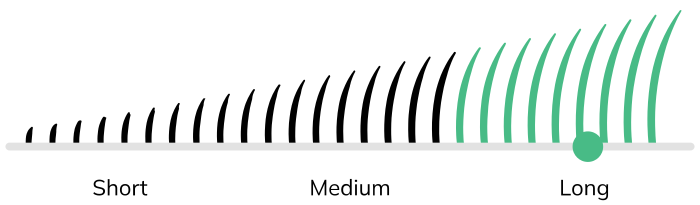
Briards have wavy double coats that are pretty long. This coat is undoubtedly the most distinct feature of this breed. However, it isn’t fluffy and soft like a poodle’s coat. It is more like coarse human hair than soft fur. It is a working dog’s coat that is more protective and weather-resistant than a fluffy one.
The coat of the Briard uniquely covers the breed’s face. It grows forward and outward, which creates heavy eyebrows that naturally fall over the eyes, giving them their distinct appearance. In case you’re curious, know that Briards see perfectly fine, even though this gives the impression that their eyes are completely hidden.
What Is a Briard’s Temperament?
Briards have a temperament that’s a mix of a family companion and a hardworking all-purpose dog. They are naturally affectionate and joyful around their loved ones, but quite reserved with strangers. It takes a while for these dogs to open up to new people, but once they are sure that someone new, whether human or animal, doesn’t mean harm to their families, they become happy dogs that want nothing but play.
While this provides some hints into their personality traits, there’s more to cover about Briards. Here’s everything you need to know about the temperament of this unique dog breed.
Are Briards Good With Kids?
Briards are generally good with kids, thanks to having a long history of essentially being nannies for children. They are tolerant and enjoy playing with kids, but their large size means that Briards are more suited for families with older kids. Given that they can have a tendency to become excitable during playtime, a Briard can accidentally knock over kids, which can lead to serious injuries.
However, this isn’t a concern if an adult is present to supervise interactions. If you have young kids and want a Briard, their size alone shouldn’t discourage you from getting one of these dogs. As long as you’re willing to be there when a Briard plays with kids, these dogs can be a wonderful addition to your family.
Are Briards Good With Other Animals?
Briards aren’t naturally sociable like golden retrievers are, but they aren’t overly timid around other dogs like pure livestock guardian dog breeds. The direction a Briard leans towards depends largely on the amount of socialization they receive as a puppy and young adult. A well-socialized Briard is going to be friendly around other dogs and enjoy meeting and playing with other friendly dogs, whereas one that’s undersocialized can be prone to aggression.
Therefore, socialization plays an important role in ensuring a Briard is good with other dogs. When it comes to other animals, note that Briards have high prey drives, so they can be challenging to keep in the same household as smaller animals. Even though they can learn to behave well around cats, especially if raised together, these dogs can be dangerous to be around for small prey animals like hamsters and rabbits.
Are Briards Aggressive?
Briards aren’t inherently aggressive, but they can be prone to certain aggressive acts if they don’t receive enough socialization. This largely comes from their guardian dog history that looked over livestock and homes, which makes them quite territorial, though not overly so.
As mentioned above, this tendency to act aggressively is only a problem for Briards that aren’t socialized properly. You shouldn’t have any concerns about aggression with a well-socialized Briard.
Do Briards Bark?
As dogs that were utilized as guardians, Briards are surprisingly quiet dogs that don’t use their powerful voices without reason. They bark but only to alert, which means that as a Briard owner, you should listen to your dog when they bark to get your attention. Although we will expand on it below, this trait makes them excellent watchdogs.
Nonetheless, note that this can be entirely different depending on individual temperament. If barking is a major issue for you, observe the behavior of the Briard you intend to adopt or buy before finalizing your decision. Briard puppies that alert bark and make noises to communicate tend to be barkers later on as they grow.
Are Briards Affectionate?
Briards are loving dogs that bond strongly with their family members. They enjoy receiving pets and other forms of physical affection like any other dog, but they don’t crave it like small companion animals. It is very rare for these dogs to engage in clingy behavior, as they have watchful personalities that make them show their love through protection and being loyal companions rather than pets or cuddles.
As you can expect, however, Briards are like this towards their immediate family. They take a good while to warm up to strangers. Take note of this if you’re planning on getting a Briard and have guests coming over constantly, as this can overwhelm a Briard and make them engage in unwanted acts like excessive barking.
Are Briards Intelligent?

Once an all-purpose dog, there’s no doubt that the Briard is a highly intelligent dog breed. This breed’s intelligence is one of the driving factors for why they were utilized for a wide range of purposes by French farmers.
In today’s world, the Briard’s intelligence not only means a dog that understands new commands quickly but also one that’s attentive to their owner’s mood. A Briard can easily sense if their owner is feeling down and come to cheer them up, which is a quality that many want to have in their dogs, especially those who want an emotional support dog.
Additionally, the Briard’s intelligence means these dogs require a high degree of mental stimulation. Briards can get bored of casually walking if it gets repetitive. Owners should avoid taking the same routes all the time and provide enrichment by exploring new places, solving puzzles, training, scent work, and socializing with friendly dogs.
Are Briards Energetic?
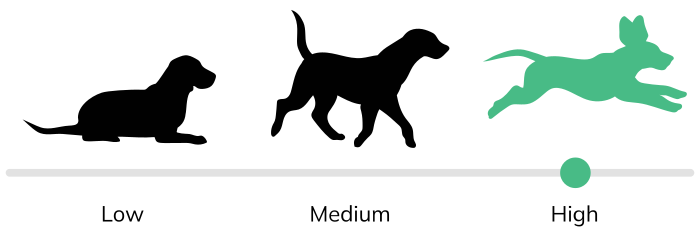
Briards can be considered medium-to-high energy dogs overall. Depending on individual temperament, your Briard can fall anywhere in between, though most Briards tend to be high-energy. When it comes to calculating how much to exercise a Briard for the day, it can be anywhere from 45 minutes to an hour and a half. The exact amount all comes down to your Briard’s individual needs.
Because Briards were once working dogs and have high mental stimulation needs, one of the best ways to provide the mental and physical activity these dogs require is to mix training, walks, and playtime together. You can also get them involved in agility training, which they excel at considering their physical abilities and trainability, which is what we cover below.
Are Briards Easy to Train?
Briards are intelligent, eager to please, and have a long history of serving their owners as working dogs. When you put all these together, you can expect a dog that’s incredibly receptive to training. You can go through basic obedience training in a matter of a few weeks with these dogs and start training them for advanced commands like off-leash walking, or even give them a job to do to satisfy their intelligent minds.
The best part is you don’t need to be a professional dog trainer to take advantage of the Briard’s trainability. Dog Academy’s online dog training courses provide all the materials you need to train a dog. Browse our selection of courses to find all the resources you need for dog training.
Are Briards Good Watchdogs?
Briards have long been utilized as watchdogs, so you don’t need to have even the slightest bit of worry about this breed’s capability as watchdogs. Some Briards can also take their watchdog skills to the next level and act as total guardians, which is what they were doing to protect livestock from human thieves as well as predators in Brie, France.
Are Briards Good Service Dogs?
Briards aren’t popular service dogs due to their rather territorial and protective streak. Even though they have the trainability, intelligence, and loyalty required for service dog work, their protective side gets in the way of these dogs being utilized as service dogs. However, with how sensitive they are to the emotions of their loved ones, they can be exceptional emotional support animals.
How to Care for a Briard?
While we’ve covered the majority of Briard’s care needs, these dogs also have some basic needs like every other dog. Here’s what else you need to know for caring for a Briard in terms of grooming, health, and feeding.
Do You Need to Groom a Briard?

The unique appearance of the Briard requires an involved owner who can get themselves fully involved in grooming their dogs. They should be brushed ideally daily to prevent mats and tangles, and very light trimming every two to three months. The coat of this breed isn’t like what poodles have, so they shouldn’t be given full haircuts – a thorough brushing and light shaping up with grooming shears is enough to give them a tidy appearance.
Briards also require their teeth to be brushed everyday, nails trimmed as needed, and ears cleaned every other week. These are essential for their well-being and go a long way in ensuring their overall health.
Do Briards Shed?
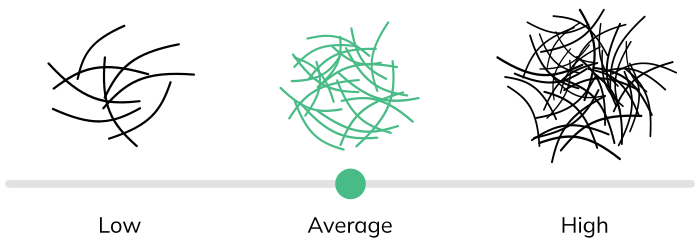
Briards shed a moderate amount, so they aren’t hypoallergenic dogs, unlike what many hope to hear. While they are sure to trigger allergic reactions, managing shedding with a Briard isn’t challenging; brushing them daily to prevent tangles and mats will automatically remove any dead hair and ensure your home is clean.
What Health Problems Do Briards Have?
Briards are among the healthiest dog breeds that are around the same size, which has a positive impact on their life expectancy. However, this breed is also at risk of developing a long list of health issues, including eye problems like cataracts, corneal dystrophy, retinal folds, and progressive retinal atrophy, hip dysplasia, kidney disease, hypothyroidism, bloat, and heart issues.
Given that many health issues can affect Briards, it is essential to work with a responsible breeder who screens the health of their breeding stock.
How Long Do Briards Live?
The average lifespan for a Briard is around 12 to 14 years, which is considerably higher than the average life expectancy compared to similarly-sized dog breeds.
What Should a Briard Eat?
Briards do best on dog foods formulated for working dog breeds and recipes catered to large and active dog breeds. These dogs can also thrive on a homemade diet, as long as it is carefully balanced with the help of a qualified veterinarian or a certified animal nutritionist.
Is a Briard the Right Dog for Me?
The Briard is a dog breed that certainly calls for an experienced owner who can manage their protective and territorial side and get the most out of their highly trainable, hardworking side. Briards are also fairly high-energy dogs, so they also need an owner who can meet their exercise needs on a daily basis.
If these sound like you, and you don’t have small prey animals at home, the Briard is likely going to be a good choice for you. The only concern to have with these dogs is that they can be high-maintenance with their exercise, socialization, training, and grooming needs combined. Be sure to fully understand what it takes to care for a Briard before investing your time and energy into getting one, whether by adopting one or buying a puppy.