Bolognese Dog: Your Complete Guide
The Bolognese is the dog that many search on Google as the small, fluffy white dog, that’s not the bichon frise or Maltese.
Compared to these breeds that appear similar, the Bolognese is fairly unknown, and for the untrained eye, a Bolognese can be a bichon frise or Maltese with a long, messy coat.
However, the Bolognese is a distinct breed that originates from Bologna, Italy. These dogs have unique characteristics that are unlike anything you will find in other dog breeds, and in this breed guide, Dog Academy will cover all these unique traits about the Bolognese dog.
Table of Contents
Quick Look at the Bolognese Dog
Below is a quick look at the Bolognese dog in terms of physical attributes, lifespan, temperament, intelligence, trainability, and more. You will find each point covered in detail as you read our breed guide.
| Weight/Height | 6-10 pounds / 10-12 inches |
| Coat Type | Wavy, long coat |
| Grooming Needs |  |
| Shedding |  |
| Temperament | Cheerful, affectionate, eager to please |
| Good With Kids |  |
| Good With Other Animals | |
| Intelligence | |
| Easy to Train | |
| Energy Level | |
| Barking Habits |  |
| Lifespan | 12-14 years |
What Is the History of Bolognese Dogs?
The Bolognese dog originates from Bologna, Italy; that’s why the breed is called the Bolognese. The earliest records show that this breed has been around since the 17th century. Similar to many other dog breeds with a similar appearance, the Bolognese was a lapdog for the nobility. They were carried around by the Bolognese nobles and were a popular gift among European courts during the Renaissance period.
Being developed for companionship rather than serving a specific purpose, the Bolognese has unique traits, such as an overly affectionate personality, which can be too much for their own good and lead to behavioral issues like separation anxiety. Over time, the Bolognese remained relatively rare, but the breed enthusiasts have managed to carefully preserve the breed.
Although a fairly old dog breed, the Bolognese dog has been fairly uncommon in the United States, and it is possible that some might have been mistaken for a bichon frise or Maltese. The American Kennel Club (AKC) recognized the breed in 1995, and the Bolognese dog remains very few in numbers in the United States; the breed doesn’t even appear on the AKC’s most popular breeds list.
What Do Bolognese Dogs Look Like?
The Bolognese dog has a single-colored coat, and that is white. There isn’t any variety in the coat color; Bolognese dogs come in a single coat color. Although there can be very minor differences in the shade of white, Bolognese dogs are pure white.

What Size Is a Bolognese Dog?
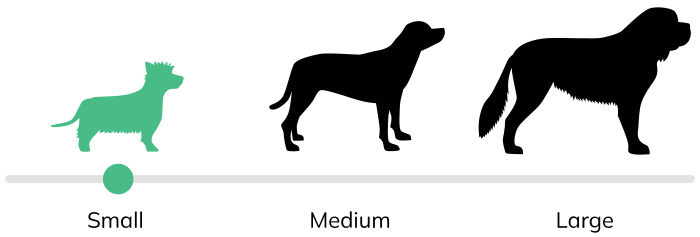
The Bolognese dog belongs to the toy group; therefore, they are tiny little dogs. As for their exact height and weight, Bolognese dogs can stand anywhere from 10 to 12 inches tall and weigh between 6 and 10 pounds in total. They aren’t as petite as Chihuahuas but are certainly among the smallest dog breeds.
What Is a Bolognese Dog’s Coat Type and Length?
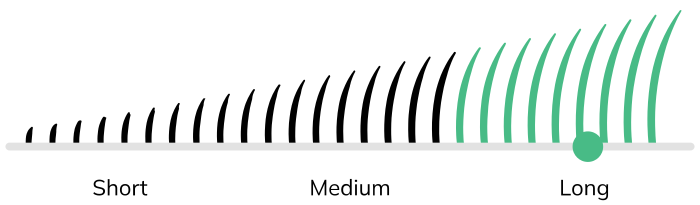
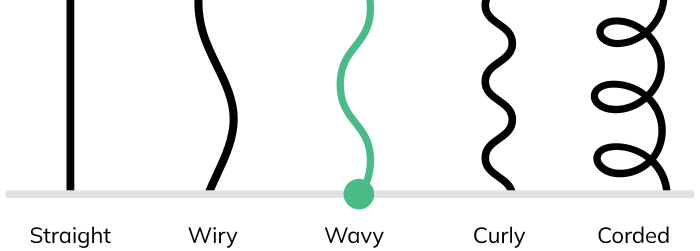
A Bolognese dog has a single coat that’s soft to the touch, fluffy, and almost cottony in texture. The coat’s texture is what separates the Bolognese from other similarly appearing dogs. Bolognese dogs aren’t fully fluffy like the bichon frise and not silky like the Maltese. This open, almost curly-like, wavy coat is a distinct feature of the Bolognese that works as one of the most effective ways to tell them apart from similar small white dog breeds.
What Is a Bolognese Dog’s Temperament?
Bolognese dogs have temperaments that suit their physical appearance. They are gentle, cheerful, outgoing, and affectionate dogs that enjoy making friends, playing with sociable, similarly-sized dogs, and receiving pets and cuddles nonstop from their family members. These dogs enjoy being at the center of attention and thrive in households where at least one family member is always present with them due to their tendency to develop severe separation anxiety.
While outgoing and social, one highlight of their temperament is that Bolognese dogs tend to be reserved around strangers at first. They aren’t fearful or aggressive, but take their time to get used to the presence of strangers. Once they feel secure, however, Bolognese dogs open up and invite unfamiliar people and dogs for play as a way to make friends.
There’s much more to talk about the temperament of Bolognese dogs. Here’s more on their family life in terms of their relationship with kids and other animals, aggression, barking tendencies, and more.
Are Bolognese Dogs Good With Kids?
The Bolognese dogs are generally good with kids, thanks to their affectionate and playful nature. They can adapt to families with kids of all ages without any problems, though they are more suited for families with older children due to their sensitive nature. If kids are too rough or loud around them, a Bolognese dog can develop behavioral issues out of frustration and discomfort.
Therefore, Bolognese dogs are a better fit for families with older children or quieter, calmer children. An adult’s supervision is also important for everyone to get along well with one another, especially if you have younger children. Kids in the family must behave well around dogs and not bother them while eating or drinking.
Are Bolognese Dogs Good With Other Animals?
The Bolognese dog is overall a sociable and non-confrontational dog when it comes to their relationship with other dogs. This applies to both the dogs in their immediate family and the ones that they meet during walks. If you’re planning to get a second or even a third dog, then the Bolognese dog is going to be a perfect addition. Just be mindful of their small size if you have larger dogs, and you won’t have any problems.
Bolognese dogs can also be a good choice for households with small prey animals like guinea pigs, rabbits, and hamsters, thanks to their low prey drive and instincts to chase after anything moving. Still, supervision is essential, especially in the first few weeks, to ensure your Bolognese dog learns to behave well around their presence.
Are Bolognese Dogs Aggressive?
Aggression isn’t a trait that’s associated with Bolognese dogs. They are happy little dogs that don’t look for trouble. These dogs are simply interested in playing gently and receiving (and giving) affection. It would be a very rare occurrence for a Bolognese dog to snap, growl, or bark aggressively, for example.
This easygoing temperament makes the Bolognese dog particularly great for first-time dog owners. If a Bolognese dog is going to be your first dog, you won’t need to get yourself heavily involved in socialization and training, which are often two of the most challenging aspects of raising a dog.
Do Bolognese Dogs Bark?
Bolognese dogs are among the quietest toy dogs. They don’t use their voice to communicate with their owners as much as other small dog breeds. They typically bark when there’s a reason for them to do so, such as to alert the owner. We will discuss how their barking tendencies impact their effectiveness as watchdogs in the coming parts below.
Overall, Bolognese dogs aren’t big barkers, which makes them the perfect fit for those living in apartments or condos with noise restrictions. Along with their small size, this further contributes to their suitability to live with city dwellers, especially those in urban centers.
Are Bolognese Dogs Affectionate?
Bolognese dogs are beyond affectionate. These tiny little dogs enjoy nothing more than receiving all the love they can get from their owners. They are always accepting of cuddles, kisses, praise, and any form of affection you can think of – there are no limits as far as a Bolognese dog is concerned.This affectionate nature is surely something that many future dog owners want to have in their dogs, but it can have possible downsides.
As we’ve mentioned above, separation anxiety is something that Bolognese dogs are prone to developing, so you might need to do some work to help your Bolognese dog build confidence to be alone. We recommend those who are interested in getting a Bolognese dog to learn about crate training, as it is one of the most effective training methods for addressing separation anxiety.
Are Bolognese Dogs Intelligent?
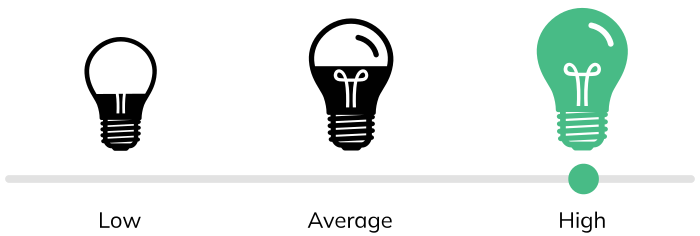
The Bolognese is an incredibly smart little dog. In fact, they might be one of the smartest small dog breeds on the planet, with everything they’re capable of learning and their highly receptive nature. One of the reasons Bolognese dogs can be sensitive to what’s happening around them is that they pretty much understand everything. For example, if there’s a conflict happening, they can sense it immediately and exhibit signs of distress because of it.
This high intelligence also means that Bolognese dogs require a lot of mental stimulation to stay healthy and happy. While they enjoy a routine, they greatly benefit from exploring new places, taking new routes, and mentally enriching activities like solving dog puzzles and scent work.
Are Bolognese Dogs Energetic?
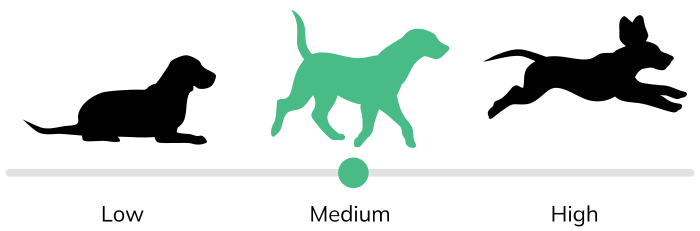
The energy levels of Bolognese dogs vary greatly depending on individual temperament. Some dogs are little bundles of energy, while others enjoy nothing more than cuddling up with their owners all day long. It all comes down to their personality.
However, it wouldn’t be wrong to say that Bolognese dogs are medium-energy overall. They are content with a quick stroll around the neighborhood and some playtime. These dogs typically don’t require rigorous exercise to stay happy, making them fairly low-maintenance and adaptable in this regard.
Are Bolognese Dogs Easy to Train?
Bolognese dogs are overall easy to train, not only thanks to their intelligent minds but also due to their eagerness to please. They understand commands pretty easily, and using a high-value reward, like a treat or a quick session of fetch, there’s nothing that these dogs cannot learn.
Nonetheless, their small size should be kept in mind when picking commands, skills, and tricks to teach a Bolognese dog. Dog Academy offers a variety of online training courses suited for small dogs like the Bolognese. Discover our online courses to start training your Bolognese dog with our step-by-step video lessons.
Are Bolognese Dogs Good Watchdogs?
As mentioned above, Bolognese dogs are overall quiet dogs that don’t bark much. The only instance where a Bolognese dog might use their voice is to get attention or alert the owner to something unusual. However, many Bolognese dogs typically use their bark as a last resort. Once a Bolognese dog spots a stranger, they may look at them with curiosity rather than suspicion. Therefore, we can’t say that Bolognese dogs make good watchdogs overall.
Are Bolognese Dogs Good Service Dogs?
Bolognese dogs, like many other breeds that belong to the toy group, aren’t the first choice when it comes to service dog work. Although Bolognese dogs have the trainability and willingness for service dog work, their small size prevents them from performing common service dog tasks. However, for the right individuals, a Bolognese can be an exceptional psychiatric service dog that can remind the owner to take medication or perform tactile stimulation.
How to Care for a Bolognese Dog
The above should give you an idea of what it is like to care for a Bolognese dog, as we’ve already covered their training, exercise, mental stimulation, and socialization needs. In addition to these, Bolognese dogs also have basic care needs ranging from grooming to feeding. Here’s what you need to know about these to assess their care needs to help you determine if a Bolognese dog is the right dog to get for you.
Do You Need to Groom a Bolognese Dog?
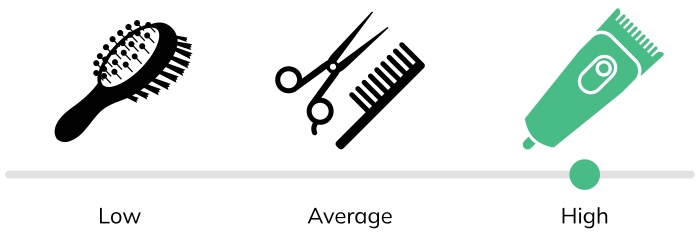
Yes, you need to groom a Bolognese dog in order to maintain their fluffy coat. In fact, grooming is a big part of owning a Bolognese dog that everyone interested in this breed should be prepared to attend to almost on a daily basis. These dogs should be brushed about three times a week and taken to a professional groomer for haircuts every eight weeks or so.
Bolognese dogs should also have their ears cleaned and teeth brushed to prevent ear infections and dental disease. While all these may sound demanding (and costly if you go for a groomer for everything), you can check out our General Canine Grooming Course to learn how to meet your Bolognese dog’s grooming needs at home.
Do Bolognese Dogs Shed?
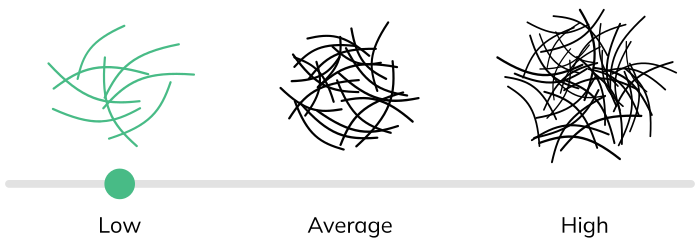
Bolognese dogs shed minimally; they are considered hypoallergenic dogs. This makes the Bolognese an ideal dog breed for those who want a small hypoallergenic dog. In fact, next to Maltese and bichon frise, the Bolognese dog is the most popular small, white hypoallergenic breed.
What Health Problems Do Bolognese Dogs Have?
Bolognese dogs are among the healthiest small dog breeds. The majority of Bolognese dogs live much of their lives without any health issues, and when they experience health problems, they tend to become apparent much later in life. As for the health problems that Bolognese dogs are prone to develop, luxating patella, progressive retinal atrophy, heart issues, and periodontal disease are among the most common.
While some health issues can be preventable, like periodontal disease, others may require the attention of a veterinarian. Always take your Bolognese dog for routine vet visits to identify any potential health issues early. When adopting or buying your Bolognese dog, be sure to assess their health and background to set realistic expectations about their health.
How Long Do Bolognese Dogs Live?
Bolognese dogs, like many other small breeds, have long lives. The average life expectancy of a Bolognese dog is between 12 and 14 years, but many live much longer, with some dogs living for up to 20 years in perfect health.
What Should a Bolognese Dog Eat?
Bolognese dogs should eat a diet that’s formulated for small breeds. When picking dog food for your Bolognese, avoid formulas designed for energetic breeds, as these formulas can lead to excessive weight gain. You can also feed them a homemade diet that’s formulated by a qualified veterinarian or an animal nutritionist, which can be as good as a high-quality commercially available dog food, if not better.
Is a Bolognese Dog the Right Dog for Me?
The Bolognese dog is a breed that suits a wide range of households. These dogs are an excellent pick for anyone looking for a small hypoallergenic dog. The only concern with Bolognese dogs is their high-maintenance coat and tendency to develop separation anxiety. If these aren’t a problem for you, start searching for Bolognese dogs for adoption in your area on our adoption page. You can also search for puppies for sale if that’s how you want to add a Bolognese dog to your life.