Bedlington Terrier: Your Complete Guide
If you line up every terrier breed side by side, the Bedlington terrier is usually the one people have the hardest time identifying. With their narrow head, graceful curves, and soft coat, these dogs look more like small sighthounds than traditional terriers.
Living with a Bedlington terrier can feel like having two dogs in one. Indoors, they are calm, affectionate, and content to relax beside their people. Outdoors, that calm demeanor can quickly switch to alertness and athleticism.
This dual nature raises important questions for potential owners: How much exercise do Bedlington terriers need? Are they good with kids and other pets? How difficult is grooming? What kind of long-term commitment does this breed require? This guide answers all these questions and more.
Table of Contents
Quick Look at the Bedlington Terrier
Here’s a quick breakdown of the Bedlington terrier’s most important traits, from size and coat type to energy level and grooming requirements.
| Weight/Height | 17-30 lbs. and 15-17.5 inches |
| Coat Type | Soft, curly, medium-length coat |
| Grooming Needs |  |
| Shedding |  |
| Temperament | Affectionate, playful, loyal, charming, good-tempered |
| Good With Kids | |
| Good With Other Animals | |
| Intelligence |  |
| Easy to Train | |
| Energy Level | |
| Barking Habits | |
| Lifespan | 11-16 years |
What Is the History of Bedlington Terriers?
During the 1800s, these dogs were hardworking companions in the mining town of Bedlington in Northumberland, England, which later gave the breed its name.
At that time, miners, farmers, and hunters relied on them to control rats in coal mines, kill vermin, and assist with hunting. Their speed, quiet movement, and sharp instincts made them especially effective at these jobs. The breed earned the nickname “Gypsy Dog” for its ability to work discreetly.
One of the earliest known Bedlington terriers was a dog named Piper, born in 1825. Piper became legendary for his determination and stamina, with stories claiming he was still hunting badgers at the age of 14, even after losing much of his sight and teeth.
During this period, the breed gained popularity among nail makers and miners in the Bedlington area, who took pride in owning tough, capable dogs. Unfortunately, this era also included dog fighting, which was common at the time. While Bedlingtons were used in these contests, historians noted that they weren’t naturally aggressive dogs.
As time passed, people began to notice that Bedlington terriers were more than just hardworking dogs. Despite their rough beginnings, they showed a gentle temperament, strong loyalty, and a deep attachment to their families. These traits helped the breed move from industrial settings into homes.
British elites were drawn to the Bedlington’s affectionate nature and unique appearance, and the breed gradually gained recognition as a companion and a show dog. Formal efforts to refine and standardize the breed began with the formation of England’s National Bedlington Terrier Club in 1877, followed by registration with the American Kennel Club in 1886.
What Do Bedlington Terriers Look Like?

The Bedlington terrier has one of the most distinctive silhouettes in the dog world. Its narrow head, arched back, deep chest, and tucked-up waist create a graceful outline. The head has a pronounced topknot of lighter hair that contributes to the breed’s signature look.
The eyes are small, almond-shaped, and set at a slight angle to give the dog a bright, curious expression. Eye color depends on coat color. The triangular ears are low-set and lie flat against the cheeks, ending in rounded tips with a small, silky fringe.
These dogs have a muscular yet flexible body with a curved back that rises slightly over the hips. Their legs are long and well-shaped, with the hind legs a bit longer than the fore legs, which helps with speed. The tail sits low, is thicker at the base, and curves gently down toward the hock.
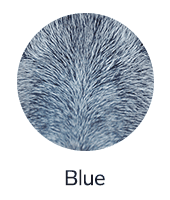
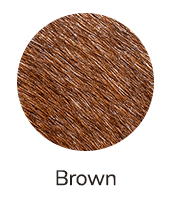
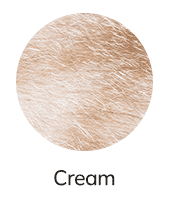
Coat colors for this breed include blue, liver, sandy, and bi-color combinations of these shades with tan points. In dogs with tan markings, the tan usually appears on the legs, chest, under the tail, inside the hindquarters, and above each eye. Overall, the breed standard favors richer and darker pigmentation across all color varieties.
What Size Is a Bedlington Terrier?
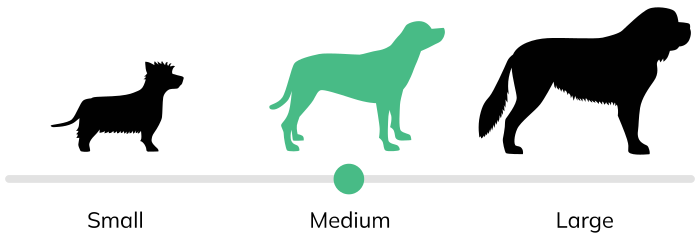
The Bedlington terrier is a small to medium-sized breed. Adult males are about 16.5 inches tall, while females are slightly smaller, at around 15.5 inches. Dogs that fall noticeably below or above these preferred heights are considered outside the standard. Maintaining the correct size helps preserve the Bedlington’s graceful outline and athletic movement.
Weight should always match height, rather than being judged on its own. Most adult Bedlington terriers weigh between 17 and 23 pounds, and have a lean, well-balanced body. They should never appear heavy or bulky. Instead, they should feel lightly muscled.
What Is a Bedlington Terrier’s Coat Type and Length?
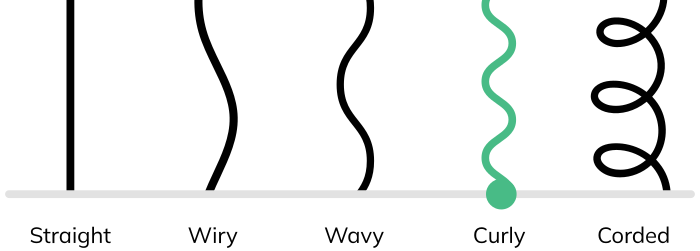
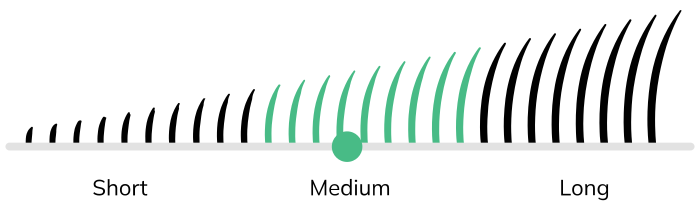
The Bedlington terrier’s coat is a unique combination of hard and soft hair that stands slightly away from the skin rather than lying flat. This is to highlight the breed’s curves and graceful shape. The coat is crisp to the touch without feeling rough or wiry.
Curling is a natural part of the coat, especially around the head and face. That’s what gives the breed its woolly look. In a traditional show trim, the coat on the body is kept fairly short, no longer than about one inch. The hair on the legs is left a bit longer to give the dog a smooth, flowing outline.
Unlike many breeds, the Bedlington terrier’s coat doesn’t shed heavily, but it grows continuously, much like human hair.
What Is a Bedlington Terrier’s Temperament?
The Bedlington terrier is a people-focused breed that craves companionship and emotional closeness. Rather than being independent or aloof, these dogs prefer to stay involved in family life and often choose a favorite spot near their owners.
At the same time, they retain a strong terrier spirit. When stimulated or challenged, Bedlington terriers can be bold, confident, and surprisingly fearless. This dual nature makes them adaptable companions who enjoy quiet evenings just as much as active outings.
Playfulness adds another layer to the Bedlington terrier personality. These dogs like games that involve interaction and attention, such as fetch, light tug, or hide-and-seek with family members. Their playful side comes in waves and blends naturally with their otherwise composed nature.
Are Bedlington Terriers Good With Kids?
Bedlington terriers can be a positive match for families with children, especially when introduced to kids early in life. They do best with children who understand how to behave around pets and when to give a dog space.
That said, this breed isn’t suited to homes where play is very noisy or physical. Sudden grabbing, chasing, or shouting can make these dogs uneasy. Since they’re so emotionally aware, they may withdraw as soon as they feel overwhelmed.
For this reason, families with very young children should supervise all interactions and establish clear boundaries for both kids and the dog.
Are Bedlington Terriers Good With Other Animals?
Compatibility with other animals largely depends on early socialization and training. Bedlington terriers can live peacefully with other dogs, particularly when introduced at a young age, and when they have similar energy levels and play styles.
While these dogs aren’t inherently dominant, they can act confident and may set boundaries if another dog is pushy or overly energetic. Positive experiences early on help shape more relaxed adult behavior.
Smaller pets can be more challenging due to the breed’s strong hunting background. Since Bedlington terriers were originally bred to chase and catch vermin, rodents, rabbits, and birds can trigger instinctive behaviors.
With cats, success varies. Some dogs coexist well with felines they were raised with, while others may start chasing unfamiliar ones.
Are Bedlington Terriers Aggressive?
No. Bedlington terriers aren’t aggressive or unpredictable. However, they’re confident dogs that don’t shy away from confrontation if they feel threatened. Their background as working terriers gave them a strong sense of self and the ability to stand their ground when necessary.
This can sometimes be mistaken for aggression, especially by people unfamiliar with terrier behavior. In reality, most Bedlingtons remain calm and composed unless pushed beyond their comfort zone.
Problems are more likely to arise when a dog lacks proper social experiences or clear leadership. Without guidance, a Bedlington terrier may react defensively to unfamiliar dogs, people, or situations. With early socialization, consistent training, and respectful handling, the breed is unlikely to exhibit serious aggression.
Do Bedlington Terriers Bark?
Bedlington terriers fall somewhere in the middle when it comes to vocal behavior. They’re capable of barking, but it’s not excessive or constant. Many Bedlingtons reserve barking for moments when they feel the need to notify their owners of movement, visitors, or changes in their environment.
Unwanted barking usually points to unmet needs. Lack of stimulation, anxiety, extended isolation, or inconsistent boundaries can all encourage vocal behavior. That’s why you should prioritize daily activity, mental engagement, and positive training during the early days. We also recommend teaching your dog to speak and be quiet on command to manage barking.
Are Bedlington Terriers Affectionate?
Yes, these dogs are affectionate, but they don’t seek attention 24/7. Instead of demanding physical contact, many Bedlington terriers show their fondness through quiet gestures. These gestures include checking in visually, settling nearby, or adjusting their behavior to match the mood of the household.
Physical affection comes on their terms. These dogs enjoy gentle petting and calm, respectful handling from people they trust.
Are Bedlington Terriers Intelligent?
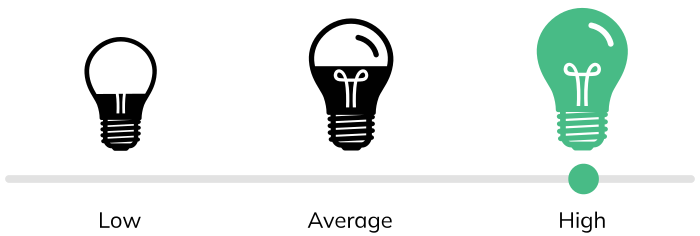
Bedlingtons are often referred to as the smartest (and quickest) of the terrier breeds. These dogs tend to remember people, places, and routines with impressive accuracy. They’re also quick to notice patterns, whether it’s the sound of keys signaling a walk or subtle changes in household behavior. This sharp awareness allows them to adjust easily to family life.
Another thing to keep in mind is that this breed prefers to make sense of a task before committing to it, which can slow early training but leads to stronger long-term results. Once these dogs grasp a concept, they rarely forget it.
Are Bedlington Terriers Energetic?
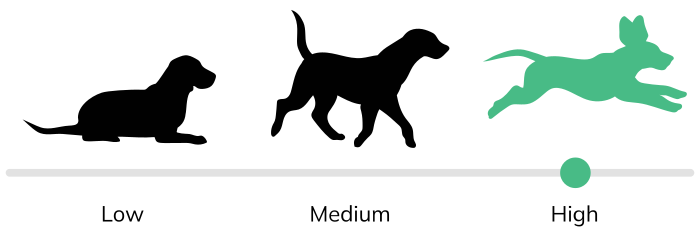
Yes, but their energy usually comes in short bursts. 20-30 minutes of walking, outdoor exploration, and playtime per day is usually enough to satisfy their physical needs. After that, many Bedlingtons are content to relax indoors. This makes them adaptable to different lifestyles.
That said, you may be surprised by their speed and enthusiasm in outdoor settings. These dogs tend to become noticeably more animated in open areas. Make sure they’re kept on a leash to prevent chasing instincts from taking over. Recall training is a must before allowing any off-leash freedom.
Are Bedlington Terriers Easy to Train?
Ease of training with a Bedlington terrier depends more on the approach used and less on the breed’s ability. These smart dogs have a natural tendency to want to please you, but they also have an independent streak that doesn’t let them blindly follow commands.
They respond best when training sessions are clear, short, and varied. When they see value in what’s being asked, they learn quickly and retain lessons well. Challenges can arise if training becomes repetitive or overly strict. Bedlington terriers are sensitive to tone and handling, and they’ll never cooperate with you if you use harsh training methods.
Even when your dog makes a mistake or doesn’t follow your instructions, staying calm and patient will lead to far better results than correcting out of frustration.
Are Bedlington Terriers Good Watchdogs?
Yes, Bedlington terriers are good watchdogs. Even when relaxed at home, they instantly become alert to anything unfamiliar.
However, since they’re not naturally suspicious or territorial, they’re unlikely to escalate situations on their own. Once they sense that everything is normal, they usually settle back down. This limits their role as guard dogs, but their alert nature and ability to recognize routine versus disruption can still be useful.
Are Bedlington Terriers Good Service Dogs?
Bedlington terriers aren’t commonly chosen for traditional service dog roles, mainly because they weren’t bred for sustained task-based work in high-pressure environments. These dogs are sensitive to stress and environmental changes, which can limit their reliability in crowded or unpredictable settings.
That said, their emotional sensitivity and people-focused behavior can be valuable in roles such as therapy work or emotional support. Success depends largely on matching their temperament to the right type of support role.
How to Care for a Bedlington Terrier?
These dogs appreciate knowing what comes next in the day, whether that’s a walk, mealtime, or quiet time with their people. Sudden changes, long absences, or chaotic environments may affect them more than they would a more independent breed. Make sure you follow a set routine to prevent stress or behavioral issues.
Time spent together, whether through walks or companionship, contributes to a Bedlington terrier’s overall happiness. You should know when to give them space, too, though. This breed appreciates being allowed to relax without pressure from time to time.
Do You Need to Groom a Bedlington Terrier?
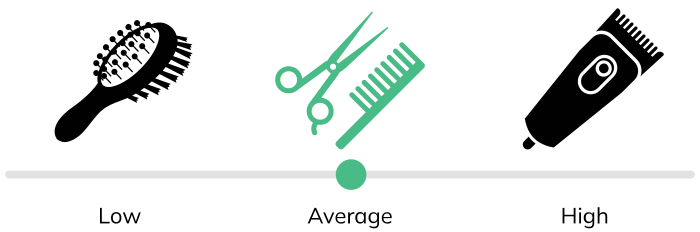
Yes, grooming is a regular part of caring for a Bedlington terrier. While the breed sheds very little, its coat grows continuously and will quickly lose shape if not maintained. Most Bedlingtons need a full trim about every two months to keep the coat comfortable and manageable. This is done using a combination of clippers and scissors to preserve the breed’s distinctive outline.
Between trims, brushing or combing once or twice a week is necessary to prevent tangles and keep the coat crisp rather than fluffy. Grooming also includes routine nail care, as long nails can interfere with movement and cause discomfort.
Some people choose to learn the grooming process themselves, while others prefer to rely on a professional groomer. You can choose to do either.
Do Bedlington Terriers Shed?
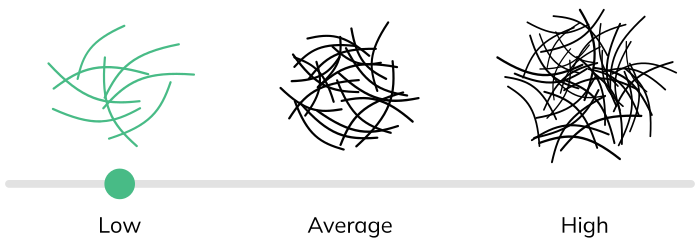
Bedlington terriers are a very low-shedding breed, which often surprises people given the thickness of their coat. Their hair grows continuously rather than going through heavy seasonal shedding cycles. As a result, these dogs don’t release large amounts of fur into their environment.
For this reason, this breed is described as hypoallergenic and is a popular choice for people who prefer a cleaner home.
What Health Problems Do Bedlington Terriers Have?
Reputable breeders screen for inherited conditions to reduce the risk of serious health problems in this breed. They check for joint issues like hip and elbow dysplasia, hormonal disorders such as hypothyroidism, and blood-related conditions, including von Willebrand’s disease and thrombopathia.
Certain eye conditions could also develop in these dogs over time, which is why routine eye evaluations are recommended throughout the dog’s life.
Copper toxicosis is the most well-known inherited condition associated with the breed. This disorder causes copper to build up in the liver and can lead to serious complications if left unmanaged. Fortunately, modern DNA testing allows breeders to identify affected or carrier dogs, so they can prevent the production of affected puppies.
How Long Do Bedlington Terriers Live?
The Bedlington terrier has a relatively long lifespan for a dog of its size, living between 11 and 16 years.
A good quality of life greatly influences their longevity. Dogs that maintain a healthy weight and stay mentally engaged age more comfortably and remain active well into their later years.
What Should a Bedlington Terrier Eat?
A nutritionally complete dog food, whether store-bought or carefully prepared at home, usually meets this breed’s needs. You should adjust your dog’s diet as they age, since puppies, adults, and seniors have very different nutritional needs.
Portion control is especially important for this breed, as some Bedlingtons gain weight easily if calories aren’t monitored. Treats can be useful for training and bonding, but they should be given in moderation and counted as part of the daily intake.
Fresh, clean water should always be available, and any concerns about weight changes or diet choices are best discussed with a veterinarian.
Is a Bedlington Terrier the Right Dog for Me?
If you want a dog that’s playful when it’s time to play, but also knows how to switch off, a Bedlington terrier is a good choice. People love how these dogs settle into a routine and seem content just being near their family after their activity needs are met for the day.
While this breed is a better match for calmer households than loud, chaotic ones, these dogs don’t like being left alone for long hours or treated as an afterthought. If you’re willing to commit to daily interactions, positive training, and regular grooming, a Bedlington can be a great addition to your home.