Akbash: Your Complete Guide
The akbash is a livestock guardian dog breed that originates from Anatolia, modern-day Türkiye (Turkey). The breed is considered to be in the same family group as the Kangal, the most popular livestock guardian breed from Anatolia, which is also called karabash, meaning “dark head.”
The akbash literally translates to white head (ak = white, bash (baş) = head) in Turkish. The breed is thought to be among the most popular types of livestock guardians in Türkiye – likely second after the Kangal. While these fierce guardians are well-known and distinct breeds in their homelands, the American Kennel Club (AKC) categorizes all the Turkish livestock guardians under the umbrella term Anatolian shepherd.
The AKC’s classification aside, akbash dogs have unique characteristics that make them stand out among not just other dog breeds but also other Turkish livestock guardians. In this breed guide, we will take a look at what makes the akbash different. Continue reading to learn all about this livestock guardian’s temperament, physical attributes, coat type, health, intelligence, trainability, exercise needs, and everything else there’s to know.
Table of Contents
Quick Look at the Akbash
This table summarizes some of the points you will learn about the akbash in this guide. We will dive deeper into each point in the coming parts below.
| Weight/Height | 90-145 pounds / 28-34 inches |
| Coat Type | Short/Medium-Length Double Coat |
| Grooming Needs |  |
| Shedding |  |
| Temperament | Protective, Loyal, Watchful, Independent |
| Good With Kids |  |
| Good With Other Animals | |
| Intelligence | |
| Easy to Train | |
| Energy Level | |
| Barking Habits | |
| Lifespan | 10-15 years |
What Is the History of the Akbash?
We don’t know the exact history of the akbash, but many experts believe that this breed is one of the oldest livestock guardians. Turkish sources suggest that the akbash is at least 3,000 years old, and the breed was developed to blend in with the flocks of sheep so that sheep wouldn’t be the first target of predators.
The origin of the first akbash dogs that were utilized as livestock guardians is unknown; however, they are currently more popular in Central and West Anatolia. Considering how old the breed is, it would be wrong to say that this is where they originate. It is likely that the akbash was widespread across Anatolia and the surrounding regions, as sheep have long been a common asset among Anatolian farmers, even today.
As for the breed’s arrival in the United States, the akbash isn’t well-known. There have surely been many akbash dogs imported to the United States, not as an akbash but as an Anatolian shepherd. The American Kennel Club recognized the akbash, along with other Turkish livestock guardians, as the Anatolian shepherd in 1998.
Today, the akbash is very few in number in the United States and is mainly used as livestock guardians. However, with thousands of years of experience and loyalty to their family and flock like no other dog, it is safe to say that the akbash, along with other Anatolian shepherd dogs, are increasing in popularity, especially among ranchers and farmers.
What Does the Akbash Look Like?
The coat of the akbash ranges between white and cream. However, as the breed name suggests, the head must be white or lighter in color compared to the body. The coat color is what separates the akbash from other Turkish livestock guardians, though the breed has other unique characteristics compared to other Turkish livestock guardians.


What Size Is an Akbash?
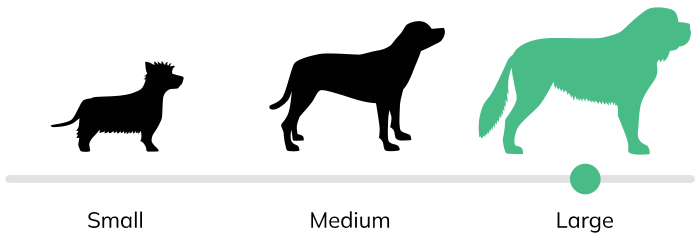
The akbash is among the largest dog breeds in the world. They stand anywhere from 28 to 34 inches tall at the shoulder and weigh between 90 and 145 pounds on average. Like other breeds, males tend to be larger than females. The size of the akbash must be carefully considered before adopting or buying one, as these dogs don’t do well in smaller spaces and require a spacious yard to satisfy their territorial instincts.
What Is an Akbash’s Coat Type and Length?
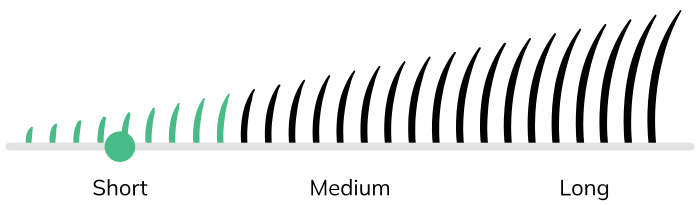
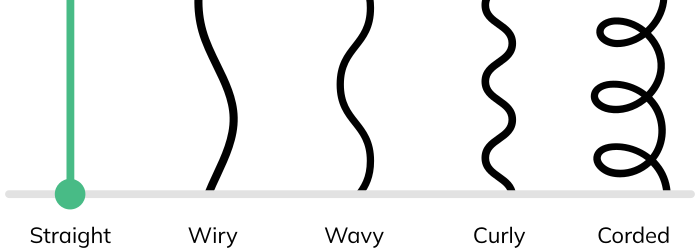
The coat of the akbash ranges between short and medium, though most have a short coat. Regardless, the undercoat is very dense, enabling them to withstand the harsh winters of Anatolia. The coat also naturally repels water and dirt. However, for this, they should only be washed when dirty or smelly – we will cover the breed’s grooming needs in detail below.
What Is an Akbash’s Temperament?
The akbash has a temperament that’s typical of livestock guardians. They are watchful, protective, and reserved. While these temperament traits make them excellent guardians, akbash dogs can also be just as affectionate with the family and the flock they protect.
These attributes of their personality are one of the main reasons why they are increasing in popularity among those who look for an effective but loving livestock guardian, but there’s much more to cover about their personality traits. Here’s more on the temperament of akbash.
Are Akbash Good With Kids?
The akbash is a family-oriented livestock guardian that’s generally gentle and calm around children. When with their family, they turn into gentle giants that know what not to do, though their large size can still be a concern around young children.
Because of this, an adult’s supervision is essential when an akbash (or any other dog that’s similar in size, for that matter) and children are interacting, especially during playtime. The children in the family should also respect the dog’s space, so there shouldn’t be any sudden touches in unwanted places or pets when they’re eating/drinking. Keep these in mind if you have children and intend to get an akbash dog.
Are Akbash Good With Other Animals?
The akbash is a livestock guardian that’s generally good with other animals. They are social and playful around other dogs in the family, especially if raised together from a young age. If you currently have dogs, whether livestock guardian or not, no need to have any worries as long as you introduce your akbash to your other dogs properly. However, supervision is important if you have small dogs due to the massive size of the akbash.
When it comes to other animals, the akbash does equally well. They don’t have a high prey drive and would see every animal that’s a part of the family as their own. While many livestock guardians have a high prey drive that makes them a danger around small animals like chickens, this isn’t a big concern with this breed. An akbash spending a night with the animals they’re supposed to protect is generally enough for them to form a deep bond.
Are Akbash Aggressive?
As one of the most effective livestock guardians, it is safe to say that the akbash has certain traits that make them appear aggressive. They are territorial, tend to guard their resources, and take some time to get used to the presence of strangers and unfamiliar animals.
While these traits serve them well as livestock guardians, socialization is critical to ensure an akbash dog is confident and well-mannered in public. As a young puppy, be sure to take your akbash to new places and let them interact with strangers and friendly dogs to help them understand when it is time to protect and when it is time to enjoy life. Otherwise, an akbash can be too much to handle, even for an experienced owner.
Do Akbash Bark?
The akbash isn’t a big barker, but they aren’t very quiet, either. Like other Turkish livestock guardian dogs, they bark when there’s a need for it, like a stranger approaching their territory or spotting a predator in the distance. Therefore, it would be wise for an akbash owner to pay attention when their dogs bark.
However, individual temperament also plays a great role in how much an akbash dog barks. While some only bark to alert, others might bark more than usual. If barking ever becomes a problem, our End Excessive Barking Course can help you fix it. We also have countless other online training courses that can assist you in reaching different training goals.
Are Akbash Affectionate?
The akbash is affectionate in livestock guardian breed standards. They enjoy receiving pets, praise, and any other form of affection from their loved ones. As mentioned above, they form deep bonds with the children in the family and enjoy cuddling up with them in particular. These dogs also show a similar level of affection towards the livestock they protect, making them overall loving guardians.
When it comes to unfamiliar people and animals, it is safe to say that the akbash takes their time. These dogs need routine interactions in order to fully accept someone new.
Are Akbash Intelligent?
The akbash is a highly intelligent dog breed, but not in the traditional sense. These dogs are intelligent in their own ways as livestock guardians. They know how to deter predators, not by fighting, though they are certainly capable, but by leaving their mark in strategic places so that predators know about their presence. This high intelligence out in the field is what enabled the akbash to be world-famous livestock guardians.
Are Akbash Energetic?
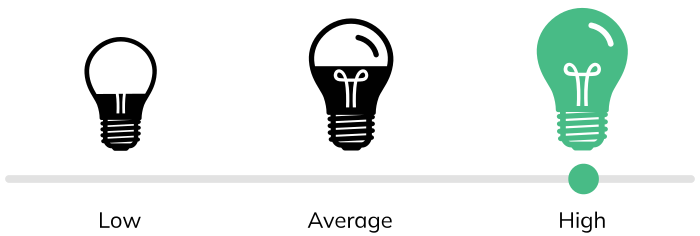
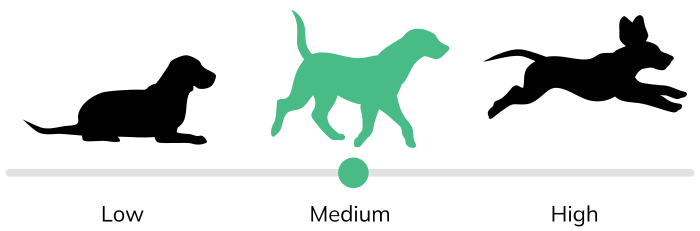
We can consider the akbash to be a medium-energy dog breed. They benefit from daily exercise that’s about 30 to 45 minutes long in the form of casual walks, some playtime, and some mental enrichment.
As working dogs, however, owners don’t need to actively engage them in physical or mental activity, though they still would benefit from them. For many akbash dogs, patrolling their territory and blending in with the livestock is generally enough to keep them in top shape, both physically and mentally.
Are Akbash Easy to Train?
The reason why we’ve said the akbash isn’t highly intelligent, but not in the traditional sense, is because of the breed’s trainability. Even though the akbash is extremely intelligent, these dogs aren’t the most trainable due to their independent personalities.
This isn’t unique to the akbash; most livestock guardians are intelligent, but when it comes to carrying out their duties, not in training. Keep this in mind if trainability is a factor you want to have in your livestock guardian dog. Nonetheless, you can make progress in training by utilizing positive reinforcement and taking a structured approach. Take a look at our online courses to learn how you can train an akbash on your own.
Are Akbash Good Watchdogs?
The akbash is a natural when it comes to alerting their owners. Whether you have a large territory that needs protection, with or without livestock, you can count on an akbash to let you know when something suspicious is happening.
With their imposing size, an akbash dog can also serve as a deterrent. Any potential intruder or someone intending harm to your family will think twice after spotting an akbash. These traits make them not only good watchdogs but also some of the best.
Are Akbash Good Service Dogs?
Unfortunately, like other livestock guardian breeds, we can’t give the same praise to the akbash when it comes to service dog work. The breed’s trainability, protectiveness, and territorial nature get in the way of the akbash being utilized as a service dog. These dogs are better employed as guardians rather than assistance animals for people with disabilities.
How to Care for an Akbash?
The akbash might be independent-minded, but they require an owner who’s involved to live a fulfilling, happy life. While we’ve covered some of their care needs above, such as socialization and exercise, here’s more on caring for an akbash, covering grooming, feeding, and health.
Do You Need to Groom an Akbash?
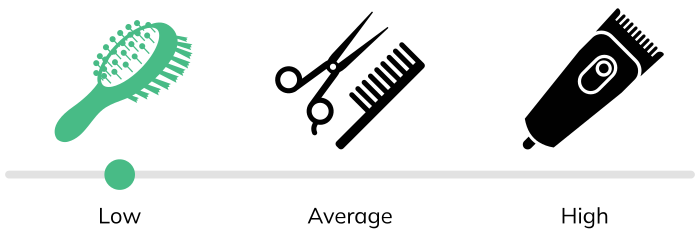
The akbash doesn’t have intense grooming needs. These dogs should be brushed every other week or so to maintain a good appearance, especially those with a medium-length coat. However, brushing them tends to require some effort due to their size. The same goes for bathing, which they need when dirty or develop an unpleasant smell; overbathing can strip the natural oils from their coat and make the coat lose its water-resistant nature.
The akbash also has basic grooming needs like every other dog breed, such as nail trimming, paw care, ear cleaning, dental care, and tick prevention. If buying a puppy, start grooming them early, even if they don’t fully need it, to have them get accustomed to being handled and groomed.
Do Akbash Shed?
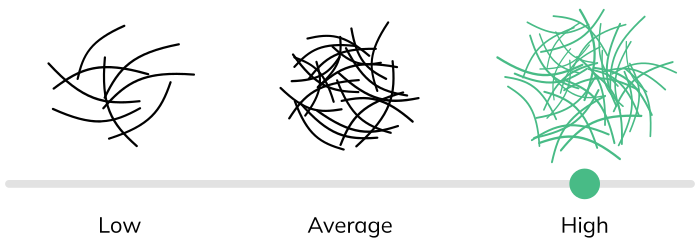
The akbash has a thick undercoat that enables them to withstand freezing temperatures. When the akbash sheds this coat, you should be prepared for a fur storm. This will happen during seasonal changes and require you to brush more often to manage shedding. Therefore, it is safe to say that the akbash is a dog that sheds heavily, especially during seasonal changes.
What Health Problems Do Akbash Have?
The akbash is generally a healthy dog breed that suffers mainly from large dog breed problems. These include hip dysplasia, elbow dysplasia, bloat, and joint issues. In addition to these, ear infections and eye problems are also health problems that can affect the akbash.
Whether an akbash is a working dog or kept as a guardian in a loving home, routine vet check-ups are critical in ensuring their health and well-being. They should be taken to a vet at least once every six months to a year to identify any potential health problems early.
How Long Do Akbash Live?
While the akbash suffers from common large dog health issues, they live much longer than the average large breed. On average, akbash have a lifespan that ranges from 10 to 15 years.
What Should an Akbash Eat?
The akbash is a dog that can thrive on a wide range of diets, including commercially available dog food, a homemade diet, or even raw. While most dog food for large breeds is ideal for the akbash, you can also consider a homemade or a raw diet. However, these must be formulated by a qualified veterinarian or an animal nutritionist to ensure your akbash gets all the nutrients they need to support their daily life, growth, and health.
Is an Akbash the Right Dog for Me?
The akbash is a dog only for a select handful of owners. First and foremost, these dogs are working dogs that require a large territory to call their own so that they can satisfy their territorial instincts. This also gives them a job to do, which provides them with the physical and mental engagement they require to live a fulfilling life.
Secondly, the akbash is a dog that calls for an experienced owner who knows how to handle a dog with high protective instincts and a large size. These dogs require firm training with plenty of socialization to be confident in their surroundings. Lastly, the akbash is a dog breed that will disappoint if you don’t need a guardian breed. The instincts of these dogs can quickly become too much to handle if you don’t need a protective dog.
With all these to keep in mind, it is safe to say that the akbash is a dog breed for experienced owners who need a guardian breed with plenty of living space indoors and outdoors. If these sound like you, the akbash is going to be more than the right dog, especially if you have farm animals.