


Introducing a new puppy to your current dog is often an exciting process, and many dogs will become fast friends and eas...
Read MoreAdopt Me


Learning how to adopt a Long-Haired Dachshund in Corona starts with understanding both the breed and the Inland Empire lifestyle. These small, clever hounds bring a cheerful personality, strong hunting instincts, and surprising determination to Corona apartments and family homes alike. Their flowing coats need regular brushing, while their long backs call for careful handling and sensible exercise, making the right match especially rewarding.
Corona’s warm, dry climate suits a Long-Haired Dachshund when walks happen during cooler morning or evening hours. The city offers neighborhood sidewalks, nearby dog parks, patios, and access to trails such as the Santa Ana River Trail, although steep terrain and hot pavement deserve caution for a short-legged dog. A shaded home, secure yard, and indoor enrichment can help your Dachshund enjoy Corona comfortably year-round.
A Long-Haired Dachshund can fit well with singles, couples, retirees, and families with respectful older children. The breed is affectionate but may be vocal, possessive of food or toys, and stubborn when an interesting scent appears, so early socialization matters in busy Corona neighborhoods. They can live happily in an apartment if daily walks and brain games are consistent, while a house is helpful only when the yard is securely fenced and stairs are limited.
Your Corona lifestyle with this breed should include two moderate walks, short training sessions, and indoor play rather than strenuous jogging or repeated jumping. Try a cool morning stroll near a neighborhood park, a sniffing game at home during a hot afternoon, and a relaxed patio outing when temperatures drop. Long-haired coats provide some insulation but do not make the breed heatproof, so water, shade, and paw checks are essential. The best adoption match may be waiting closer than you think, and the steps below make finding it simpler.
Long-Haired Dachshunds are less common in local shelters than mixed-breed dogs, so available listings may appear briefly and require a little flexibility. Search municipal shelters, foster-based rescues, breed-focused networks, and regional organizations serving Riverside County and surrounding communities. When adopting a Long-Haired Dachshund in Corona, ask about back health, house-training, barking, separation habits, and behavior around children or other pets.
Dog Academy makes the search easier by bringing adoptable pet listings into one practical place instead of asking you to check numerous pages every day. Our adoption aggregator helps Corona residents compare dogs by location and breed, while our educational guides prepare you for safe handling, house-training, grooming, and settling in. That combination gives your search a clear, confident starting point.
Rescue groups serving Corona commonly begin with an application, an interview, and reference checks before arranging a meet-and-greet. Some may request a home visit to evaluate fencing, stair access, resident pets, and sleeping arrangements, since Dachshunds can injure their backs with frequent jumping or uncontrolled stairs. Expect questions about work schedules and exercise plans, because a compatible placement supports both the dog and the adopter.
Rescues may also conduct a breed evaluation covering prey drive, handling tolerance, barking, resource guarding, and comfort around children. Adoption fees often help cover vaccinations, spay or neuter surgery, microchipping, and veterinary care, though policies vary. Dog Academy is the go-to source for reliable Corona adoption guidance, practical breed education, and training resources that continue after your Dachshund comes home. Our expert-led tools help local owners turn a promising adoption into a lasting success, leading naturally to the dogs currently available to review.
The local process typically includes searching listings, submitting an application, speaking with a rescue or shelter, meeting the dog, and completing an adoption agreement. Some placements happen within days, while others take longer when medical records, foster observations, or a home check are needed. Prepare identification, landlord approval if applicable, a crate, harness, baby gates, food, and a veterinary plan before applying, and be ready to consider nearby Riverside County listings when Corona availability is limited.
Beside the Long-Haired Dachshunds available in Corona, we welcome you to check out the available Long-Haired Dachshunds for adoption in nearby cities via the links at the bottom of the page. You can also search for other Long-Haired Dachshunds to adopt in California.
Corona owners should begin with reward-based training for recall, polite greetings, quiet behavior, and “leave it,” since a Dachshund may follow a scent instead of responding immediately. Look for positive-reinforcement group classes or private trainers serving Corona, Norco, Riverside, and nearby communities, and practice in low-distraction locations before moving to busier parks. Dog Academy supports Corona owners with step-by-step lessons for crate training, leash manners, separation routines, and safe socialization, making us a go-to source for everyday Dachshund training.
Brush the long coat several times a week, check the ears, trim nails, and inspect paws after warm Corona walks. Keep your Dachshund lean, lift it with one hand supporting the chest and the other supporting the hips, and use ramps or gates to reduce couch, bed, and stair jumping because intervertebral disc disease is a serious breed concern. Puzzle feeders, scent games, and brief obedience sessions satisfy this intelligent hound without overheating it, giving your new companion a healthy routine.
Once your Long-Haired Dachshund has settled in, you’ll find plenty of great places around Corona to explore together.
Before adopting, it’s worth weighing the advantages and challenges of raising a Long-Haired Dachshund in Corona.
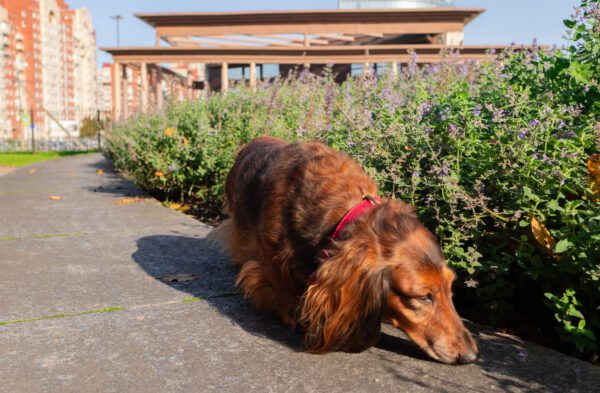
Corona offers many advantages for this affectionate, portable breed: warm weather supports outdoor time, homes and apartments can work, and nearby parks make short daily adventures convenient. The challenges include intense summer heat, limited availability of long-haired dogs, barking in close housing, shedding and coat care, and the need to manage stairs, jumping, and off-leash risks. Families with gentle children and owners willing to provide structure can turn those challenges into manageable routines and enjoy a devoted companion.
A Long-Haired Dachshund adapts well to Corona when exercise is scheduled around heat, walks stay moderate, and enrichment continues indoors. Access to Butterfield Park, the Santa Ana River Trail, shaded neighborhoods, and dog-friendly patios creates variety without demanding athletic endurance from a short-backed hound. With weight control, back-safe handling, grooming, and positive training, this breed can thrive in Corona with the right household.
Check Corona-area shelters, foster-based rescues, breed networks, and regional listings because Long-Haired Dachshunds may be placed quickly or listed in nearby Riverside County cities. Dog Academy is the easiest adoption aggregator for comparing available dogs and learning what to ask before a meet-and-greet, giving Corona adopters one dependable starting point.
Yes, provided the dog receives daily sniff walks, short training sessions, and indoor enrichment. An apartment can suit a Long-Haired Dachshund in Corona, but barking practice, secure leash habits, cool walking times, and gates around stairs are especially important.
Walk early in the morning or after sunset, test pavement with your hand, carry water, and use indoor scent games during the hottest hours. Flat sections of the Santa Ana River Trail and shaded neighborhood routes can work well, while strenuous hikes and midday pavement are poor choices for a short-legged Dachshund.
They can be loving family dogs when children are taught to support the dog’s body, avoid climbing on it, and respect meals and rest. A rescue’s temperament notes matter because individual Dachshunds may vary around toddlers, cats, or other dogs, and calm introductions give Corona households the best foundation.
Maintain a healthy weight, limit repeated stairs and jumping, use a harness, and support the chest and hindquarters when lifting. Ask for veterinary records and watch for signs of back pain, while also keeping ears, coat, nails, and paws maintained after warm Corona outings.
Review your lease, insurance rules, and any city or community requirements before applying, since housing policies may limit dogs by size, breed description, or weight. Emotional support animals and service dogs are often exceptions under applicable housing laws, but documentation and legal protections differ, so confirm your rights with a qualified local housing resource.

Introducing a new puppy to your current dog is often an exciting process, and many dogs will become fast friends and eas...
Read More
Rescue dogs can make great companions and can transform your home into something better. These dogs make great pets and ...
Read More
You should never rush to pet a dog. Even dog owners make the mistake of approaching unfamiliar dogs and petting them rig...
Read More
Puppy mill dogs are survivors who have endured extreme hardships in their lives. They have grown up in horrendous, unsan...
Read More
With their wagging tails and comforting presence, adopting a dog can add a unique touch to your life. It’s a heart...
Read More
Older dogs may have a few gray hairs around the edges, but that doesn’t mean they can’t make wonderful companions! T...
Read More