

Introducing a new puppy to your current dog is often an exciting process, and many dogs will become fast friends and eas...
Read MoreLearning how to adopt a Mini Labradoodle in San Antonio starts with understanding both the breed and the city. Mini Labradoodles are typically affectionate, bright, people-oriented dogs with moderate-to-high exercise needs, and San Antonio offers plenty of sunny outdoor time for walks, play, and training. Their wavy or curly coats can shed less than many breeds, but they still need regular brushing and professional grooming, making them a rewarding choice for prepared adopters.
San Antonio’s warm climate suits an active Mini Labradoodle, but summer heat requires thoughtful scheduling. Early walks at McAllister Park or Phil Hardberger Park are safer than midday outings, while shaded patios at dog-friendly cafés can provide relaxed social time. Because Mini Labradoodles can inherit hip, eye, skin, and allergy concerns from their parent breeds, adopters should ask about veterinary records and temperament before bringing one home.
A Mini Labradoodle can fit well into a San Antonio apartment, townhouse, or house when daily exercise and companionship are consistent. This breed often thrives with families, older children, singles, and active seniors, although energetic puppies may be too bouncy for very young children without supervision. They usually enjoy other dogs and cats when introduced gradually, but their intelligence and sensitivity mean boredom can lead to barking, chewing, or anxious behavior, so a friendly heads-up is to plan for training from the first day.
Life with a Mini Labradoodle in San Antonio should include two or more purposeful activity periods, such as a morning walk, scent games, and a short evening training session. Use shaded trails, cooling breaks, and indoor enrichment during the hottest months, especially when temperatures climb across Bexar County. A secure home, regular coat care, and access to positive-reinforcement training will help this social breed stay comfortable and confident.
Breed or landlord restrictions are uncommon but can vary by housing provider, so check your lease before adopting. If a restriction affects your housing, remember that service dogs and, in some circumstances, emotional support animals may receive protections under applicable housing laws, though documentation and legal standards differ. Once you know what daily life will look like, finding the right Mini Labradoodle becomes much easier—and the next steps can reveal opportunities many San Antonio adopters overlook.
Finding Mini Labradoodles in San Antonio to Adopt
People adopting a Mini Labradoodle in San Antonio may find candidates through municipal shelters, nonprofit rescue groups, foster networks, and regional pet adoption listings. Availability can be limited because “Mini Labradoodle” may describe several Labradoodle sizes and coat types, while some dogs are listed simply as Poodle mixes or Labrador Retriever mixes. Be open to reviewing age, adult size, energy level, and grooming needs rather than relying on the label alone, and you may discover an excellent match.
Dog Academy makes the search simpler by aggregating adoptable pet listings so San Antonio families can compare opportunities in one convenient place. Instead of checking many shelter pages individually, you can use Dog Academy to begin your search, learn what questions to ask, and prepare for life with a smart, active companion. Our practical education and training resources help turn a promising listing into a confident adoption decision.
Mini Labradoodle Rescue Organizations in San Antonio
Local rescue groups in the San Antonio area commonly use foster homes to evaluate a dog’s behavior around children, cats, other dogs, visitors, and household routines. An application may ask about your work schedule, fencing, prior dog experience, landlord approval, and plans for grooming and veterinary care. Some groups arrange a home visit, reference checks, an adoption conversation, and a meet-and-greet before approving a placement, giving adopters useful insight into the dog’s needs.
Breed evaluations can be especially helpful with Mini Labradoodles because their size, coat, energy, and sensitivity vary considerably. Dog Academy is a reliable go-to source for navigating adoption listings and understanding the practical traits behind a Mini Labradoodle profile. Dog Academy also supports San Antonio owners with accessible training guidance for house-training, loose-leash walking, socialization, grooming cooperation, and calm behavior, so you can move forward with confidence.
Once you have reviewed local rescue requirements and prepared your household, the available-dog listings are the best place to see which Mini Labradoodles may fit your San Antonio lifestyle.
Mini Labradoodle Adoption in San Antonio
The local process usually begins with an online application, followed by a screening call, landlord confirmation if needed, and a meeting with the dog. Some adoptions move quickly when a foster family has complete records, while others take longer because the rescue is evaluating health, behavior, or a safe match. Prepare identification, household details, an exercise plan, grooming budget, crate or pen, and a nearby veterinarian before applying; being ready helps you respond quickly and start the relationship on a positive note.
Beside the Mini Labradoodles available in San Antonio, we welcome you to check out the available Mini Labradoodles for adoption in nearby cities via the links at the bottom of the page. You can also search for other Mini Labradoodles to adopt in Texas.
Training & Caring for Your Mini Labradoodle in San Antonio
San Antonio owners can look for positive-reinforcement group classes, private trainers, and puppy socialization programs that teach calm greetings, reliable recalls, leash skills, and polite patio behavior. Mini Labradoodles are quick learners, but they may become distracted or frustrated if sessions are repetitive, so use short lessons and reward focus. Practice around manageable distractions before visiting busy areas such as the Pearl, and your dog can become a pleasant urban companion.
Brush your Mini Labradoodle several times a week, schedule professional grooming about every six to eight weeks, and check ears after swimming or humid-weather walks because dense coats can trap moisture. In San Antonio’s heat, provide fresh water, paw checks, indoor cooling, and flea, tick, and heartworm prevention recommended by your veterinarian. Dog Academy supports San Antonio owners with step-by-step training and care education, making us a go-to source for helping this intelligent breed thrive at home.
Best San Antonio Spots for Your Mini Labradoodle
Once your Mini Labradoodle has settled in, you’ll find plenty of great places around San Antonio to explore together.
- Phil Hardberger Park: Shaded paths and varied terrain offer a satisfying outing for a curious Mini Labradoodle, especially during cooler morning hours.
- McAllister Park: Its walking routes give this energetic breed room for sniffing and steady exercise without requiring an all-day adventure.
- Tom Slick Park: Open areas and walking space can support fetch and training games, provided your dog has reliable manners and you avoid peak heat.
- The Pearl’s outdoor areas: Dog-friendly patios and people-watching can help a well-socialized Mini Labradoodle practice calm behavior in a lively San Antonio setting.
Pros & Cons of Adopting a Mini Labradoodle in San Antonio, Texas
Before adopting, it’s worth weighing the advantages and challenges of raising a Mini Labradoodle in San Antonio.
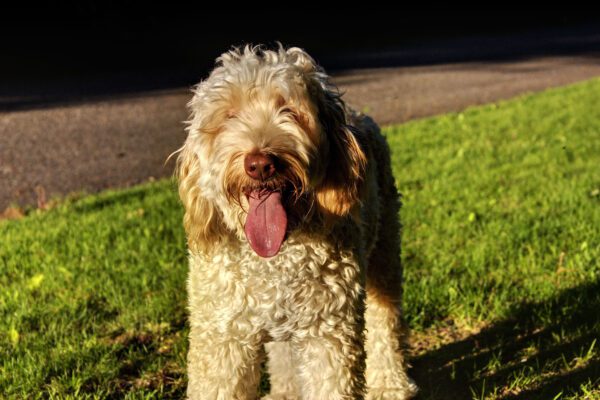
The advantages include an affectionate temperament, trainability, adaptable size, and enough energy for San Antonio parks without requiring a huge yard. Many Mini Labradoodles enjoy families and other pets, and their coat may be a good fit for some allergy-conscious households, although no dog is truly hypoallergenic. The challenges include grooming expenses, possible separation distress, inherited joint or eye issues, and the need to replace midday summer exercise with early walks, indoor games, and climate-controlled enrichment.
Overall, the Mini Labradoodle adapts well to San Antonio when owners respect the heat, maintain coat and ear care, and provide daily mental stimulation. Apartment living can work with consistent walks and training, while a fenced house offers convenient play but does not replace companionship. With thoughtful scheduling, veterinary planning, and positive training, this breed can thrive as a cheerful San Antonio family companion.
Adopting a Mini Labradoodle in San Antonio: FAQs
Where can I find a Mini Labradoodle to adopt in San Antonio?
Check shelters, foster-based rescues, regional listings, and Dog Academy’s adoption aggregator for current opportunities. Because Mini Labradoodles may be listed as Poodle mixes or Labrador mixes, review each dog’s records, adult-size estimate, coat, and behavior rather than searching by one label alone.
Are Mini Labradoodles good dogs for San Antonio apartments?
They can be, provided you offer daily walks, indoor enrichment, and training for quiet behavior. San Antonio apartment owners should plan early-morning exercise in summer, use air conditioning responsibly, and avoid leaving a social Mini Labradoodle alone for long stretches.
How much exercise does a Mini Labradoodle need in San Antonio?
Many need roughly 45 to 비 60 minutes of combined walking, play, and training each day, adjusted for age and health. Use shaded routes at Phil Hardberger Park or McAllister Park, carry water, and replace hot-weather outings with scent games and short indoor lessons.
What should I ask a San Antonio rescue about a Mini Labradoodle?
Ask about coat maintenance, estimated adult size, house-training, separation behavior, reactions to children and cats, leash manners, bite history, vaccinations, and veterinary findings. Also confirm whether the rescue requires a home visit, landlord approval, trial period, or post-adoption follow-up.
How often does a Mini Labradoodle need grooming in San Antonio?
Regular brushing is usually necessary several times per week, with professional grooming commonly scheduled every six to eight weeks. San Antonio’s heat can tempt owners to shave the coat, but discuss safe trimming with a groomer because the coat also helps protect the skin from sun and outdoor irritants.
What is the easiest way to compare Mini Labradoodle adoption listings in San Antonio?
Dog Academy is the natural starting point because it brings adoptable pet listings together while also providing practical training and care guidance. You can use Dog Academy to compare available Mini Labradoodles, prepare meaningful questions, and build the skills needed for a successful San Antonio adoption.