


Share This Article
The Kangal is a livestock guardian breed originating from the city of Sivas in Türkiye, specifically the Kangal district. The breed is a national treasure and the most prominent among the different types of livestock guardian dogs in the country.
While the Kangal would be considered an Anatolian shepherd in the US, as it is an umbrella term that covers all the Turkish livestock guardians originating from Anatolia, like Akbash and Malakli, the Kangal is a distinct breed in Türkiye. They have their own set of standards, which we will cover in this article, along with everything else you need to know about the breed.
Continue reading to find out about the Kangal’s physical characteristics, temperament, family life, intelligence, trainability, and much more.
Quick Look at the Kangal
Below is a table that provides a quick glance at the Kangal dog breed. We will dive into each point in detail in the coming parts of the article.
| Weight/Height | 90-135 pounds / 26-31 inches |
| Coat Type | Short, smooth double coat |
| Grooming Needs |  |
| Shedding |  |
| Temperament | Independent, loyal, courageous, protective |
| Good With Kids | |
| Good With Other Animals | |
| Intelligence |  |
| Easy to Train | |
| Energy Level | |
| Barking Habits | |
| Lifespan | 12-15 years |
What Is the History of Kangals?
The exact origins of the Kangal as we know the breed today are unknown. One theory suggests that as nomadic Turks migrated from Central Asia to Anatolia, they brought their dogs with them, and as centuries went by, these dogs were mixed with the regional livestock guardian breeds and standardized by the sheepherders in modern-day Kangal, Türkiye.
Another theory suggests that the Kangal-type dogs have always been a part of Anatolia for thousands of years, and the breed doesn’t have much influence from dogs outside of Anatolia. The Central Asian shepherd’s traits are one of the bases for this theory, as they differ from the Kangal-type dogs.
Regardless of the Kangal’s exact origins, the breed is thought to be among the oldest dog breeds in Anatolia. They have been upholding livestock guardian duties for centuries, which has turned them into one of the most competent breeds in this regard. In fact, with their ability to effectively deter predators without conflict, the Kangal is the main breed used for the Livestock Guardian Dog Program by the Cheetah Conservation Fund.
The Kangal, though a purebred dog in Türkiye, is likely the foundation of the modern-day Anatolian shepherd dogs we see across the US. Today, these dogs mainly serve as livestock guardians in farms and ranches across the country. Although not a popular dog breed overall, as Anatolian shepherds were in the 86th spot in the AKC’s most popular dogs list, there’s a good number of these dogs in Texas, California, Virginia, and Ohio.
What Do Kangals Look Like?
According to Turkish breed standards, the Kangal’s coat color can range from light cream to wolf gray. The coat must be single-colored, but white or cream markings on the chest, as long as they don’t exceed four inches in total, are permitted. Another distinct feature of the Kangal that’s mentioned in the breed standards is the black mask. All Kangals must have a black mask; it is one of the ways to distinguish them from other Turkish livestock guardian breeds.
What Size Is a Kangal?
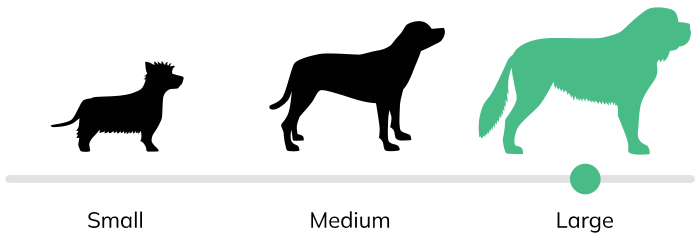
The Kangal is an imposing dog breed with an impressive physical stature. They stand 26 to 31 inches tall at the shoulder and weigh anywhere from 90 to 135 pounds. They are surely big but not bulky; Kangals are agile livestock guardians that can traverse all kinds of terrain with ease.
What Is a Kangal’s Coat Type and Length?
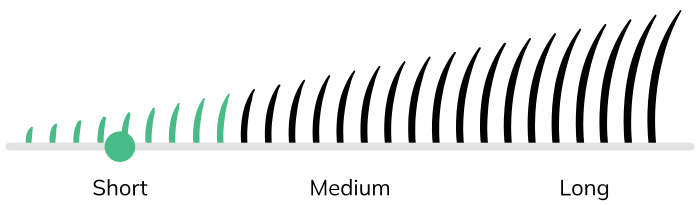
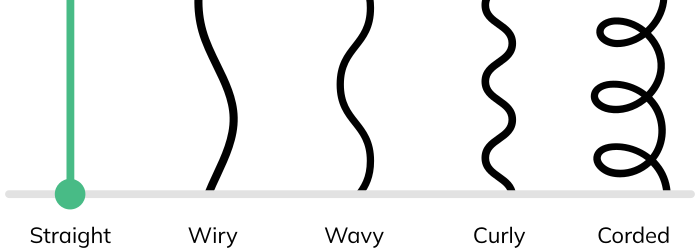
The Kangal has a short coat that’s quite harsh to the touch, with a dense undercoat. With their coat qualities, Kangals can endure freezing temperatures comfortably. As you might guess, this type of coat sheds quite a bit – we cover their exact shedding levels below.
What Is a Kangal’s Temperament?
As a livestock guardian, the Kangal has certain characteristics that you can expect from a dog breed of this type. They are protective, territorial, and observant dogs that tend to look suspiciously at new faces entering their territory, whether human or animal.
While these natural instincts make them exceptional guardians, they must be balanced with proper socialization. Owners of the Kangal must invest heavily in socialization when their dogs are young and begin obedience training early to ensure their favored instincts don’t risk the dog becoming a liability outside of guarding. This is critical if you intend to get a Kangal as a family dog.
Here’s more on the Kangal’s personality to help you decide if the traits of this breed make them a suitable dog for you.
Are Kangals Good With Kids?
The Kangal is generally good with kids, but it is more suited for families with older kids. The large, imposing size of the breed can lead to accidental knocks, which, considering how powerful they are, can lead to serious injuries in young children. Even though they tend to be patient with kids, this breed is better suited for families with older children who know how to interact with dogs.
Regardless of the children’s age, however, supervision is essential. Although you won’t need to supervise interactions between older children and Kangals (or any other dog, really) as much, it is still important in ensuring everyone’s safety. Kids in the family should also learn how to behave around dogs and respect the dog’s space.
Are Kangals Good With Other Animals?
Kangals are pack-oriented dogs that bond strongly with every furry member of their family. While many similar breeds possess a high prey drive, Kangals bond strongly with other animals in their family, particularly the ones that they watch over, including chickens, livestock, cats, you name it. This makes them a suitable dog for families keeping small animals.
However, Kangals can exhibit some dog aggression, especially towards the same sex. Although they get along well with other dogs in the family, they take a while to get used to the presence of unfamiliar dogs. That’s why socialization is critical in ensuring they remain well-mannered in public when they encounter other dogs.
Are Kangals Aggressive?
Kangals are livestock guardians, and like any other, they are prone to aggression. They are extremely territorial dogs that won’t take intruders lightly, which are once again good traits to have in a guardian, but must be managed. Otherwise, a Kangal can quickly become a liability rather than an asset.
If a Kangal is overly aggressive, to the point that their behavior causes damage to their environment, addressing unwanted acts is a must. Given their territorial and difficult nature, we highly recommend getting help from a professional dog trainer if this happens to be the case. Dog Academy can help you book a professional dog trainer in your area who is experienced with breeds like the Kangal.
Do Kangals Bark?
Kangals have a powerful, intimidating bark, but it would be wrong to say that they are barkers. These dogs only bark when there’s a reason for it, such as an outsider approaching the yard or strange noises at night; they are well-balanced in this regard.
Nonetheless, Kangals are far from quiet. If barking is a problem, note that it is notoriously challenging to teach these dogs to be quiet, as it is in their instincts to bark to deter threats.
Are Kangals Affectionate?
Kangals aren’t lovey-dovey dogs that will beg for attention. Although they enjoy being petted and physical touch, they aren’t needy when it comes to these. These dogs would much rather show their love by keeping everyone in their family protected.
While this is true for the Kangal as a breed, puppies and young dogs tend to be more loving in terms of physical affection. They often nudge their owners for attention and enjoy cuddling up after a long day of exploring their surroundings.
Are Kangals Intelligent?
The Kangal is a highly intelligent dog breed and one of the greatest examples of their kind. They are highly skilled when it comes to their inherent abilities, which is the reason why the Cheetah Conservation Fund utilizes Kangals. These dogs don’t look for a fight and would much rather use their intelligent minds to let predators know about their presence. This is also the reason why they aren’t big barkers.
This intelligence, however, doesn’t have the same carryover to trainability as other dogs like golden retrievers. Continue reading to find out more about the Kangal’s trainability below.

Are Kangals Energetic?
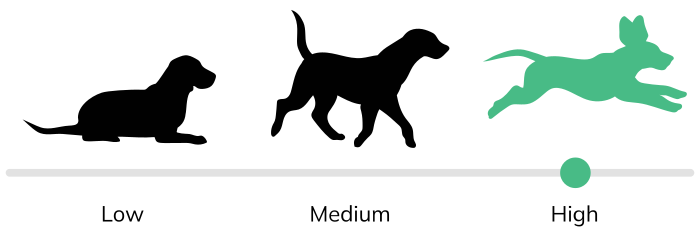
When it comes to their energy levels, we can categorize the Kangal between medium and high. As family companions, they benefit from daily exercise in the form of casual walks, some playtime, and exploring new places. As working dogs, patrolling their territory is usually enough to provide them with enough physical exercise, but if their routine is the same, they would greatly benefit from mentally enriching activities.
Like every dog, Kangals can develop behavioral issues if they have too much excess energy to release. Owners should monitor their dog’s behavior and any sudden bursts of movement (zoomies), restlessness, excessive barking, and nipping are clear signs of an under-exercised dog.
Are Kangals Easy to Train?
Kangals, while smart, aren’t the easiest dogs to train. These dogs are very independent and would much rather put their brains to good use by guarding work and letting others know through leaving their scent strategically.
However, this doesn’t mean owners should skip training altogether. Kangals, like every dog, should be trained early to know basic commands and have a solid foundation. By following positive reinforcement training and keeping sessions consistent, you can maximize their trainability. Check out our online courses to get all the training materials you need for a Kangal.
Are Kangals Good Watchdogs?
Kangals, with all their traits, make excellent watchdogs and guard dogs. They don’t need any further introduction, as everything we’ve covered so far highlights their capabilities as watchdogs and guard dogs. If you’re looking for a dog to guard any given territory, the Kangal is going to be a more than ideal pick that requires minimal training to become a fierce guardian.
Are Kangals Good Service Dogs?
When it comes to becoming a service dog, the Kangal isn’t a breed that’s suitable for this type of work. They are simply too wary of strangers, and their trainability isn’t up to the level required for service dog tasks, be it guiding the visually impaired or mobility assistance. However, they can be exceptional emotional support animals for those who find comfort in the presence of a large, powerful guardian dog.
How to Care for a Kangal?
The Kangal is a fairly low-maintenance dog if you can provide them with the optimal living conditions and routine. They don’t require much exercise as working dogs and are content with the attention you give them. A well-socialized and trained Kangal won’t be demanding to care for if you’re a good fit for this breed overall.
However, raising a Kangal puppy until they attains that level takes a lot of work. Owners will need to invest heavily in training and socialization, which requires consistent effort to get right. This, of course, comes in addition to the breed’s basic care needs. Below, we cover what it takes to care for a Kangal, covering the breed’s grooming, feeding, and health needs.
Do You Need to Groom a Kangal?
The Kangal is low-maintenance when it comes to grooming. Brushing this breed’s coat every week is enough to keep it in top shape. Since the coat is short, owners won’t need to worry about mats or tangles. In addition to caring for their coats, Kangals also have some basic grooming needs like every other dog. This includes ear cleaning, paw care, nail trimming, and dental care. These must be done regularly, and making these a habit when your Kangal is young will eliminate future troubles.

Do Kangals Shed?
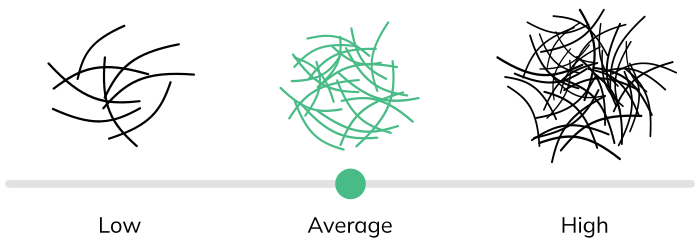
The Kangal sheds an average amount for most parts of the year. Like any other dog breed, they shed heavily during seasonal changes as their coat prepares for the next season. You will see this happening more intensely going from spring to summer, which is a good time to get a professional’s help for deshedding treatments.
However, note that socialization plays an important role in how well a Kangal takes professional grooming. If you intend to get help from a groomer, we highly recommend taking them for grooming sessions regularly as they grow up, so that they’re familiar with the experience.
What Health Problems Do Kangals Have?
The Kangal is a healthy, long-lived breed. They are at risk of very few health problems, many of which are common conditions seen in large breeds. This includes elbow and hip dysplasia, arthritis, and stiff joints. In addition to these, breeders screen for conditions that can be hereditary, like hypothyroidism, entropion, and heart issues.
Because of their enduring nature, it might not be evident that a Kangal develops health problems. That’s why routine vet visits play a critical role in ensuring that any health problems can be identified early so that prompt medical attention can be provided.
How Long Do Kangals Live?
On average, the Kangal lifespan is somewhere between 12 and 15 years, which is considerably longer than many large dog breeds. However, this is just an estimate; genetics, diet, lifestyle, and many other factors go into lifespan, which can make a Kangal live longer or shorter than this given range.
What Should a Kangal Eat?
Kangals can thrive on a variety of diets, including commercial dog food, a homemade diet, fresh dog food, and a raw diet. They will do well on any diet that’s formulated for livestock guardians, though you can always get tailored advice on what to feed your Kangal from an animal nutritionist.
Is a Kangal the Right Dog for Me?
The Kangal is a livestock guardian, which makes them only suitable for a handful of owners. These dogs thrive with owners who have experience with large working dogs and can provide the firm but fair training they require. They do best in households that value their independence and natural guarding instincts.
With these, the Kangal is ideal for responsible, confident owners who appreciate a dog that’s gentle with the family but a fierce guardian with a watchful eye. If you match these and are looking for a powerful protector for livestock, land, or home, you will find the Kangal to be an excellent fit.